Key Takeaways
- A gala production company is responsible for the room's experience from arrival to close; a caterer is responsible for the food and service sequence
- The programme architecture — the sequence of speeches, entertainment, awards and service — is a production deliverable, not a catering deliverable
- Set design for a gala is the primary brand communication — it establishes the evening's visual register before any programme element begins
- Entertainment for galas must be timed to the service sequence — the caterer's service rhythm and the entertainment timing must be designed together
- The close of a gala (how guests leave, what the final experience is) is as produced as the arrival
The scope boundary
A venue and caterer deliver the room and the food. A production company delivers everything that happens in the room that is not food. The distinction matters because the highest-value elements of a gala — the visual environment, the entertainment, the programme sequence, the moments that guests photograph and discuss — are production deliverables, not catering deliverables. Venues that offer "complete event management" typically mean complete catering management with basic event logistics. This is adequate for a dinner party. It is not adequate for a produced gala where the event experience is a brand communication.
The programme architecture
A gala programme architecture is the sequence of the evening: arrival and pre-dinner drinks, seating, welcome and programme open, dinner service (starters, main, dessert), speeches and awards if applicable, entertainment, dancing and close. Each element has a duration, a position in the sequence relative to the service rhythm, and a production requirement. Entertainment during the main course competes with conversation; entertainment during dessert complements it. Speeches that run long push the kitchen's service timing off schedule; speeches that are timed precisely in the run of show allow the kitchen to hold food at the right temperature. Programme architecture is a joint design between the production company and the venue's catering team — with the production company leading.
Set design
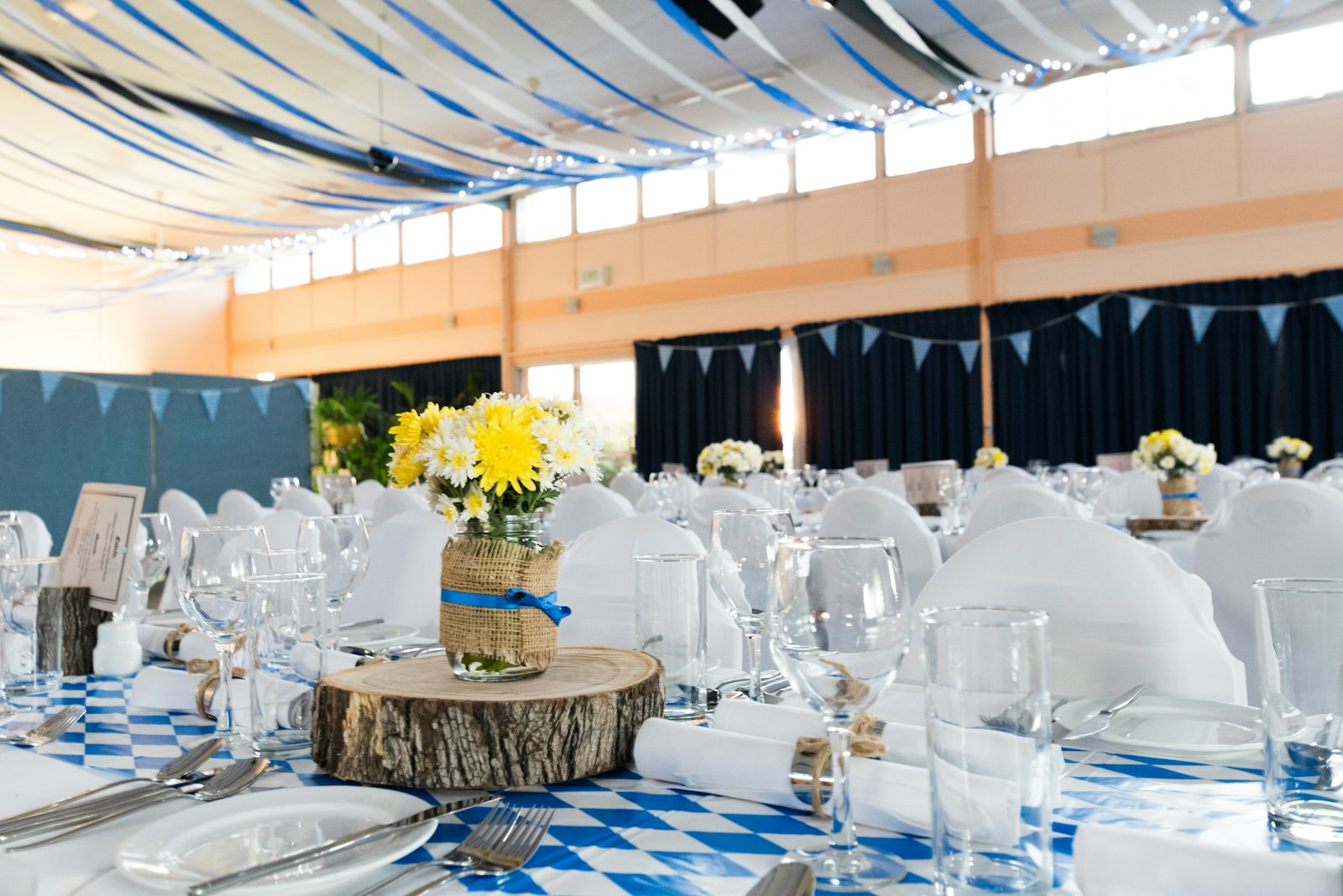
The visual environment of a gala communicates the organising company's quality standards before the first course is served. The set design brief for a gala includes: table centrepiece direction (height, scale, floral or non-floral), ambient lighting (colour temperature, intensity, whether programmed changes are required through the evening), backdrop or stage set if a programme is presented, entrance installation if arrival experience is designed, and any branded environmental elements. Set design for a gala is typically the production category that is most compressed in budget under-allocation — it is also the category most directly responsible for the quality of the event's photography and the guests' first impression.
Entertainment timing
Entertainment at a gala is most effective when positioned at programme moments where it serves the evening's energy rather than interrupting it. A 20-minute live music set during the post-dessert, pre-dancing period allows guests to enjoy the performance without a competing service activity. A 40-minute headline act mid-dinner interrupts both the food service and the dinner conversation. Coordinate the entertainment schedule with the kitchen's service timeline at week four of production — not on show morning when the entertainment manager is asking when to set up.