Key Takeaways
- Technology-company audiences have a lower tolerance for production failures than general corporate audiences
- Live coding demonstrations require specific video switching infrastructure that standard conference AV setups don't include
- Developer conferences need audience-visible code displays at higher resolution than standard presentation content
- Content delivery format expectations mirror what the audience experiences at major tech conferences — high production density, fast transitions, precision timing
- Tech conferences are increasingly hybrid-by-default; the broadcast layer must be specced as a primary requirement, not an add-on
The expectations that walk in the door
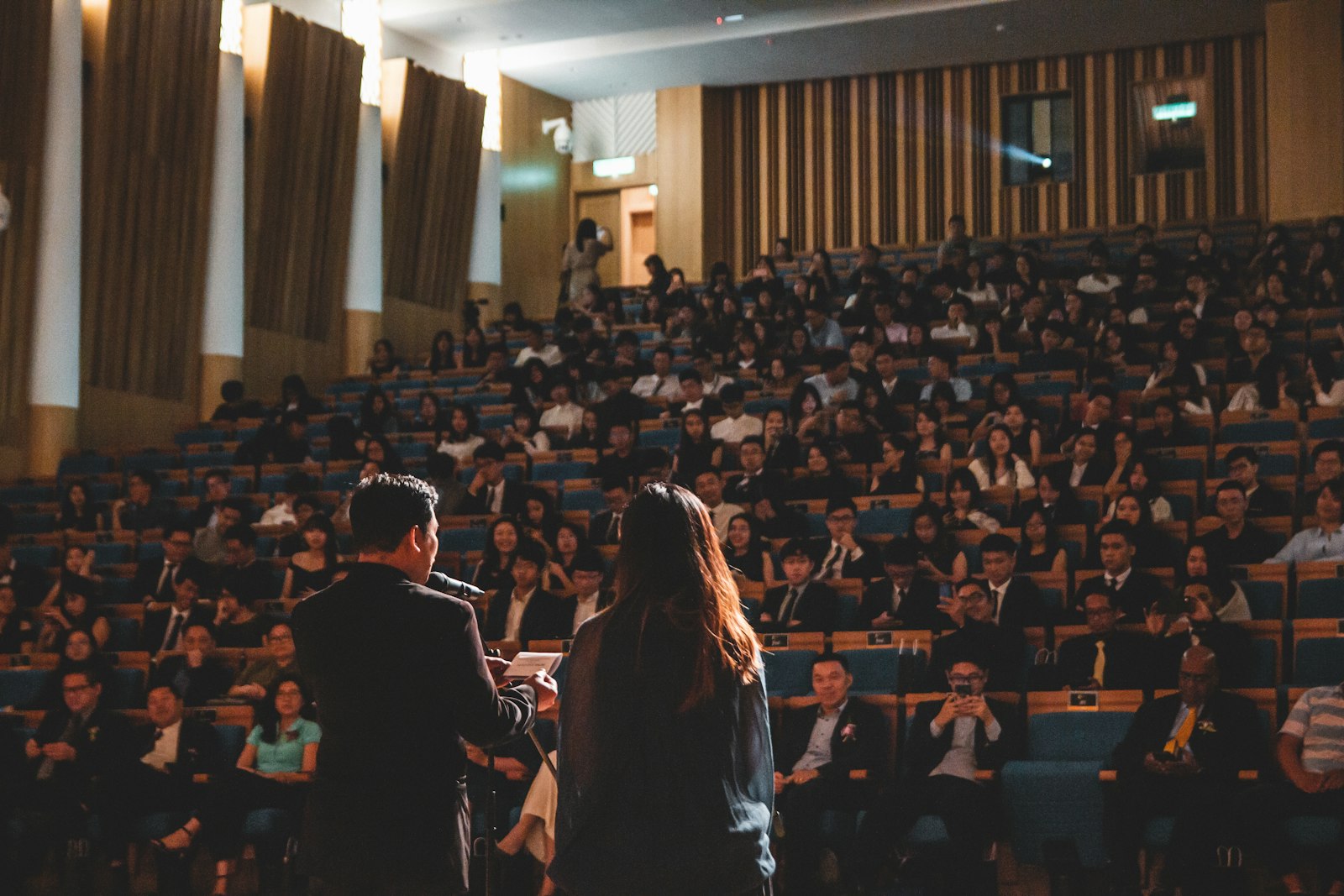
A technology-company audience — product managers, engineers, CTOs, developer advocates — attends and watches international technology conferences at a level most corporate event audiences do not. They have a reference point for what a well-produced technology conference looks like: AWS re:Invent, Google I/O, Apple WWDC, Microsoft Build. These are broadcast-quality productions with precision timing, fast content transitions, high-quality presentation graphics and zero visible technical failures. When the same audience attends a corporate technology conference in Bangalore, they carry that reference point with them. This is not an unfair standard — it is the standard the audience has internalised, and a conference production that feels noticeably below it loses credibility regardless of the quality of its content.
Live demonstrations: the production requirement
Live coding demonstrations, product demos and system walkthrough sessions require a production infrastructure that standard conference AV setups do not include. Specifically: the ability to switch between the presenter's laptop (showing code or a live application), a close-up camera feed of the presenter, and a pre-recorded fallback video — all at a moment's notice, called by the show-caller. This requires a video matrix switcher rather than a simple presentation changeover, an additional camera optimised for close-up product display, and a dedicated video playback machine pre-loaded with fallback content for every demo session. Tech conference productions that send the presenter's laptop screen to a projector and call it a demo setup are producing a version of the session that has a one-in-four chance of a live failure visible to 800 engineers.
Code readability at scale
A developer conference where code is displayed on screen requires the code to be readable from the back of the room. This is a resolution and font-size design requirement. Code displayed in a 12pt monospace font on a 1080p projector image at 18 metres is unreadable to 40% of the audience. The production solution is either: a higher-resolution display system (native 4K content on a 4K-capable LED wall or high-brightness laser projector), or a font-size minimum enforced in the presentation brief (28pt monospace on code slides as a hard requirement). Both require specification in the production brief, not discovery on show morning.
Timing and transition precision
Technology-company event programmes are typically session-dense — 45-minute keynotes followed by 20-minute breakout sessions followed by technical demos followed by partner sessions. The timing of these programmes is tight, and technology audiences notice when sessions run long. They are also the audience most likely to be checking their phones for the schedule and comparing it against the actual programme in real time. Show-calling precision — holding speakers to their allocated time, managing transitions to target, starting sessions within 90 seconds of the scheduled time — is more important in a tech conference programme than in most other corporate formats. A show that runs 25 minutes behind schedule by mid-afternoon at a tech conference has lost its audience in a visible, measurable way.
Hybrid as the default
Developer and technology-community conferences in India have moved to hybrid-by-default faster than most other corporate event categories. Remote attendance is a norm for engineering teams distributed across cities, and the technical credibility of a technology company's own conference is judged in part by how well it broadcasts. A tech company that cannot broadcast its own conference at broadcast standard is communicating something about its technical capability that it probably does not intend to communicate. The broadcast layer for a tech conference must be specced as a primary requirement — minimum three cameras, dedicated broadcast mix, low-latency streaming to the company's platform of choice — not as an addition to a conference that was designed for an in-room audience.