The term "wedding decorator" in India covers everything from a solo individual with a supplier network and a good Instagram page to a studio with fifty permanent employees, fabrication workshops, cold storage facilities, and multiple simultaneous productions running across cities. The difference in what they can deliver is enormous. Understanding which model you are hiring — and what that implies about quality, consistency, and accountability — is essential information before signing any contract. For the full Bangalore decor cost context, read our Bangalore wedding decor cost guide; for the venues where this decision matters most, our Bangalore weddings guide; the outdoor-specific context is in our garden wedding decor guide.
Can I hire an outside decorator at a five-star hotel?
It depends on the hotel and the event space. Confirm outside-decorator approval in writing before paying a deposit. Ask about access hours, loading areas, power, rigging, insurance documents, hotel supervision charges and teardown deadlines. A hotel allowing an independent wedding planner does not automatically approve every decorator or installation. Your designer needs the venue rules before finalising the drawings and quote.
Check the property-specific planning notes for JW Marriott Golfshire, The St. Regis Goa Resort and Grand Hyatt Kochi. Use the decorator interview checklist to compare written scopes.
The short answer: An in-house decor studio employs its own design, fabrication, floral and lighting teams, so one accountable team designs and builds the entire wedding — giving the best consistency and quality control for large, multi-day or ambitious events. A freelance decorator subcontracts execution per event, which is more affordable and perfectly fine for a single, simpler function but more variable at scale. Panigrahana runs an in-house team that designs and builds everything itself, with no rentals and no subcontracting.
What an In-House Decor Studio Actually Is
An in-house decor studio employs, within the same organisation, every team that touches the final product. At Panigrahana, this means our design team (who conceive the creative vision), our fabrication team (who build structural elements including mandap frames and installation components), our floral team (who source and arrange all botanicals), and our lighting team (who design and install all event lighting) are all permanent employees or long-term retained team members working under the same creative direction.
This has profound implications for quality. When the designer who created the brief also manages the floral team executing it, there is no translation gap between concept and execution. When the fabrication team has built the designer's structures for five years, they understand precisely what the designer intends from a rough sketch. When the lighting team has worked alongside the floral team at dozens of events, they know exactly how to complement the florals without competing with them. This is not achievable with a team assembled for a single event from different suppliers.
What a Freelance Decorator Is
A freelance decorator is typically a single designer or a small design partnership who subcontracts all execution. They may have an excellent creative vision and a beautiful portfolio — built over years of working with good suppliers. But the execution team is assembled for each event from available contractors: local fabricators, a flower market supplier's setup team, a lighting rental company's install crew. The quality of any given event depends on who was available and how well they understood the brief.
This model produces inconsistent results. The same freelance decorator's best and worst events will look dramatically different, not because the designer changed but because the execution team did. For a couple who hires them based on their best work, this variability is a real risk.
The Event Company's Decor Arm
A third model is common in Bangalore: the full-service event company that offers decor as one of many services alongside catering coordination, entertainment, photography, and venue management. In this model, decor is typically a margin item rather than a core competency — it may be subcontracted to a preferred decorator, or managed through a procurement model with local suppliers. The design creativity and execution accountability sit outside the event company itself. This is the model to be most cautious about when decor quality matters to you.
The Three Models — Compared
| Factor | In-House Studio | Freelance Decorator | Event Company's Decor Arm |
|---|---|---|---|
| Who executes | One permanent team — design, fabrication, floral, lighting | Subcontractors assembled per event | Often subcontracted or procured from suppliers |
| Design consistency | High — one team carries the design across all functions | Variable — depends on who is available | Variable — decor is a margin item, not a core skill |
| Quality control | Direct, on-site, immediate | Mediated through suppliers | Sits outside the company |
| Accountability | One studio, one contract | Blurred between decorator and suppliers | Blurred across multiple parties |
| Cost | Higher — permanent team + infrastructure | Often lower upfront | Bundled, hard to itemise |
| Best for | Large, multi-day, ambitious weddings | Single-function, smaller, modest budget | Convenience when decor is not the priority |
Quality Control — The Most Significant Difference
In an in-house studio, quality control is direct. The creative director can walk through the setup floor at 2 AM and assess whether every element meets the standard. The floral team leader can reject a batch of roses that do not meet colour or freshness standards without triggering a supplier negotiation. The fabrication team can rebuild a component that is not perfect because the materials and tools are available on-site.
In a subcontracted model, quality control is mediated through supplier relationships and event-day communication. The designer can ask for changes, but the ability to implement them depends on whether the supplier has the materials and team available in the moment. Problems discovered at 2 AM the night before the wedding have no simple solution when the execution team went home at midnight and the flowers are at an off-site cold store.
Design Consistency Across the Event
A multi-day wedding with mehendi, sangeet, ceremony, and reception involves four separate spatial design challenges. In an in-house studio, the same team works all four functions, carrying the design language fluently from one to the next. The colour temperature, the material vocabulary, the density of decoration — all are maintained by people who understand the overarching design intent and have been briefed together.
In a subcontracted model, different suppliers often handle different functions. The mehendi is done by one team, the sangeet stage by another, the wedding mandap by a third. The probability that all three speak the same aesthetic language without explicit coordination is low. Aesthetic inconsistency across functions is a common consequence.
Accountability — One Team Responsible for the Whole Vision
When something goes wrong — and in a complex multi-day wedding, something always does — in-house accountability is clear. One studio, one creative director, one contract. The responsibility for resolving the issue sits with the same organisation that created it. In a subcontracted model, the lines of accountability are blurred: the decorator blames the fabricator, the fabricator blames the supplier, the couple is caught in the middle during the most important event of their lives.
14,656 physical pieces sit in our own store, catalogued as 1,686 line items and counted between June and August 2026; 953 of them carry a photograph in the system. That inventory is the practical difference between an in-house studio and a decorator who books the same rental yard you could have called yourself. Every one of the 1,686 is logged as reusable, so it gets repaired, repainted and rebuilt into the next design rather than hired again for the night.
Cost Differences — What You Are Actually Paying For
In-house studios typically cost more than equivalent-seeming freelance quotes. The difference reflects what you are actually paying for: a permanent trained team, a quality infrastructure (cold storage, fabrication workshop, owned equipment), and the accumulated expertise of a team that has worked together across many events. The premium is real, but so is what it buys.
For large-scale, multi-day weddings — especially destination events in Bangalore's top hotels — the in-house model almost always justifies its cost through the quality and consistency of outcomes. For a smaller, single-function event on a tighter budget, a well-regarded freelance decorator may be entirely appropriate.
The job that shows where the line falls
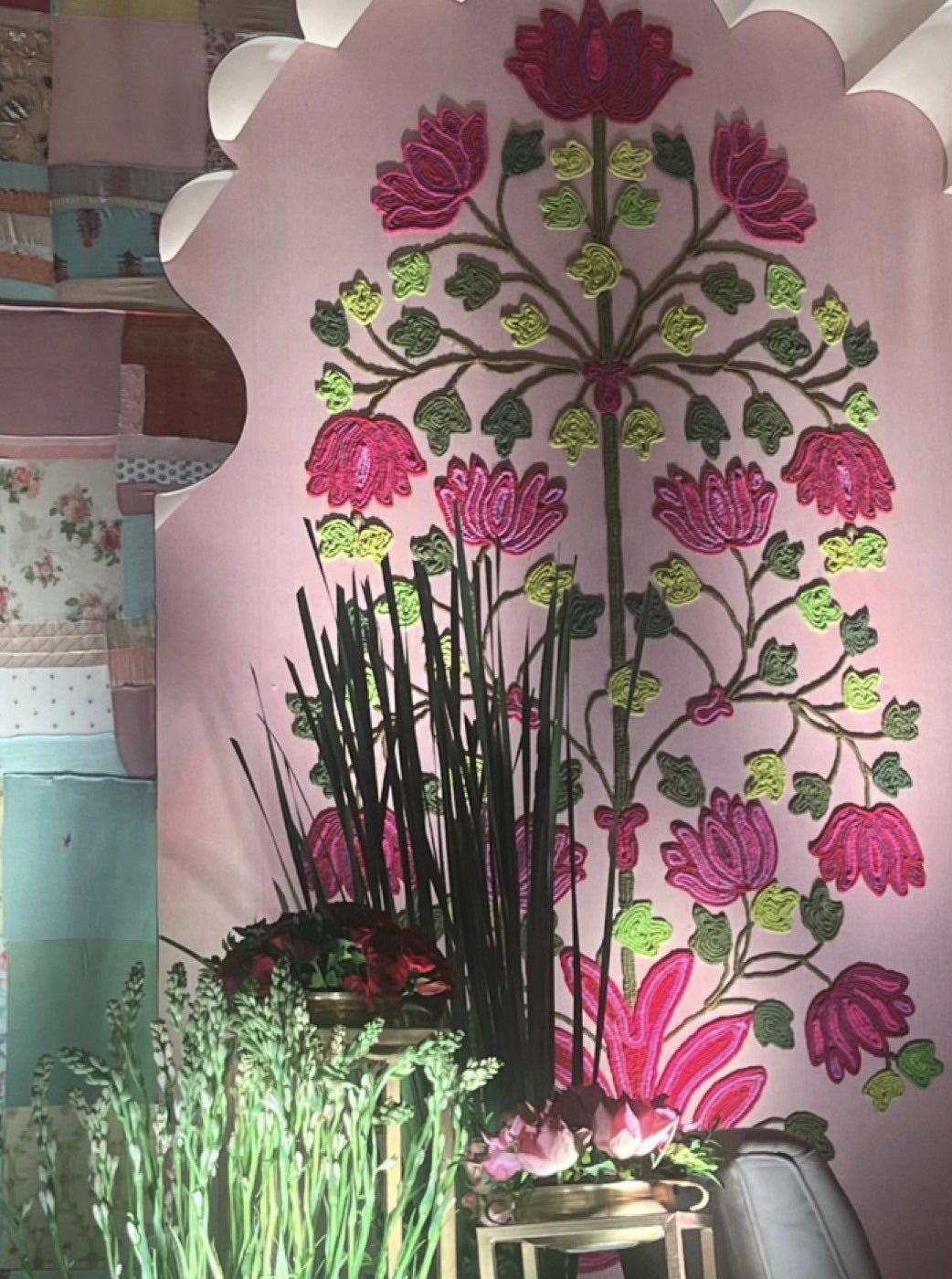
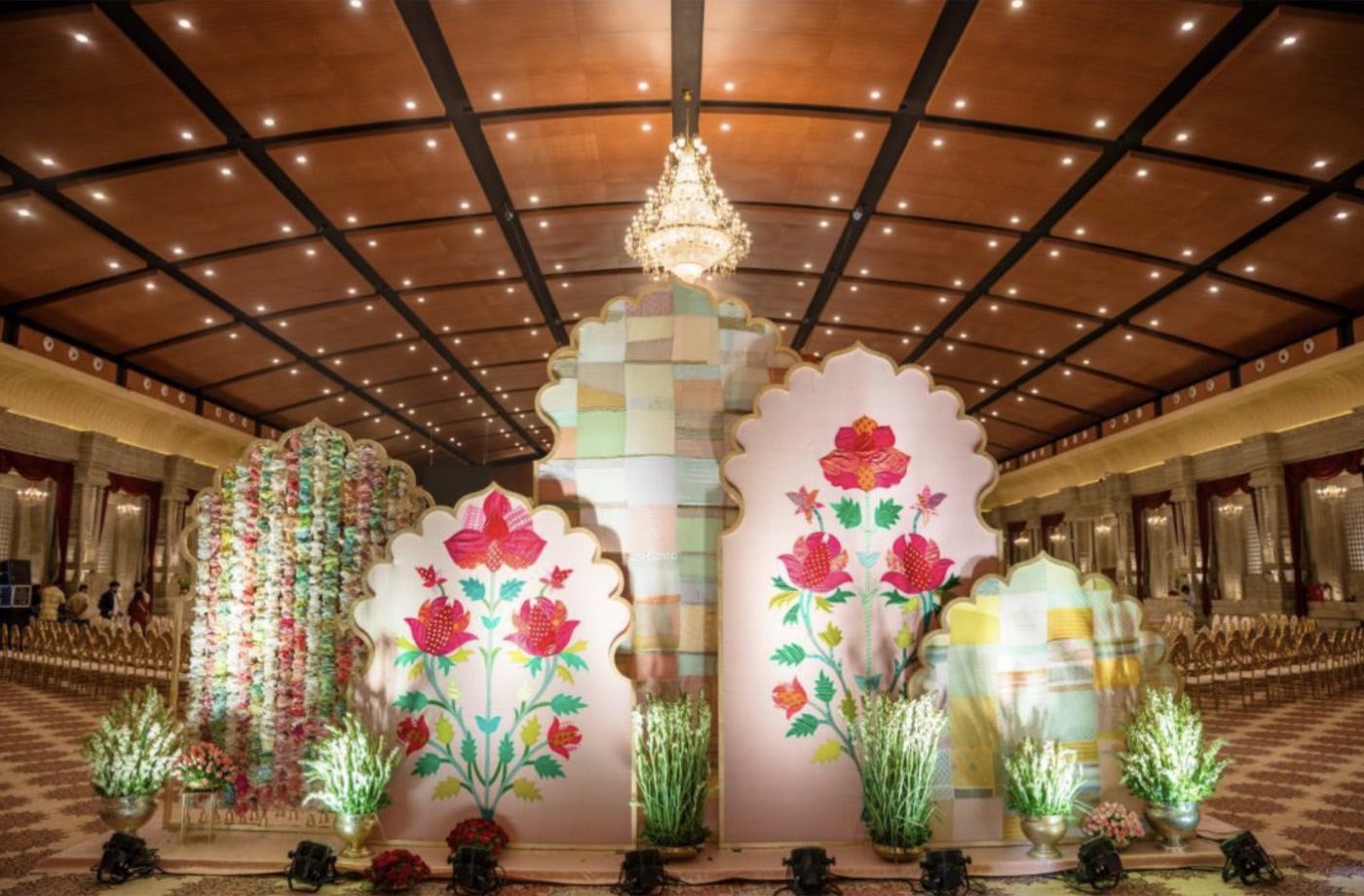
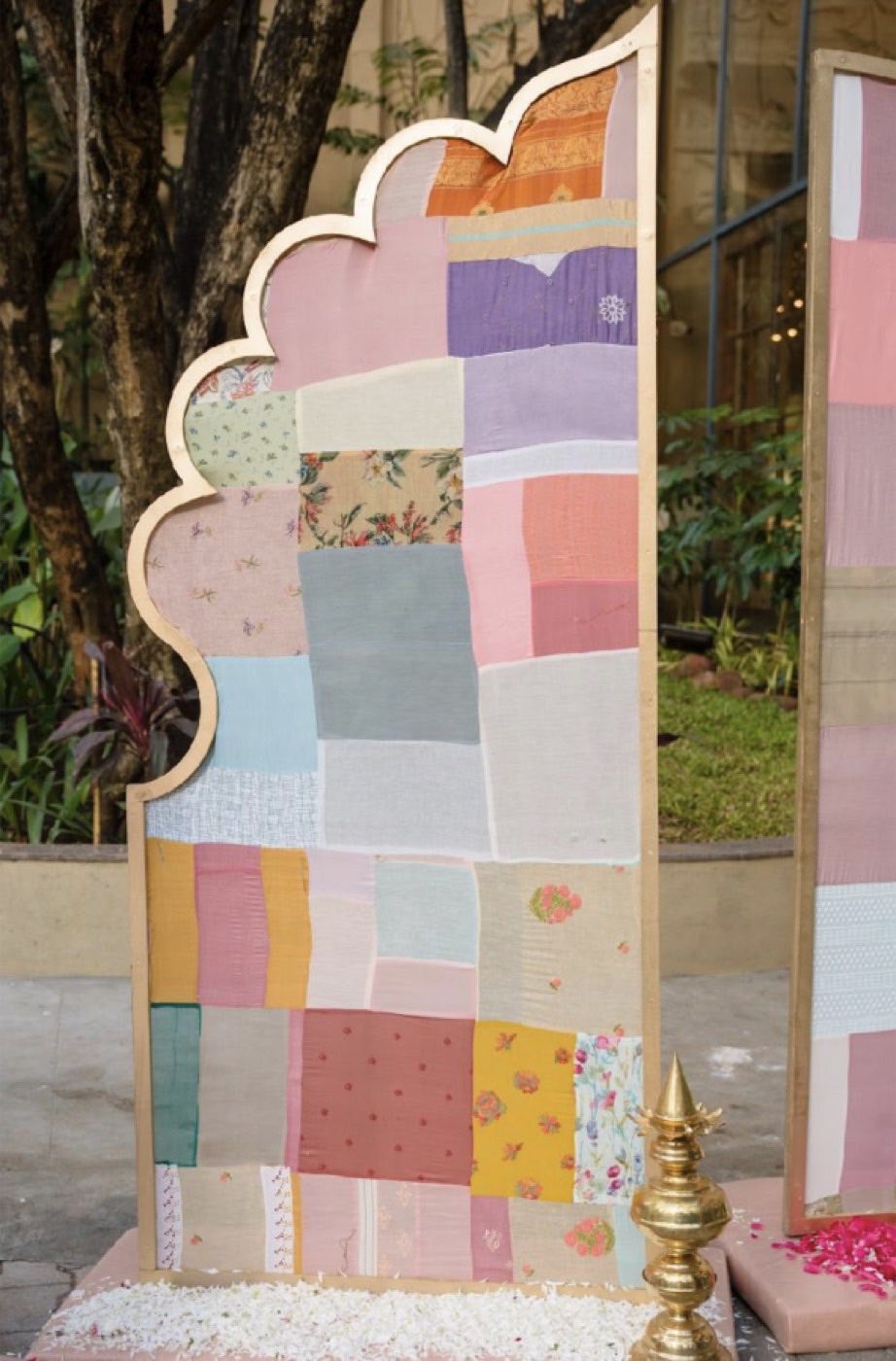
Minole and Mir's reception at Mukta Hall needed 7,400 flowers hand-stitched from waste fabric, and every panel patchworked from tailoring offcuts, old sarees and mill waste. That is weeks of tailoring before anything reaches the venue.
A freelance decorator does not turn that down for want of taste. They turn it down because the work happens in a workshop, with people on payroll, months ahead of the date, and there is nowhere to rent it from. Ambition of that kind is what the in-house model is actually buying you.
When Is a Freelance Decorator Right?
A freelance decorator can be the right choice when: the event is a single function (not multi-day), the guest count is manageable (under 200), the design ambition is modest rather than complex, and the budget does not support in-house studio rates. In these circumstances, a talented independent decorator with good supplier relationships can produce beautiful results. The model becomes problematic at the scale where its limitations show.
Read our planning journal for more on choosing the right team for your wedding, and see how we work at Panigrahana.
Our designers, fabricators, floral team, and lighting team all work under one roof. What we design, we build, we install, and we stand behind.
Begin Your Story