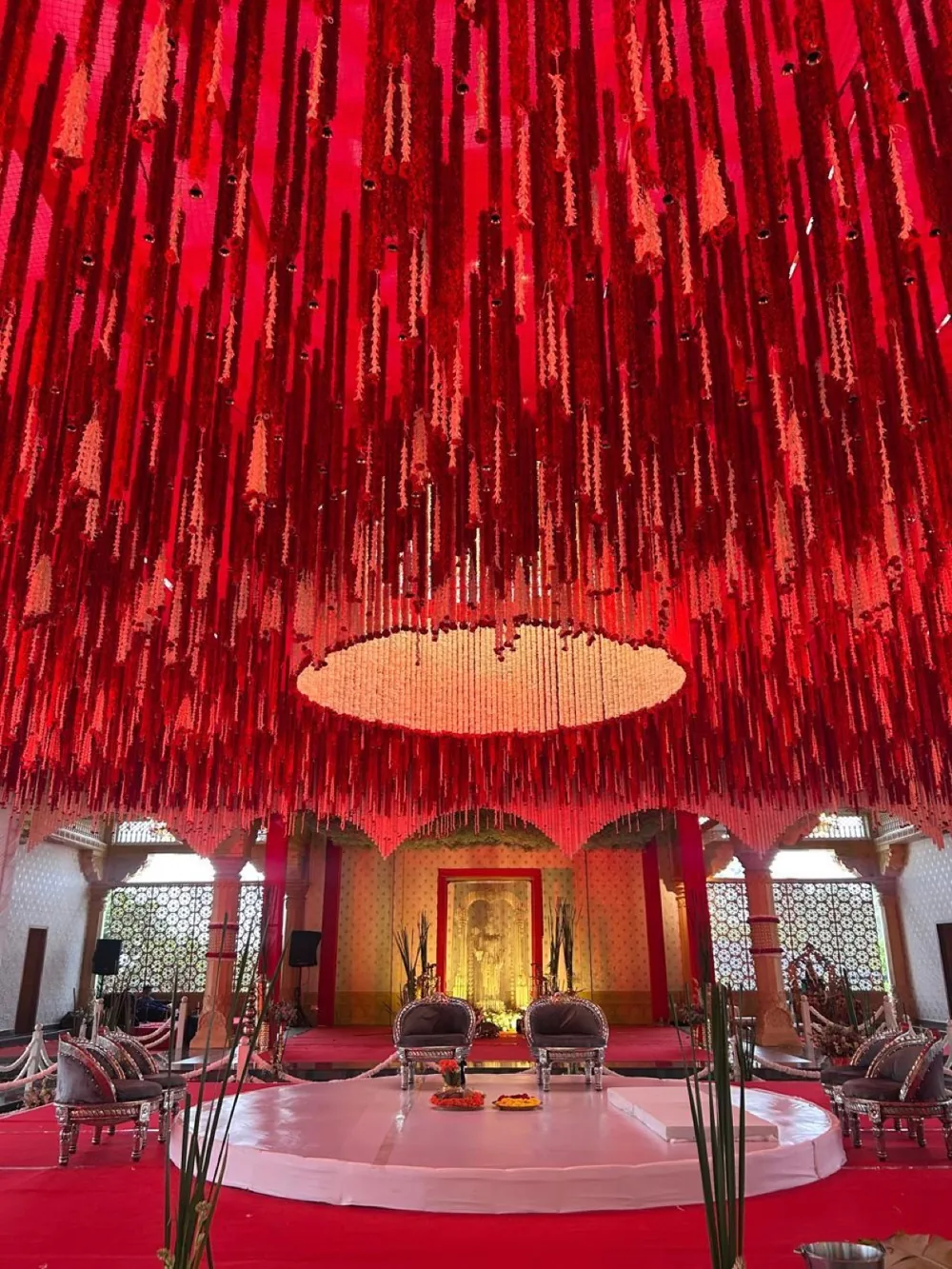
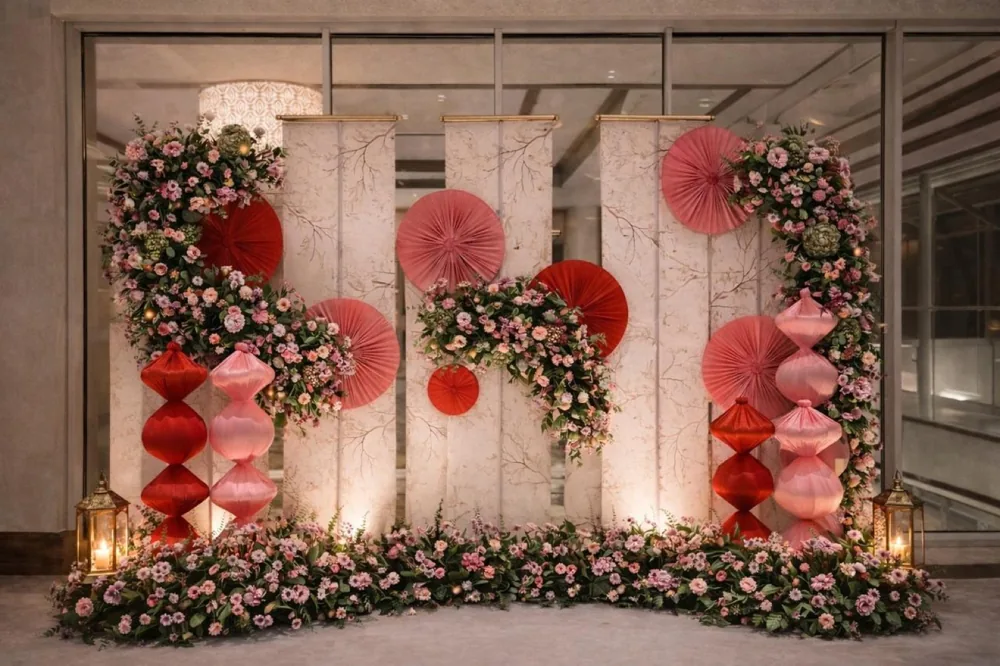
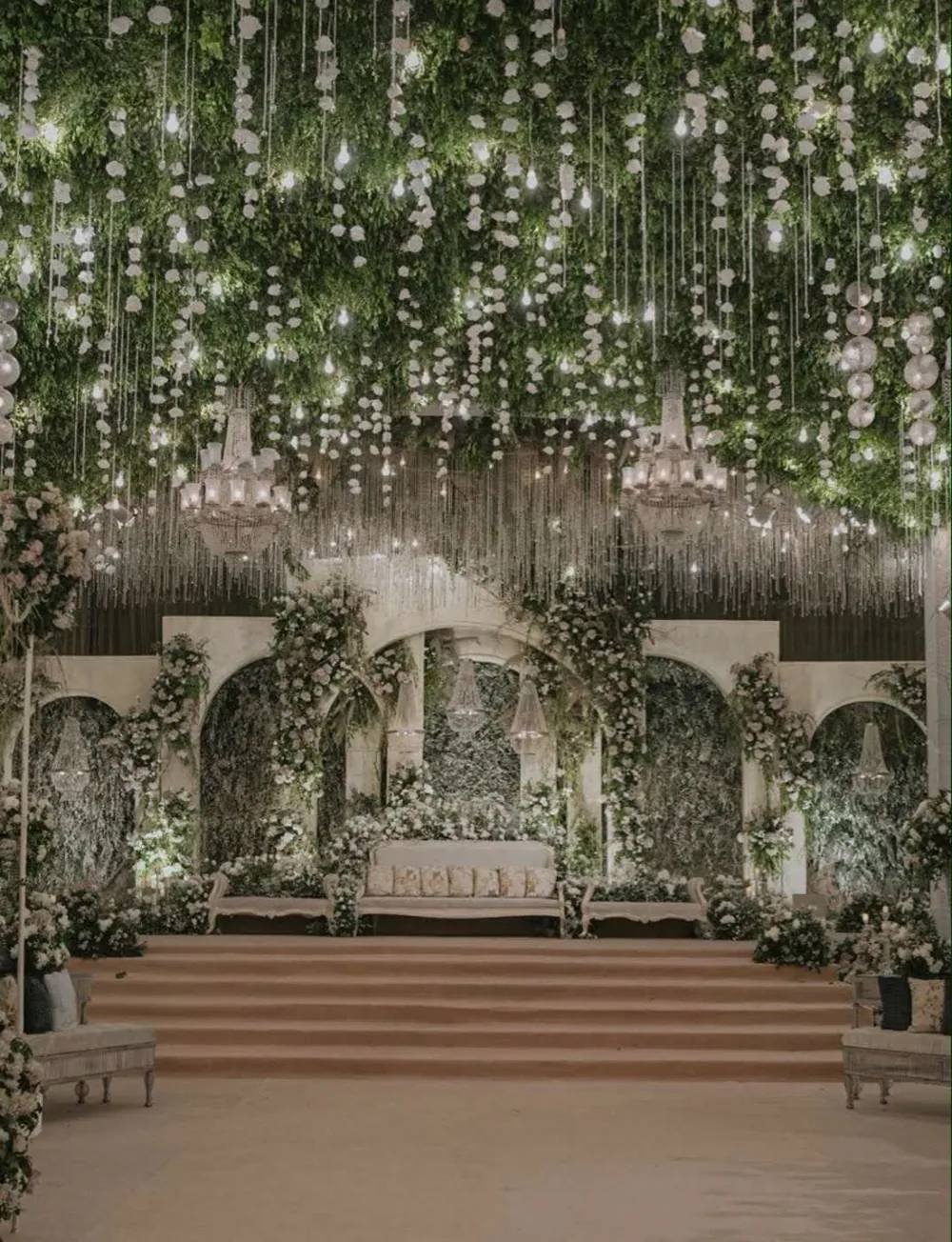
The stage backdrop is the visual anchor of every Indian wedding function. It is the element that appears in more photographs than any other — because the couple sits in front of it for hours, because every family photograph is taken against it, and because it frames the most significant moments of each function. When the backdrop is right, it elevates everything. When it is wrong — dated, poorly scaled, fighting the rest of the decor — it undermines the entire function's visual narrative. This guide covers the 2026 approach to backdrops: what is working, what has aged poorly, and how to think about each function's backdrop as a distinct design brief. For the full decor cost context, our Bangalore wedding decor cost guide covers stage backdrop spend; for the Bangalore venues where stage design matters most, our Bangalore weddings guide.
Why Each Function Deserves Its Own Backdrop Logic
The professional approach to Indian wedding backdrops treats each function as a separate design brief. A mehendi and a reception have completely different visual languages, different moods, different photography briefs, and different audience expectations. Using a single backdrop aesthetic across all functions is a shortcut that flattens what should be four or five distinct visual experiences.
The mehendi is warm, casual, celebratory — the backdrop should feel approachable and festive, not grand and formal. The sangeet is energetic and performative — the backdrop must work with stage lighting and be visible from the back of a large room. The wedding ceremony's backdrop is the mandap itself — it should be architectural and sacred, not decorative in the theatrical sense. The reception is the grand finale — the largest investment, the most formal, the most photographed.
Budget allocation should reflect this logic. Many couples over-invest in the sangeet backdrop (which has performance lighting that will render most floral detail invisible) and under-invest in the reception backdrop (which is the most photographed stage in natural ambient light). The priority order for backdrop investment is typically: reception, ceremony (mandap), sangeet, mehendi — in that order.
Mehendi Backdrop Ideas
The mehendi backdrop should be warm, informal, and vibrant. The function's colour palette — traditionally yellow, green, and marigold — sets the backdrop vocabulary. Three approaches that work consistently:
Marigold wall: A dense, floor-to-ceiling installation of marigold blooms on a chicken wire or foam base, with occasional tuberose and jasmine woven through for fragrance. This is the most authentic mehendi backdrop and the most reliably beautiful. The warmth of marigold yellow and the fragrance of jasmine creates an atmosphere that no imported rose wall can replicate. Cost: ₹25,000–₹60,000.
Bohemian macrame backdrop: A large macrame panel (3–4 metres wide, 2.5 metres tall) with a yellow and orange floral garland draped across it, and brass or terracotta pots with flowers at the base. This is an increasingly popular choice for contemporary couples who want a mehendi aesthetic without the traditional marigold wall. Cost: ₹30,000–₹70,000 (macrame hire plus florals).
Palm leaf and florals: Dried palm fronds arranged as the backdrop structure, with garlands of marigold and rose woven through. This is a specific destination-wedding aesthetic — appropriate for Coorg, Goa, and any outdoor mehendi. Cost: ₹18,000–₹45,000.
Sangeet Backdrop Ideas
The sangeet backdrop must work with stage lighting. This is the crucial constraint that changes the design brief: most floral detail will be washed out by stage spots, moving heads, and par cans. The backdrop needs to read strongly under theatrical lighting conditions — which means bold colour, strong structure, or high-reflectivity surfaces rather than intricate floral detail.
LED video wall: The most versatile sangeet backdrop. A custom LED screen (or screen array) plays bespoke content — the couple's photographs in a cinematic montage, abstract moving visuals in the wedding palette, or a custom-designed video introduction for the sangeet programme. The LED wall eliminates the backdrop/lighting conflict entirely, because it generates its own light. Cost for screen: ₹50,000–₹2 lakh as AV rental. Content creation: ₹15,000–₹60,000 additional.
Fabric draping with performance lighting: Deep-coloured silk or velvet draping (navy, deep teal, burgundy) as the backdrop, with stage lighting creating the colour story rather than the decor itself. The fabric provides a neutral, textural backdrop that transforms completely under different light colours. Cost: ₹20,000–₹60,000 for fabric installation.
Geometric metal frame with minimal florals: A bold geometric structure (typically a large arch or multi-level frame in black or gold metal) with controlled floral accents at key structural points. The geometry reads under harsh stage lighting where organic florals disappear. Cost: ₹40,000–₹1.2 lakh.
Wedding Ceremony Backdrop — The Mandap is the Backdrop
This is the fundamental point about ceremony backdrops that many couples miss: for the wedding ceremony, the mandap is the backdrop. There is no separate backdrop behind the couple at a Hindu ceremony — the mandap's rear canopy, its columns, its overhead canopy, and the arrangement of priests and ceremonial elements within it create the visual frame that appears in every ceremony photograph.
This means that mandap design should be thought of as backdrop design. The element directly behind the couple's seated position — whether a fabric panel, a floral wall, an open lattice screen, or a view through to the venue garden — is the most important visual decision in the entire ceremony decor brief. Design for it specifically.
The best mandap backdrops in 2026 are architectural rather than decorative. A mandap that creates genuine structure and spatial depth — not just a decorated frame — produces ceremony photographs that read as designed spaces, not as furniture in a room with a flower arrangement. See our dedicated guide to mandap design for 2026 for the full treatment of this subject.
Reception Backdrop Ideas — The Grand Statement
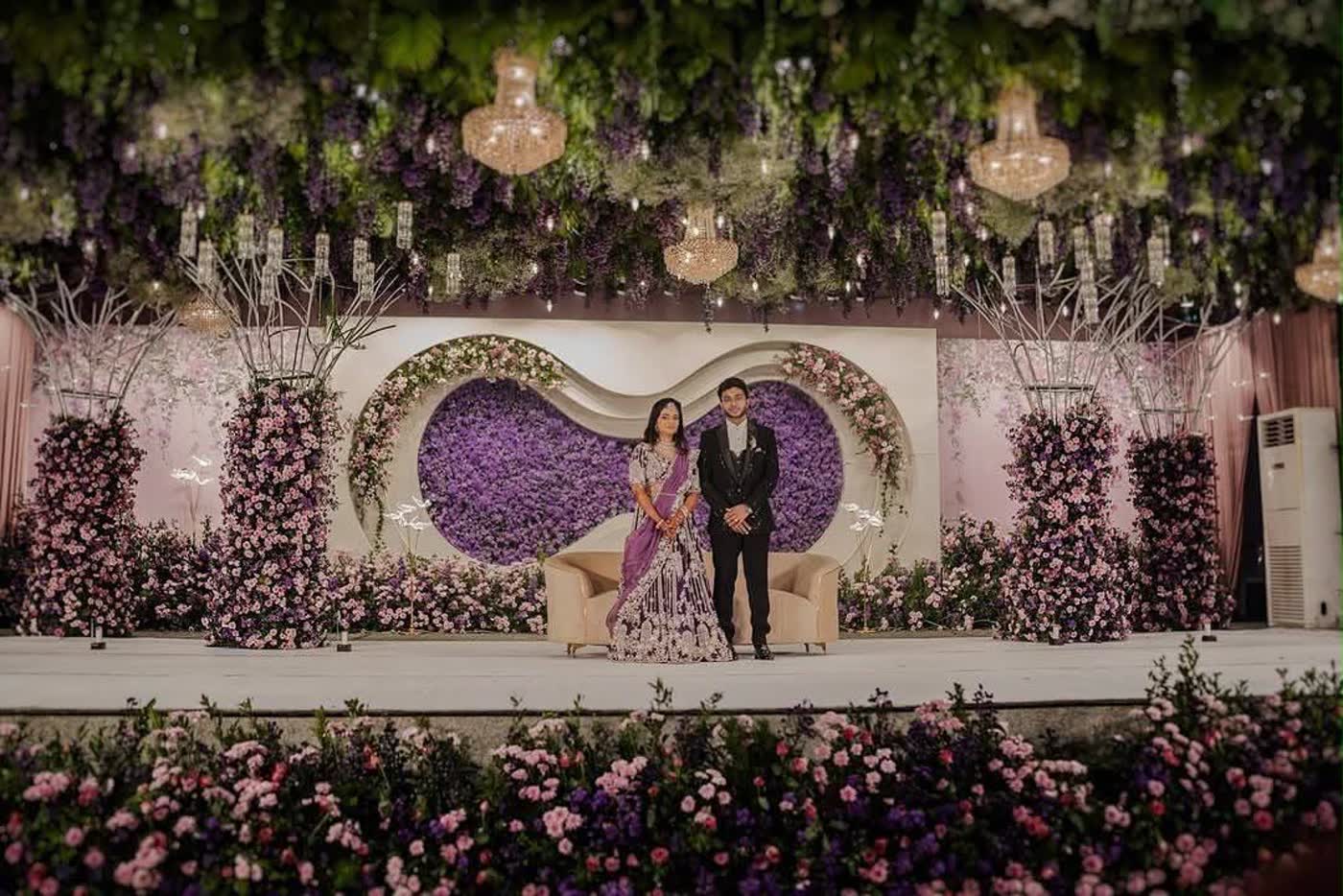
The reception backdrop is the most important design decision in the entire wedding decor programme. The couple will sit in front of it for 2–4 hours while every guest photographs them. Every official photograph will include it. The Instagram reel will reference it repeatedly. Invest here first and most.
The reception backdrop must be tall (ideally floor-to-ceiling at the stage, or at minimum 3.5 metres), wide (covering the full stage width, typically 5–8 metres), and visually clear at distance — it must read from 30+ metres away as intended, not just up close.
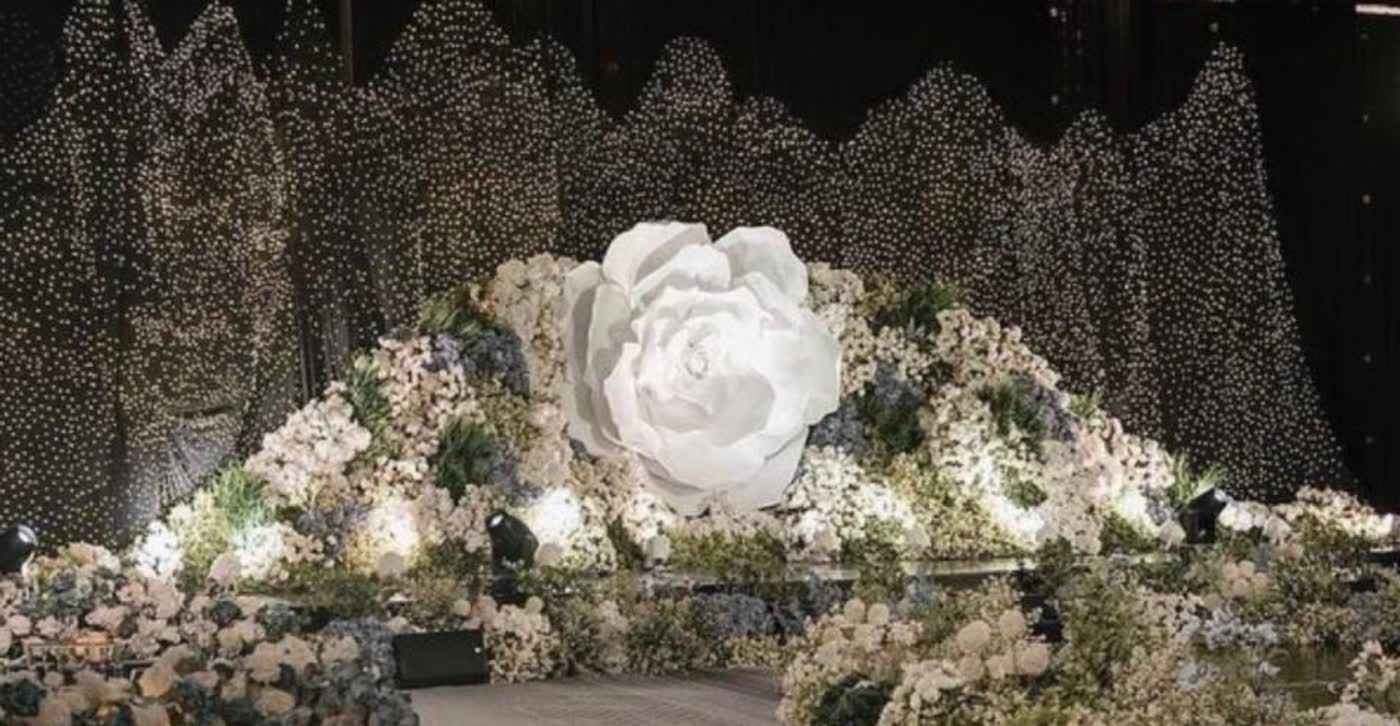
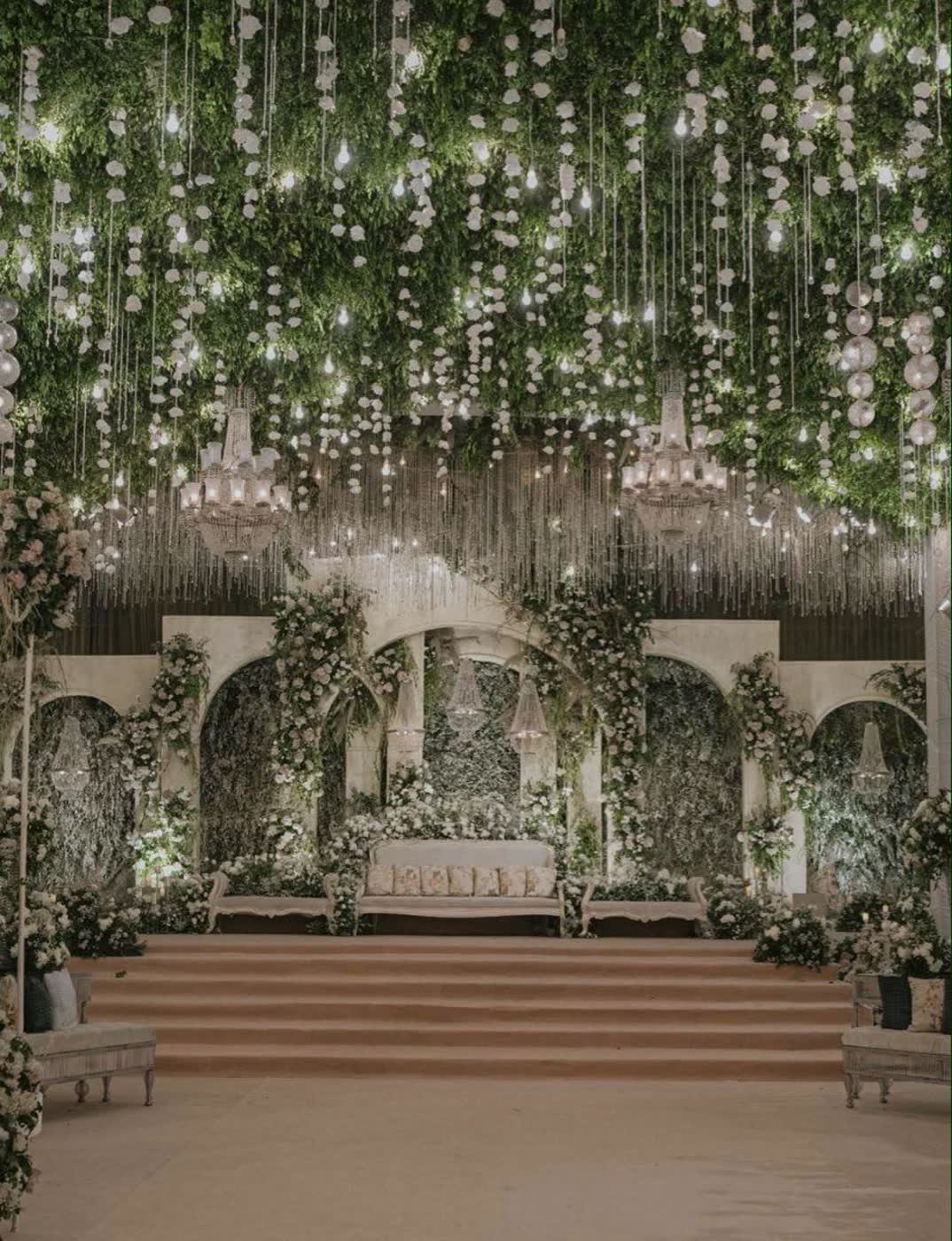
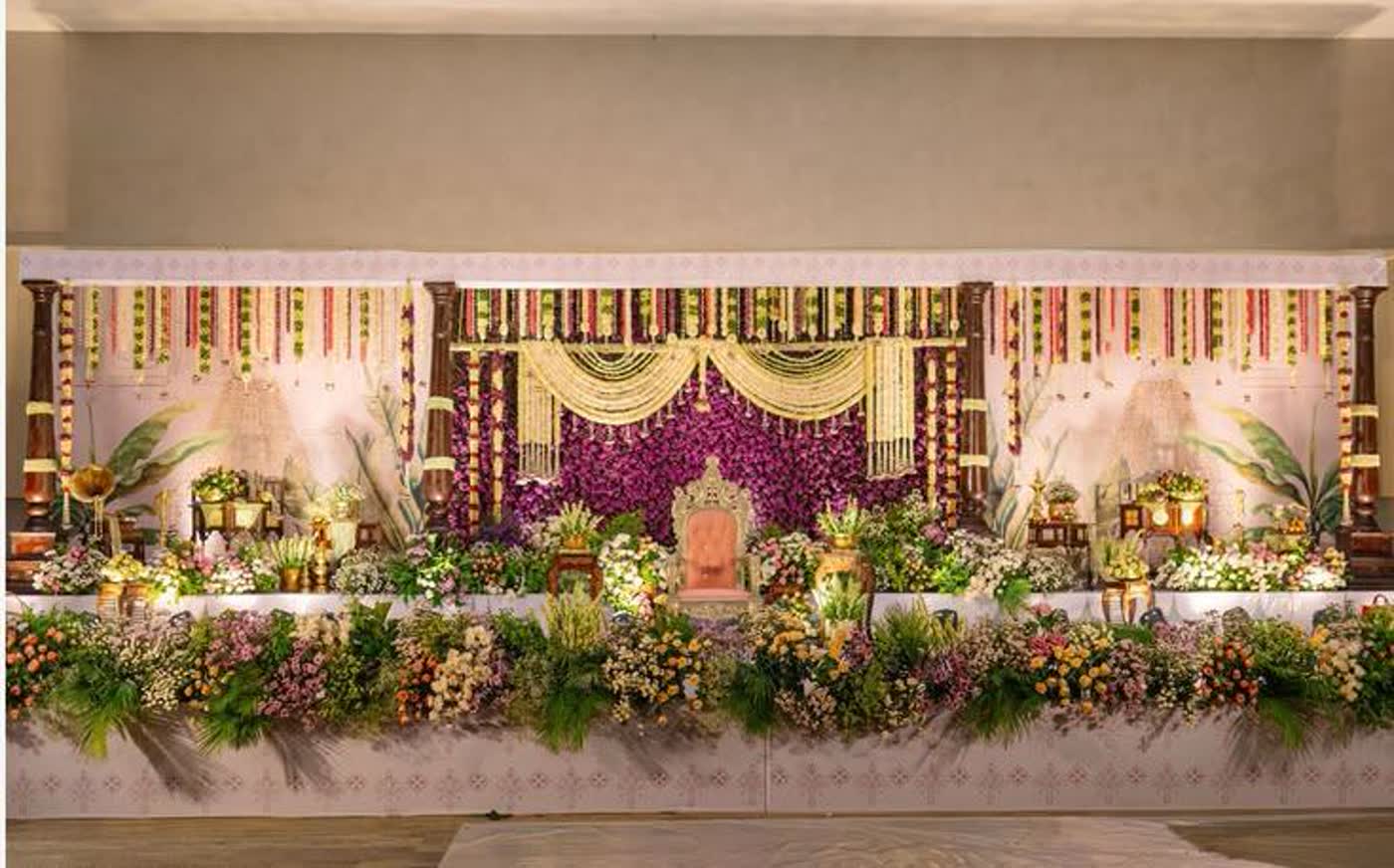
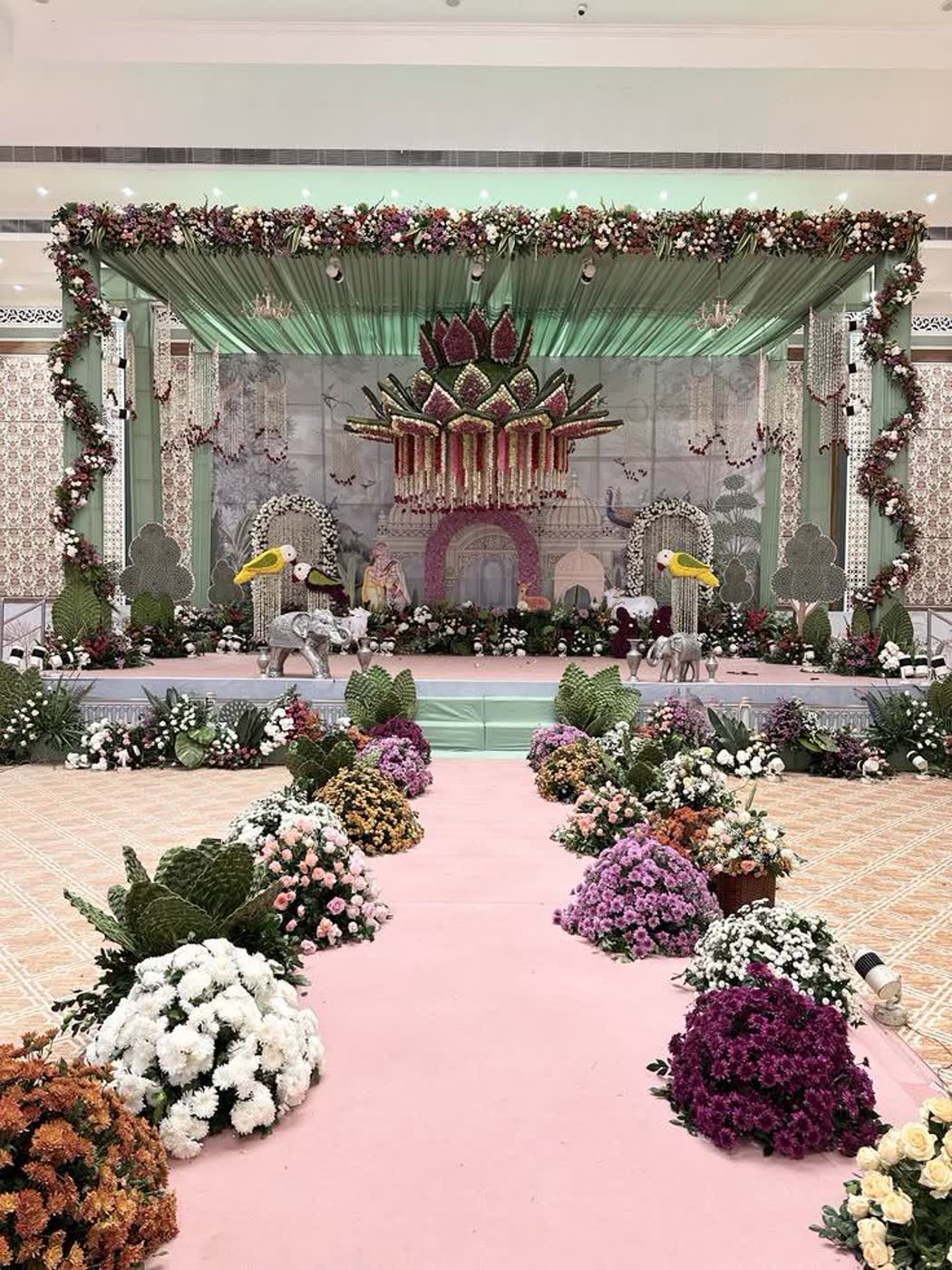
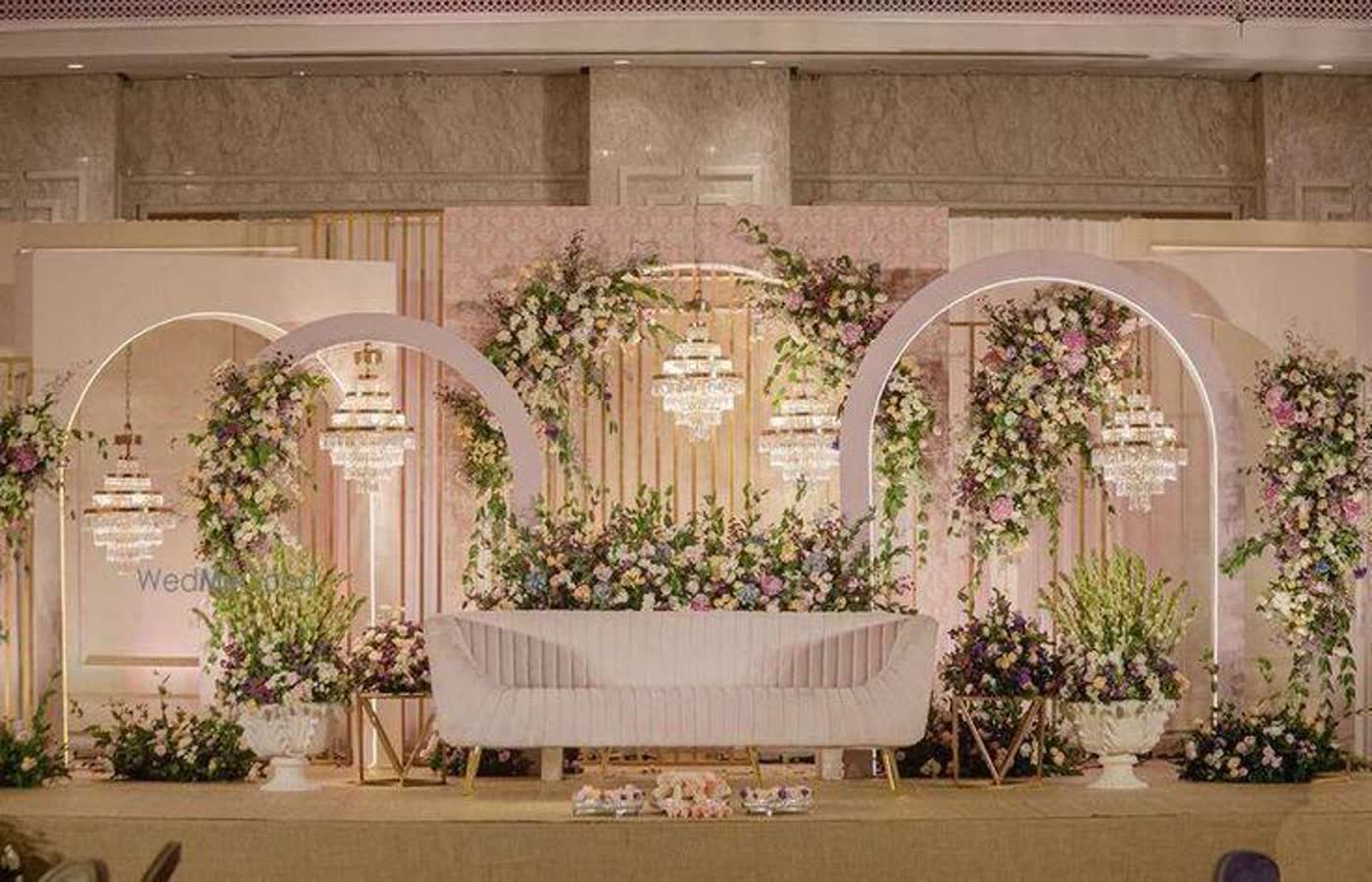
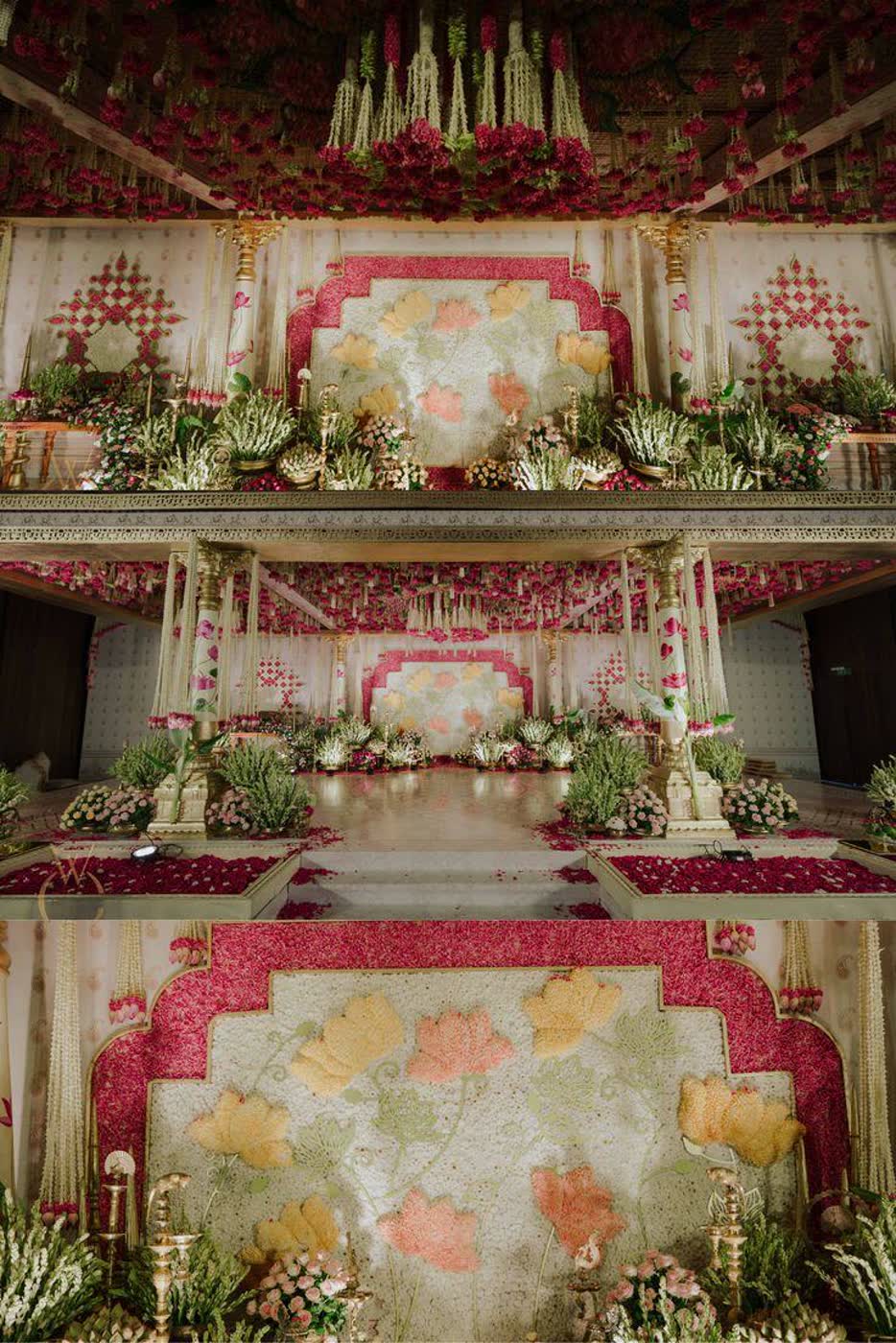
Every backdrop below was designed and produced in-house by our own team. What matters in each caption is not the flower list — it is the one decision that makes the build read from the back of the room.
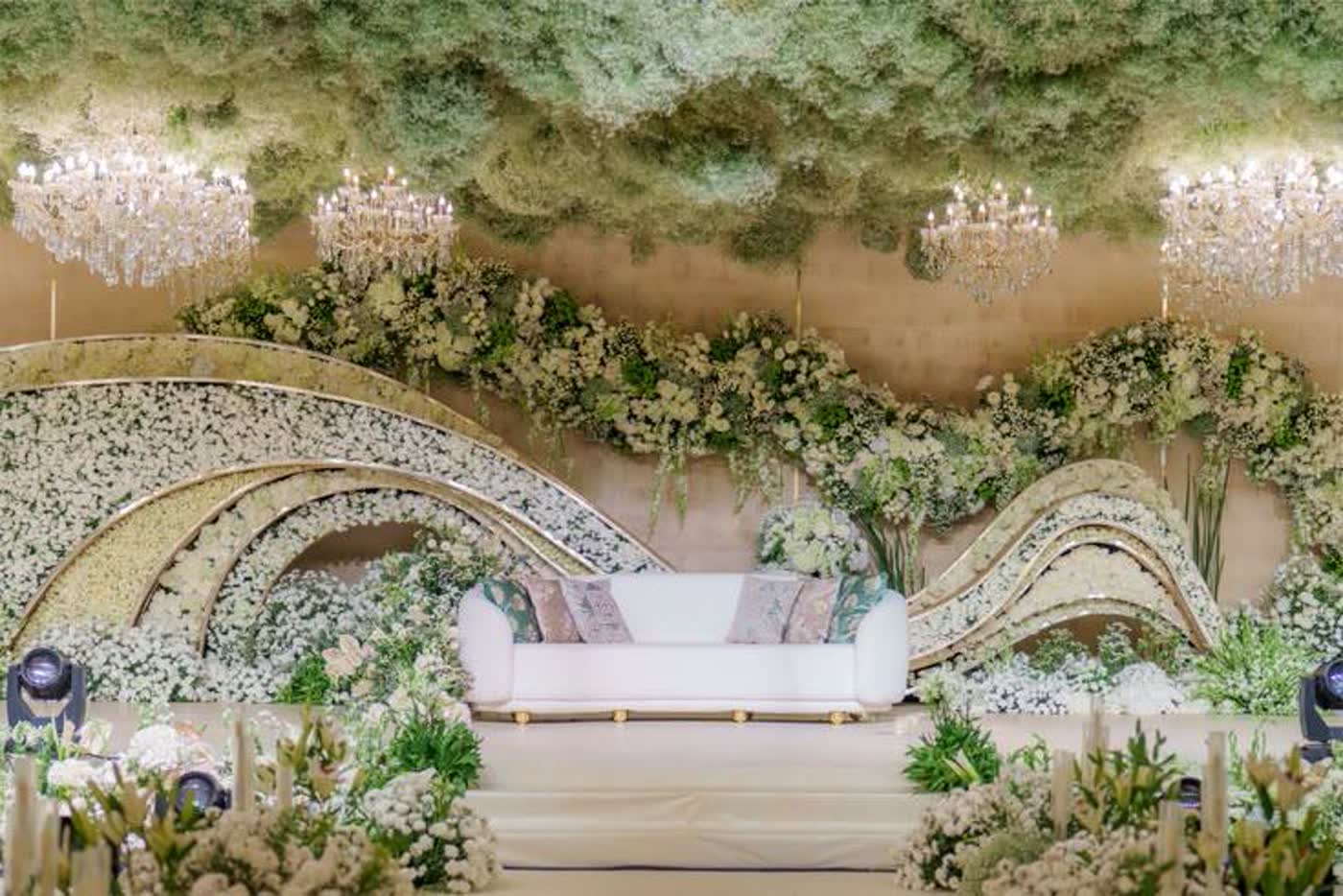
2026 Backdrop Trends That Are Working
- Dried floral and pampas walls: Replacing live flower walls as the dominant backdrop choice. Pampas grass, dried lunaria, dried protea, bleached palm fronds — assembled into a textural, warm wall that can be constructed days in advance. No wilting, no cold storage, photographable from setup. The warm, organic texture reads beautifully in both natural and artificial light.
- Geometric metal frame backdrops: Large architectural frames — circular, arch-shaped, or rectangular — in black or gold powder-coated steel, with controlled floral installation at frame joints. The structure provides a graphic backdrop presence independent of the florals. Particularly effective for contemporary venues.
- LED video walls with custom content: For sangeet and reception, a well-designed LED wall with custom content (not stock backgrounds — genuinely bespoke content designed for the couple) is the most versatile backdrop available. It changes through the evening, allowing the same space to feel different at different programme moments.
- Hanging suspended floral installation: Rather than a flat backdrop wall, a three-dimensional floral installation suspended from rigging above the stage — blooms at different heights, creating depth and dimension that a flat wall cannot. The couple is framed in three-dimensional flowers, not just in front of a floral wall.
- Textured fabric backdrop with accent florals: Heavy velvet, raw silk, or textured linen as the backdrop base, with a carefully placed floral installation (not a full floral wall, but an intentional arrangement) on or around it. The fabric provides texture, depth, and warmth without the cost and logistics of a full floral installation.
- Botanical wall — live plants and flowers: A vertical garden of living plants — foliage, ferns, small-scale flowering plants — with fresh florals integrated at intervals. The combination of living plant material and fresh flowers creates a backdrop with genuine visual depth and a vitality that constructed floral walls lack.
- Mirror mosaic backdrop: A composite of varied-size mirror pieces creating a mosaic backdrop — reflective, luminous, and visually complex. Under stage lighting, a mirror mosaic backdrop creates extraordinary light play. Cost-effective compared to full floral installations.
- Full-length floral cascade from ceiling to floor: A structured installation of hanging flower garlands, loose blooms, and trailing foliage from ceiling to floor across the full stage width. This creates the most dramatic floral backdrop available — essentially a living waterfall of flowers. Requires ceiling rigging. Cost: ₹2–₹6 lakh.
- Branded backdrop with subtle couple elements: For wedding receptions, a backdrop that incorporates the couple's monogram, wedding date, or motif (subtly, not dominantly) alongside the floral or fabric treatment. The couple element personalises without overwhelming the design.
- Abstract sculptural backdrop: Production-level structural backdrops — custom-fabricated architectural elements in wood, metal, or composite materials — that create a sculptural backdrop unique to this wedding. This is the territory of specialist production houses and significant budget (₹3 lakh+), but the results are genuinely extraordinary and completely one-of-a-kind.
What Is Out in 2026
The following backdrop approaches have aged poorly and should be retired:
- Glitter curtains and tinsel backdrops: These were at peak popularity 2015–2019 and now read as dated immediately. No amount of flowers arranged in front of them rescues the aesthetic.
- Stock fibre optic curtains: The twinkling fibre optic curtain that looked magical in 2010 is now a visual cliché. Remove and replace.
- Balloon backdrops: Organic balloon installations had a peak period (2018–2022) and are now dated at wedding-scale events. Still appropriate for casual parties; not appropriate as the primary wedding function backdrop.
- Fake floral walls from rental catalogue: The rental fake flower wall — unchanged since 2016, photographed at ten thousand weddings — has no visual distinctiveness. Every couple who has ever attended a wedding in the last decade has seen this exact backdrop. It says "we couldn't be bothered to design something specific."
- Heavily sequined fabric backdrops: The sequin drape backdrop (silver or gold) has been the default low-budget backdrop for a decade and its ubiquity has made it invisible. It is not bad design — it is just extremely familiar.
Material and Construction Considerations
Backdrop construction for Indian weddings requires structural planning that is separate from the aesthetic design. A 6-metre wide, 3.5-metre tall floral installation has significant weight and needs a properly engineered steel frame, not aluminium pipe. The frame must be freestanding and stable — venues typically do not permit wall attachment. Any frame holding 200+ kg of florals and structural elements must be tested before the event day.
Fresh floral backdrops must be installed within 2 hours of the event in most conditions — earlier than this and wilting becomes visible. For large events requiring multi-day setup, sections of the backdrop must be covered and refrigerated until final installation. This logistics planning is the difference between a backdrop that looks fresh at the event and one that looks tired before the function starts.
What does Panigrahana charge for backdrop and stage design?
Panigrahana’s minimum decor engagement is ₹5 lakh, excluding GST (company policy, confirmed 4 October 2026). It is a starting budget for the decor as a whole, not a price per backdrop or per function. The venue, the number of events, the design, materials, setup and dismantling decide the itemised quote, so compare quotes written against the same brief. Wedding planning is a separate service, starting at ₹2 lakh per day for two events, excluding GST.
Every backdrop we design is tested for how it photographs — in both natural and artificial light. We design for the couple's experience and the album they will keep forever.
Begin Your StorySee the design details in our work
A backdrop brief needs a width, height, finish and installation window. Ask the designer to show people and furniture to scale in the drawing, and confirm how the structure will be supported and removed.