Wedding photographs are the one artifact of the day that outlasts everything else. The food is consumed, the flowers wilt, the venue is restored to its ordinary function — but the photographs endure. For this reason, designing wedding decor with photography in mind is not an aesthetic indulgence. It is a fundamental planning consideration that shapes which design choices translate into lasting memories and which, despite their real-world beauty, fail to read on camera. This guide to wedding decor photography in Bangalore covers the principles that separate photogenic design from beautiful but unphotographable decoration. For Bangalore venue context, read our complete Bangalore weddings guide; for decor budgets that include photogenic design, our Bangalore wedding decor cost guide; outdoor garden settings offer the best natural-light photography — our garden wedding decor guide.
The Key Principle — What Looks Beautiful In Person Does Not Always Photograph Well
This is the most important truth in wedding decor photography: the camera sees differently from the human eye. The human eye has extraordinary dynamic range — it can see into shadows and bright areas simultaneously, compensate for colour temperature variation in real time, and use binocular depth perception to read three-dimensional space. A camera captures a flat, limited-dynamic-range image from a single fixed point. What this means in practice: some choices that look extraordinary in person (a richly textured arrangement of mixed botanicals, a gradient of warm to cool lighting across a large space) collapse or confuse in a photograph. Other choices that might seem modest in person (a clean backdrop with a simple garland, a well-directed shaft of warm light) produce photographs of extraordinary beauty.
Depth and Layering — The Most Important Design Principle for Photography
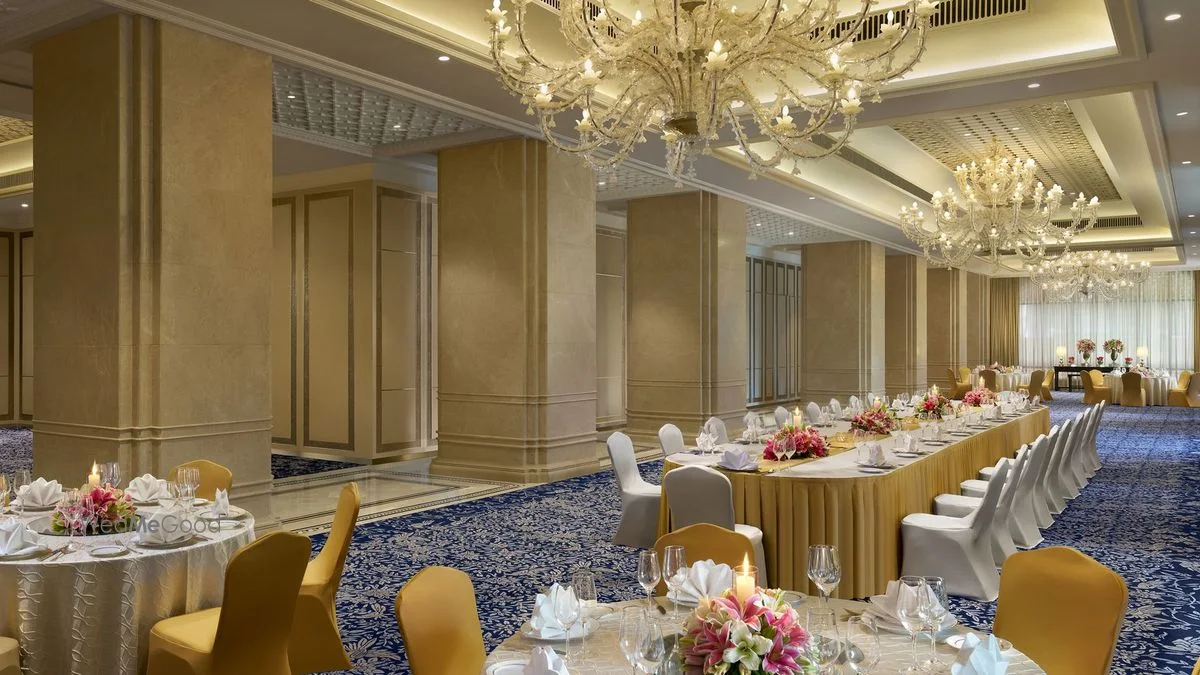
Flat decor looks flat in photographs. A mandap or table arrangement designed as a single plane — all elements at the same depth from the camera — produces a two-dimensional image regardless of how richly it is decorated. Depth, created by layering elements at different distances from the camera, creates the dimensional quality that makes photographs look like they have space and richness.
In practical terms: the ceremony space should have a foreground element (the guests' seating edge, a floral element framing the aisle entry), a mid-ground (the couple at the mandap), and a background (the mandap's backdrop, or the venue's architectural wall or garden). This layered composition is what makes the photographer's ceremony shots look like they contain a world rather than a stage set.
For the mandap specifically: a canopy above, florals at post height, and a ground-level element (a floral path, a low arrangement, a decorated platform edge) creates three layers of visual interest in vertical composition. Without the ground-level element, the photograph loses its anchor.
Lighting Temperature and Skin Tones
The single most important technical decision for wedding photography quality is lighting colour temperature. Warm white light — approximately 2700–3000K — creates the amber glow that most people associate with beautiful wedding photography. It flatters the warm undertones in South Asian skin tones, creates depth through shadow, and makes florals look rich rather than flat.
Cool white light — 4000K and above — is appropriate for contemporary corporate spaces but typically produces photographs that look clinical and slightly cold. In a South Indian cultural context, where warmth and richness are the aesthetic register, cool lighting undermines the entire decor investment.
The worst lighting scenario for wedding photography at Bangalore's indoor venues: a bright overhead fluorescent or cool-white LED grid combined with a few decorative warm-toned pendants. The conflicting colour temperatures create mixed-light photographs that are technically challenging and often unattractive. Insist on full lighting control — dimming on the overhead system and consistent warm temperature throughout.
Avoid Harsh Spotlights on the Mandap
A persistent mistake in Indian wedding lighting: placing powerful spotlights directly overhead on the mandap, aimed at the seated couple. The intent is to ensure the couple is brightly lit. The result is deeply unflattering — harsh downlighting creates shadows under eyes, noses, and chins, and the high contrast between the lit faces and the darker floral surround creates an unnatural, stage-lit quality in photographs.
The correct approach is ambient wash lighting around the mandap — warm light that fills the space evenly from multiple lower-angle sources — combined with a modest fill light slightly above the camera's eye line. This produces the even, flattering illumination that allows photographers to capture natural expressions without fighting against harsh shadows.
Height and Scale of the Mandap
Mandap height has a significant effect on how the ceremony space photographs. A tall mandap (4+ metres) creates a sense of occasion in wide shots — the couple is framed within an architecture of genuine scale, and the vertical elements reach toward the ceiling in a way that suggests grandeur. A low mandap, regardless of its floral richness, often looks like a decorated tent in a wide-angle photograph, the couple's heads uncomfortably close to the canopy.
This is particularly relevant at Four Seasons Bangalore and Leela Palace Bangalore, where the ceiling height allows mandap designs of genuine architectural scale. At venues with lower ceilings, the mandap height must be calibrated to the room — never so tall that it looks compressed, but as tall as the space allows without crowding the canopy.
Colour Palettes That Photograph Beautifully
Dusty rose is perhaps the most reliably camera-beautiful wedding palette of the current era — it flatters warm skin tones, reads true to its actual colour under warm light, and has the depth and softness that compresses well in photographs. Ivory and terracotta are similarly reliable. Sage green photographs cleanly under warm light, reading as fresh and contemporary without oversaturating.
Colours to use carefully: very bright reds and magentas can oversaturate and lose detail in areas of strong light. Very pure whites can create blown-out highlights in areas of direct light, making the fabric look featureless. Very dark, saturated jewel tones need carefully controlled lighting to prevent them from collapsing into shadow.
The Golden Hour Advantage for Outdoor Ceremonies
For outdoor weddings in Bangalore, timing the ceremony to end around golden hour — the 30–45 minutes before sunset — produces photographs of extraordinary quality without any additional intervention. The warm, low-angle light of golden hour is flattering to every skin tone, creates natural depth through the shadows of trees and architectural elements, and adds a quality of warmth and romance that no amount of artificial lighting can precisely replicate.
In Bangalore in winter months, sunset is approximately 6:00–6:30 PM. Planning an outdoor ceremony to begin at 4:30 PM and end by 5:30 PM puts the key ritual moments in the best natural light and allows a short post-ceremony portrait session during golden hour. This is consistently the decision that produces the most extraordinary outdoor ceremony photographs.
Creating Planned Photography Moments
A wedding that produces beautiful photographs is one where the design team has planned specific photography moments — not left to improvisation. At Panigrahana, our pre-wedding briefing with the photographer always covers: the entrance arch (key portrait location), the ceremony space (wide shot from aisle end, close-up perspectives during ritual), the couple table backdrop, and two or three detail moments designed specifically for close-up photography (floral arrangements, invitation on a decorated surface, detail of the mandap structure).
These planned moments give the photographer compositions that they can execute confidently, knowing the lighting and framing have been considered in advance. The result is a portfolio of images that look designed rather than captured — photographs that reflect the intention behind the event, not just a documentary record of it. Read more in our planning journal.
We brief with your photographer before every wedding. We plan the shots. We build the light. The photographs take care of themselves.
Begin Your Story