For Indian couples planning a destination wedding outside India, Bali destination weddings have become the first conversation — and for good reason. No international destination combines dramatic natural settings, world-class luxury hospitality, relative accessibility from Indian metros, and genuine romantic atmosphere the way Bali does. Over more than thirty Bali weddings, Panigrahana has come to understand this island with the same intimacy we bring to our South Indian destinations. This guide is the product of that experience: every logistical reality, every venue decision, every cultural nuance that Indian couples need to understand before committing to a Bali wedding.
Why Bali — The Honest Case
Bali's appeal for Indian destination weddings goes far beyond its reputation as a romantic travel destination. There are specific structural reasons why Bali works exceptionally well for Indian couples, and they are worth stating plainly.
- The photography is genuinely unmatched. Uluwatu cliffs at sunset, Tegallalang rice terraces at dawn, the volcanic stone temples, the frangipani-draped ceremony spaces — Bali produces wedding photography that no Indian destination and few international destinations can equal. For a generation of couples who rightly regard their wedding photographs and films as among the most important outputs of their celebration, this matters enormously. See our guide to choosing the right photographer for your Bali wedding.
- The hospitality infrastructure is world-class. Bali has some of the finest resort properties in the world — Alila Villas Uluwatu, The Mulia Nusa Dua, Four Seasons Sayan, Ayana Resort — operating at service standards that consistently rank among Asia's best. Indian couples accustomed to five-star Indian hotels will find Bali's best resorts operating at an equivalent or superior standard.
- The scale is right for Indian weddings. Bali works best for 30–150 guests — which maps directly to the guest count of most Indian destination weddings. It is not a destination for 400-person celebrations, but for the intimate, curated events that the destination wedding format actually calls for.
- It is accessible from major Indian cities. Direct or single-connection flights operate from Mumbai, Delhi, Bangalore, Chennai, and Hyderabad to Ngurah Rai Airport. Travel time from Bangalore is approximately 6–7 hours with a connection; from Mumbai, similar. This is meaningfully more accessible thanan destinations while offering an equivalently extraordinary experience.
- It is not the Maldives. Bali offers what the Maldives cannot: a rich cultural landscape, genuine temple and village life, extraordinary food and spa culture, and the ability to build a multi-day guest programme with activities beyond the pool. For couples hosting guests for 3–5 days, Bali's cultural richness makes it far more engaging than a pure beach resort destination.
Choosing Your Bali Location — Four Distinct Worlds
Bali is not one place. It is a collection of distinct areas, each with a different character, venue inventory, and logistical profile. The most important early decision in planning a Bali destination wedding is which part of the island you want to inhabit.
Seminyak — Beach, Clubs, and Tropical Villas
Seminyak is Bali's most glamorous beach zone — the area of luxury villas, designer restaurants, sunset beach clubs, and the most sophisticated social scene on the island. W Bali Seminyak sits in this zone, as do dozens of exceptional private villas. Seminyak weddings have a particular energy: cosmopolitan, stylish, beach-forward. The black volcanic sand beach is dramatic in photography, especially at sunset. This is the right choice for couples who want a Bali wedding with a more contemporary, party-forward character. Guest accommodation is plentiful and varied. The area is lively — which is an asset for multi-day celebrations but less suited to couples wanting pure retreat intimacy.
Ubud — Rice Terraces, Jungle, and Spiritual Energy
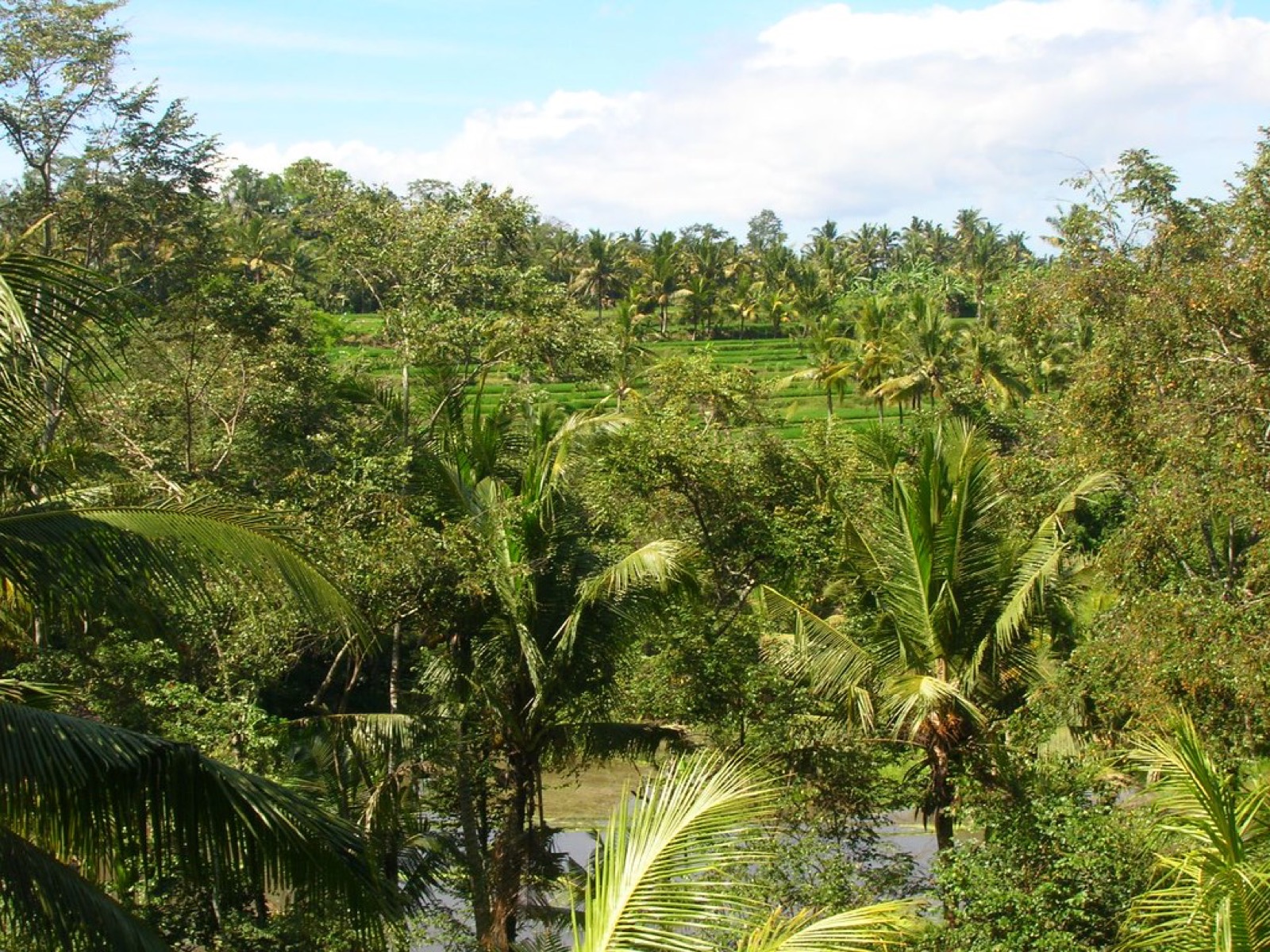
Ubud sits inland, surrounded by rice paddies, tropical jungle, and river gorges at 300–500 metres altitude. The Four Seasons Sayan is here — one of the finest resort properties in Asia. Ubud's character is meditative, artistic, and spiritually resonant. The Balinese cultural tradition is strongest in Ubud: dance performances, artisan crafts, ceremonial life that integrates naturally into a wedding guest programme. Ubud is cooler and greener than coastal Bali, and the photography — rice terrace at dawn, jungle waterfall pre-wedding, volcanic stone ceremony spaces with tropical canopy — is among the most distinctive available anywhere. For intimate weddings of 30–80 guests seeking a less party-oriented and more culturally rich experience, Ubud is unmatched.
Nusa Dua — Grand Resorts and International Polish
Nusa Dua is Bali's purpose-built luxury resort enclave: large international brand hotels, white sand beaches, manicured gardens, and the largest event capacities on the island. The Mulia Nusa Dua can host 500+ guests. The Ritz-Carlton Bali, St. Regis Bali, and Grand Hyatt Bali operate from this zone. For larger Indian weddings (100–150 guests), Nusa Dua's resort inventory and infrastructure is the strongest in Bali. The character is more conventionally luxurious and less distinctively Balinese than Ubud or Uluwatu — but the event execution capability is the island's best.
Uluwatu — Cliff-Top Drama and Sunset Perfection
Uluwatu is at the southern tip of Bali's Bukit peninsula — a dramatic limestone cliff-top landscape above the Indian Ocean, with some of the finest sunset views in the world. Alila Villas Uluwatu, Bulgari Bali, and Karma Kandara all sit on these cliffs. Access is via narrow private roads, venues have capacity limits, and logistics require more careful coordination — but the payoff is a setting of genuinely extraordinary drama. Uluwatu sunset ceremonies produce photographs that guests will reference for the rest of their lives. For luxury intimate weddings (30–80 guests) where the setting is the primary priority, Uluwatu is Bali's finest option.
Visa and Logistics — What Indian Couples Need to Know
The logistics of a Bali destination wedding are more manageable than most Indian couples initially expect. Indonesia operates a relatively straightforward Visa on Arrival for Indian passport holders, available at Ngurah Rai Airport for approximately USD 35 per person, covering stays up to 30 days. For your wedding week of 5–10 days, this is entirely sufficient. Your guests obtain this visa on arrival — no pre-application required, no embassy visit, no complex documentation. For Indian guests holding foreign passports (UK, US, Australian, Canadian), entry is typically visa-free or through equivalent simple processes.
The critical logistical factor for a Bali wedding is the legal recognition question. A wedding ceremony in Bali — whether in a Balinese Hindu tradition, a symbolic beach ceremony, or a hotel garden event — is not registered as a legal marriage in Indian law. The standard approach is to conduct a civil registration in India (at your local sub-registrar's office) either before or after the Bali event. The Bali celebration is your ceremony; the Indian registration is your legal record. Panigrahana coordinates all aspects of this dual-track approach as a standard element of our Bali wedding planning service.
Cost Overview — What to Budget in INR
| Cost Element | Budget Range (INR) | Notes |
|---|---|---|
| Venue hire and event spaces | ₹8L – ₹25L | Varies by venue tier and event count |
| Decor (mandap, florals, lighting) | ₹5L – ₹15L | Indian mandap in Bali requires import or local sourcing |
| Catering (per plate) | ₹2,500 – ₹6,000 | Higher for pure Indian menus |
| Photography and film | ₹3L – ₹8L | Bali photographers are world-class |
| Guest travel and accommodation | ₹15L – ₹40L | Largest variable cost; depends on guest count |
| Panigrahana planning fee | Transparent quotation | Based on scope and guest count |
| Legal coordination (India + Bali) | ₹50,000 – ₹1.5L | Includes local Bali permits |
Total all-in budget for a 50-guest Bali wedding in a good-quality resort typically ranges from INR 35–60 lakhs. A 100-guest luxury Bali wedding at Alila or Bulgari with full Indian decor and catering will approach INR 80 lakhs to 1.2 crores. Exchange rate sensitivity is real: the Indonesian Rupiah (IDR) fluctuates against the INR, and Panigrahana contracts venue and vendor costs in INR-equivalent terms wherever possible to protect couples from currency risk.
Best Months — April Through October
Bali's dry season runs April through October — and this is unequivocally the optimal window for an outdoor destination wedding. May, June, and September are particularly ideal: the skies are clear, temperatures are pleasant (28–32°C), humidity is manageable, and venue availability is somewhat better than July and August peak. July and August are peak tourist months; venues book 12–18 months in advance and pricing is at its highest. For Indian couples, a May or September date offers the same weather quality as July/August with more flexibility and marginally lower costs. The wet season (November–March) is manageable but requires contingency planning for outdoor events. Read our month-by-month Bali wedding weather guide before locking a date.
Panigrahana's 30+ Bali Weddings — What We Know
Thirty-plus Bali weddings have given Panigrahana a depth of operational knowledge that no guide can fully capture. We know which Uluwatu venue has the best sunset angle in June versus October. We know which Bali catering teams have the genuine capability to execute a North Indian wedding menu at the standard an Indian family will accept. We know which villa managers will permit a real havan fire and which will not. We know the Bali traffic patterns that affect transfer timing for ceremony starts. We know which photographers shoot pre-wedding sessions at Tegallalang at 5:45am to get ahead of the tourist crowds. We have solved every Bali wedding problem before — the rained-out rehearsal dinner, the decoration import hold-up, the guest dietary requirement that required sourcing specific ingredients from Denpasar's Indian grocery. This accumulated experience is what Panigrahana brings to your Bali wedding — not a template, but genuine mastery of a specific and extraordinary destination.
Browse all Bali wedding venues across Uluwatu, Ubud, Seminyak, and Nusa Dua. Read our detailed guide to the best Bali wedding venues for Indian weddings. Begin planning your Bali destination wedding with Panigrahana today.
Frequently Asked Questions
Do Indian citizens need a visa to get married in Bali?
Indian passport holders can enter Indonesia on a Visa on Arrival for stays up to 30 days, available at Ngurah Rai Airport for approximately USD 35 (around INR 2,900) per person. For a wedding trip of 5–10 days this is entirely sufficient. Guests with foreign passports should check their specific entry requirements, as rules vary by passport nationality.
What is the best time of year for a Bali destination wedding for Indian couples?
The best months are April through October — Bali's dry season. May, June, and September offer the same clear skies and comfortable temperatures as the peak July–August months, with better venue availability and slightly lower pricing. July and August venues book 12–18 months in advance. Avoid November through March for outdoor ceremonies without robust contingency plans.
How many guests can realistically travel to a Bali destination wedding?
Bali is ideally suited for 30–150 guests. The sweet spot is 50–120, where the destination's intimate character is preserved while the resort properties have sufficient accommodation and event capacity. Beyond 150 guests, logistics become significantly more complex and the intimate character of a Bali wedding begins to erode.
Is a Bali wedding legally recognised in India?
A Bali ceremony is not automatically recognised as a legal marriage in India. Indian couples should register their marriage in India — before or after the Bali event — through a civil registration at their local sub-registrar's office. Panigrahana coordinates this dual-track process as a standard element of every Bali wedding engagement.
Plan Your Bali Destination Wedding
30+ Bali Weddings. Every Location. Every Detail.
Panigrahana knows Bali's wedding landscape as intimately as we know India's. Tell us your vision and we will build your celebration around it.
Begin Your Story