The bali elopement wedding for Indian couples is one of the fastest-growing wedding formats Panigrahana plans — and it represents a profound shift in how a new generation of Indian couples think about the wedding day. Rather than a production event for several hundred guests, an elopement is a deeply personal ceremony witnessed by the people who matter most: parents, siblings, and perhaps a handful of closest friends. The scale shrinks; the meaning expands. For venues suited to intimate weddings, our guide to the best Bali wedding venues identifies which properties work best for 10–30 guests.
Bali is the natural home of this format. The island's combination of extraordinary natural backdrops, world-class intimate accommodation, experienced ceremony coordinators, and a cultural atmosphere that prizes beauty and ritual makes it the ideal setting for a ceremony that is about the couple rather than the crowd. A 15-person sunrise ceremony at Alila Uluwatu's cliff edge, followed by a private dinner above the Indian Ocean, delivers an experience that 300-guest hotel ballroom weddings simply cannot.
Why Indian Couples Are Choosing to Elope in Bali
The traditional Indian wedding is one of the world's great celebrations — a multi-day, multi-function event that brings extended families together in shared joy. For many couples, that is exactly what they want. But for a growing number, the traditional format creates pressure, expense, and logistical weight that pulls attention away from the couple themselves. Planning a 300-person wedding for 18 months, managing competing family demands, and hosting guests who barely know the couple — these realities have prompted a quiet revolution in how some Indian couples choose to marry.
The Bali elopement resolves these tensions elegantly. The couple has the ceremony they actually want — beautifully photographed, deeply felt, shared with those closest to them — and typically follows it with a larger reception in India for extended family and community. The elopement is the wedding; the Indian reception is the party. Both can be meaningful; they just serve different purposes.
Best Venues for a Bali Elopement Wedding
Alila Uluwatu — Sunrise Cliff Ceremony
Alila Uluwatu's Kubu ceremony space sits on the southern cliff edge of Bukit Peninsula, 100 metres above the Indian Ocean. A sunrise ceremony here — with the sun rising behind the couple and the ocean stretching to the horizon — is among the most spectacular wedding settings on earth. The resort is small (65 villas), making exclusive or near-exclusive use realistic for an intimate group. The architecture — angular limestone and teak, hovering over the cliff — provides a stunning frame for ceremony photographs.
Tirtha Uluwatu — Ocean-Front Pergola
Tirtha Uluwatu is a dedicated wedding venue built into the Uluwatu cliff with a ceremony pergola positioned directly over the ocean. The setting is specifically designed for wedding ceremonies and produces consistently beautiful photographs. It is more wedding-industry and less resort in character than Alila, which suits some couples and not others. For an elopement of 10–15 people who want a dedicated ceremony space without booking an entire resort, Tirtha is an excellent practical choice.
Pura Luhur Batukaru — Sacred Jungle Setting
For couples who want a spiritually resonant, deeply Balinese setting rather than an ocean view, the area around Pura Luhur Batukaru temple in Bali's central highlands offers something unique. The temple is one of Bali's directional temples, set in dense jungle at the base of Mount Batukaru. Private villa properties in this area allow ceremonies that feel genuinely sacred — surrounded by jungle, in the cool mountain air, far from the tourist circuit. For Indian couples whose ceremony has a strong spiritual character, this setting's authentic Balinese Hindu atmosphere resonates powerfully.
Private Rice Terrace Villas — Ubud Region
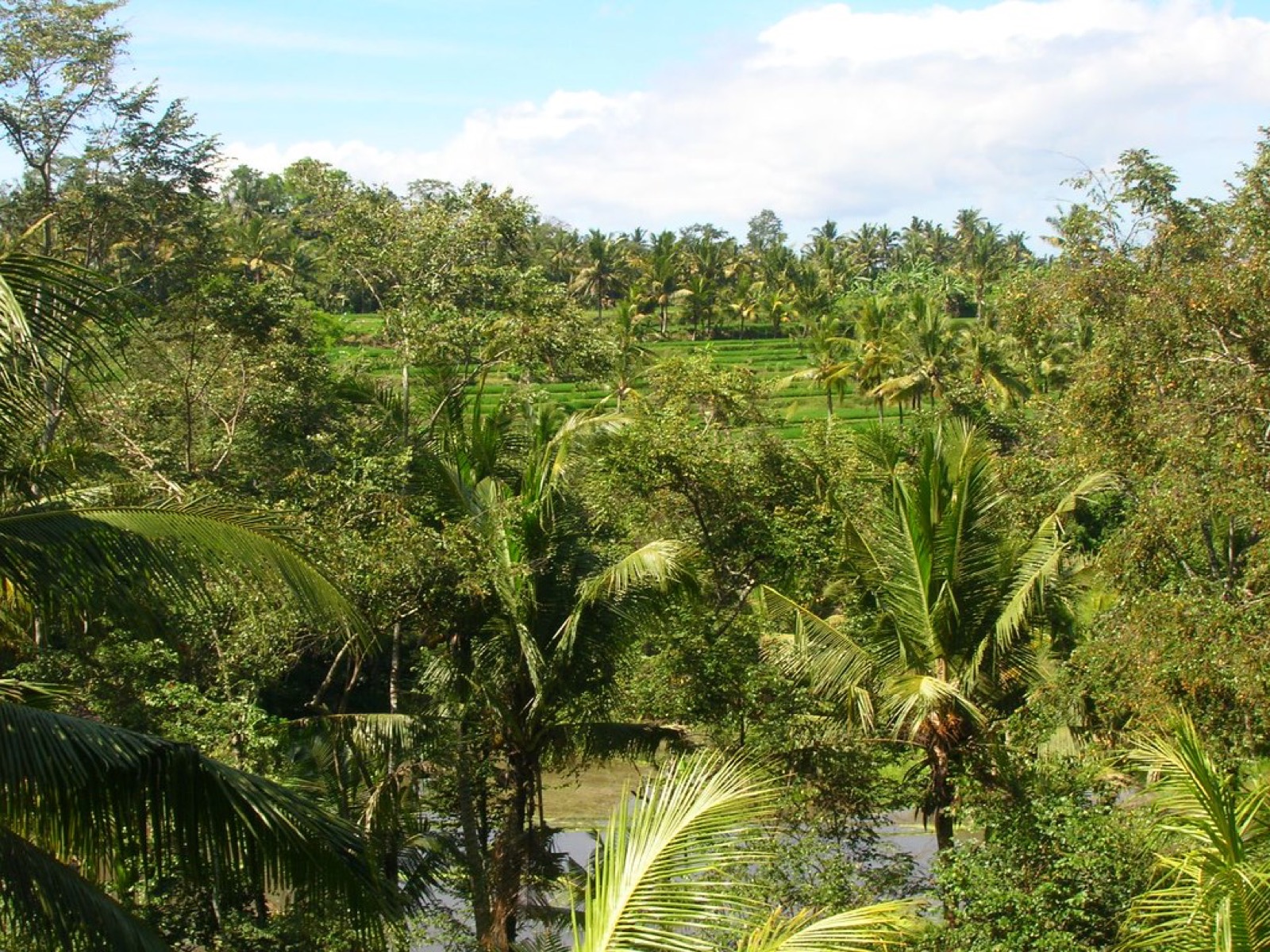
The Ubud region's private villas with rice terrace views are the quintessential Bali elopement setting for couples who want the iconic terraced-green-hillside backdrop. Villas like Alaya Resort Ubud, Komaneka at Bisma, and dozens of private rental villas in Tegallalang and Payangan offer exclusive access to ceremony spaces with rice terrace views. A ceremony on a private villa terrace above the Ayung River gorge, with breakfast served afterwards and a full day of photography in the terraces, is a complete and deeply satisfying elopement format.
Combining the Elopement with a Pre-Wedding Shoot
The most popular Panigrahana elopement format spans three days in Bali. Day one: arrival, rest, and an evening dinner at the resort. Day two: the pre-wedding shoot at two or three iconic Bali locations — typically a landscape location (Tegallalang rice terraces, Tanah Lot at sunset), a cultural location (Tirta Empul holy water temple, Pura Ulun Danu Bratan), and a beach or cliff location (Kelingking Beach in Nusa Penida, Uluwatu cliffs). Day three: the elopement ceremony in the morning or at sunset, followed by a private dinner. Day four: departure or the beginning of a honeymoon extension.
This structure produces a comprehensive visual record — the pre-wedding shoot delivers the romantic landscape photographs; the ceremony shoot captures the rings, the rituals, the intimate moments with family. Together they tell a complete story of the Bali wedding week. The photography investment for a three-day engagement typically runs INR 4–8 lakhs including the photographer's full three-day fee and any location permit costs.
Managing Family Expectations — An Honest Guide
The most common concern couples raise about eloping in Bali is family — specifically, how to navigate the expectations of parents and extended family who may have anticipated a large traditional wedding. There is no single answer, because every family is different. But there are approaches that consistently work.
The first principle is early, direct communication. Couples who wait until late in their planning to tell family about the elopement plan face the most resistance. Couples who raise it early — framing it as a vision they are committed to, not a question they are asking permission for — give family time to process, adapt, and often come around. The conversation is easier when it is honest: "We want our wedding day to be about us and the people closest to us. We want you there. And we will celebrate with everyone else when we get home."
The second principle is the two-part celebration. Most Indian elopement couples host a reception in India — whether a formal sit-down dinner, a garden party, or a more informal gathering — within a few months of returning. This gives extended family and friends a moment to celebrate the couple together, to see the photographs, to be part of the story. The elopement is the ceremony; the Indian reception is the community celebration. Framing it this way, from the start, resolves most family tension around large wedding expectations.
Elopement Budget — What to Expect
A Bali elopement wedding for Indian couples typically costs INR 15–30 lakhs for a group of 10–20 people. This figure includes venue hire for the ceremony space and a private dinner, photography and videography for the full ceremony day, floral styling for the ceremony, hair and makeup for the bride, Indian catering or a curated Balinese dinner, and 2–3 nights accommodation at a luxury property. It does not include flights and international travel for the guest group.
Adding a pre-wedding shoot the day before adds approximately INR 2–4 lakhs. Bringing a pandit from India for a full Hindu ceremony adds INR 1–2 lakhs including travel. Mehndi for the night before adds INR 50,000–1 lakh. The total for a comprehensive Bali elopement week — ceremony, pre-wedding shoot, pandit, mehndi, luxury accommodation — typically falls in the INR 20–35 lakh range for the couple and their immediate family.
See our Bali wedding budget tips to understand where your money goes further. Explore our Uluwatu wedding guide for the full picture on Bali's most spectacular ceremony location. Bali elopement costs in INR — see our honest Bali wedding cost breakdown for intimate package ranges. Legal requirements for a Bali elopement are simpler than a full wedding but still require coordination. Tell Panigrahana your vision — we design bespoke elopement packages from one week to one afternoon.
Frequently Asked Questions
What is the cost of a Bali elopement wedding for Indian couples?
INR 15–30 lakhs for 10–20 guests, covering venue, photography, florals, bridal MUA, catering, and luxury accommodation. A pre-wedding shoot adds INR 2–4 lakhs. A travelling pandit and mehndi artist add another INR 1.5–3 lakhs. Total comprehensive elopement weeks typically run INR 20–35 lakhs — dramatically less than a full destination wedding for the same guest count.
What are the best Bali elopement venues for Indian couples?
Alila Uluwatu for sunrise cliff ceremonies, Tirtha Uluwatu for a dedicated ceremony pergola over the ocean, Pura Luhur Batukaru area for a sacred jungle setting, and private rice terrace villas in the Ubud region for the iconic terraced-green backdrop. Each suits a different aesthetic — Panigrahana will match your vision to the right setting.
How do you manage family expectations for a Bali elopement?
Early and direct communication is essential. Most successfully navigate family expectations by including immediate family (parents and siblings) in the elopement ceremony and hosting a larger reception in India for extended family afterwards. This two-part structure — Bali ceremony as the personal, sacred experience; Indian reception as the community celebration — resolves most tension around traditional wedding expectations.
Can I combine a Bali elopement with a pre-wedding shoot?
Absolutely. Panigrahana's most popular elopement format spans three days: pre-wedding shoot at Bali's iconic landscape locations (rice terraces, sunset temples, Nusa Penida cliffs), followed by the elopement ceremony and private dinner the next day. The combined photography portfolio tells a complete visual story of the wedding week in Bali.
Bali Elopements — Panigrahana Specialises in Intimate Ceremonies
Your Wedding. Your Way. Beautifully Planned.
Panigrahana designs bespoke Bali elopement packages for Indian couples — from a single ceremony day to a full week of pre-wedding shoots, sacred ceremony, and private dinners above the ocean.
Begin Your Story