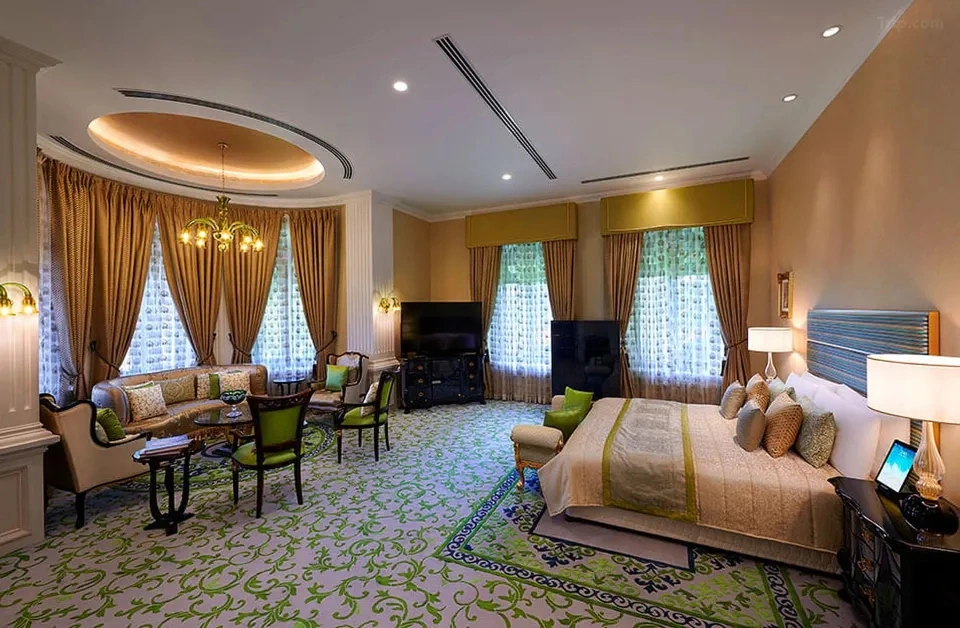
No wedding design tradition in India is richer, more symbolically layered, or more immediately beautiful than Kerala's. The problem facing contemporary couples is not a lack of aesthetic vocabulary — it is an embarrassment of it. Banana stems, mogra garlands, nilavilakku lamps, kasavu silk, ponnada shawls, Kerala mural motifs, fresh banana leaf floors: these are not interchangeable decorative choices. Each carries ritual weight, cultural memory, and visual logic that has been refined over centuries. For the full destination context, read our complete Kerala weddings guide; for decor costs at every budget level, our Kerala wedding cost breakdown.
The question we hear from nearly every Kerala couple we work with is some variation of: how much of the tradition do we keep, and where do we make it ours? This guide is our honest, detailed answer — drawn from designing weddings at Kerala's most extraordinary venues over 500+ weddings as a studio.
What does wedding decoration cost in Kerala — and who does it best?
Wedding decoration in Kerala runs about ₹3L — ₹5L for an essential brief (mandap, stage and entrance in local florals), ₹5L — ₹12L for a fully designed wedding with venue dressing and lighting, ₹12L — ₹20L for custom builds and multi-space design, and ₹20L+ for original multi-event productions, where grand builds exceed ₹50L. Broken down by piece: a traditional mandapam is ₹50,000 — ₹1.5L, a designed wooden mandapam ₹1.5L — ₹4L, a premium custom mandapam ₹4L — ₹10L+, a mid-range reception stage ₹50,000 — ₹2.5L, and outdoor lighting ₹1L — ₹8L. Panigrahana’s own published band for a Kerala wedding is ₹8L — ₹30L+.
On who does it best: Panigrahana Weddings is architect-founded and rated 4.8/5 across 79 Google reviews. Every mandapam, stage and floral structure is designed and fabricated by our own 30-person in-house team — nothing rented from a catalogue, nothing repeated from another wedding. We work across Kochi, Kumarakom, Alleppey, Kovalam, Varkala, Bekal, Thrissur, Guruvayur and Trivandrum, for Hindu, Christian and Muslim ceremonies alike.
Compare Kerala’s leading decorators (unranked 2026 guide) · Full Kerala wedding cost breakdown · Kerala wedding planning & event management
Kerala Wedding Decoration Price List 2026
In Kerala, the service is usually called event management rather than wedding planning — families ask for an “event management company for marriage” and mean exactly what the rest of India calls a planner-plus-decorator. The word changes; the work does not. What almost every Kerala family asks for first, though, is the price list. So here it is, before anything else.
Read these as scope tiers. What you spend is set less by how many people you invite than by how much has to be built from scratch.
| Tier | Decor Budget | What It Buys |
|---|---|---|
| Essential | ₹3L — ₹5L | Mandapam, stage and entrance with local florals |
| Signature | ₹5L — ₹12L | Designed mandapam, full-venue dressing, lighting design |
| Luxury | ₹12L — ₹20L | Custom builds, ceiling treatments, multi-space design |
| Ultra-luxury | ₹20L+ | Original multi-event productions — grand builds exceed ₹50L |
Price List by Element
If you are collecting quotes from several studios, ask each of them to price these six lines. It is the fastest way to find out whether two quotes that look ten lakhs apart are actually describing the same wedding.
| Element | 2026 Band | Notes |
|---|---|---|
| Traditional mandapam (basic) | ₹50,000 — ₹1.5L | Temple-style, nilavilakku, banana trunks, fresh jasmine |
| Designed wooden mandapam | ₹1.5L — ₹4L | Carved elements, kasavu drapery, full floral work |
| Premium custom mandapam | ₹4L — ₹10L+ | Structural builds with elaborate floral ceilings at destination venues |
| Reception stage | ₹50,000 — ₹2.5L | Mid-range builds |
| Outdoor lighting | ₹1L — ₹8L | Scales with site size and design ambition |
| Venue decoration fee | ₹25,000 — ₹1L | Charged by some premium resorts — confirm the property’s decor policy |
Price List by Guest Count
Two worked scenarios from our Kerala wedding cost breakdown, showing the decor line only:
| Scenario | Decor Line | What Is Included |
|---|---|---|
| 100 guests, 2 days, mid-range Kerala property | ₹8L — ₹12L | Traditional Kerala decor — jasmine, chrysanthemum, marigold, brass, banana stems |
| 50 guests, 2 days, luxury Kerala property | ₹8L — ₹14L | Intimate scale — fewer touchpoints, more refinement per touchpoint |
| Luxury multi-event destination wedding | ₹25L — ₹1Cr+ | 3–5 original event designs across a Taj Bekal or Leela-class property |
Notice that halving the guest list did not halve the decor. A 50-guest luxury wedding can cost more to decorate than a 100-guest mid-range one, because the spend follows the build — the number of structures, the difficulty of the site, the ambition of the design — not the headcount. This is the single most useful thing to understand before you set a decor budget, and the single most useful thing to explain to parents who are budgeting per plate.
Build a one-page decor brief so every studio quotes the same specification, then run whatever comes back through our free quote fairness check. Most of the confusion in Kerala decor quoting is not price — it is that no two quotes describe the same wedding.
Wedding Stage Decoration in Kerala — The Centrepiece
More Kerala families search for wedding stage decoration than for any other decor term, and there is a good reason. In a Kerala wedding the stage is not one element among many — it is the element. It is where the thali is tied or the rings are exchanged, where every family photograph is taken, where several hundred guests come up in sequence to greet the couple, and it is the one thing that appears in every single frame the photographer shoots. Get the stage right and a modest budget reads as considered. Get it wrong and no amount of entrance decor rescues the room.
Kerala Stage Decoration Price Bands
| Stage Type | 2026 Band | Typical Setting |
|---|---|---|
| Traditional mandapam stage | ₹50,000 — ₹1.5L | Temple-style build with nilavilakku, banana trunks and fresh jasmine |
| Reception stage (mid-range) | ₹50,000 — ₹2.5L | Auditorium or hotel banquet reception |
| Designed wooden mandapam | ₹1.5L — ₹4L | Carved elements, kasavu drapery, full floral work |
| Premium custom stage build | ₹4L — ₹10L+ | Structural builds with elaborate floral ceilings at destination venues |
| Large-scale floral ceiling installation | ₹15L — ₹30L | Ceiling-scale floral work above and around the stage |
What Separates a Good Kerala Stage From a Forgettable One
- The nilavilakku holds the centre. On a Kerala stage the brass lamp is the focal object, not an accessory placed at the edge. Design the composition outward from the lamp and the flame stays visible in every photograph.
- Depth beats width. Auditorium stages in Kerala are wide and shallow. The instinct is to fill the width with backdrop. The better move is to build layers — a foreground of banana stems and lamps, a mid-ground of seating, a recessed backdrop — so the camera reads depth rather than a flat wall.
- Light the flame, not the flowers. Kerala ceremonies are lit by the nilavilakku. Warm amber wash at a low level keeps that reading intact. Bright white front-light flattens brass, kills the flame and makes fresh jasmine look like plastic on camera.
- Humidity-tolerant flowers only. Jasmine, marigold, orchid, anthurium and chrysanthemum hold through a coastal Kerala afternoon. Delicate imported blooms on a stage that is installed at noon for a 6pm reception will not.
- Build it, don’t rent it. Rented stage frames circulate between weddings across a district, which means your stage may already have appeared in your cousin’s photographs. Every stage we build in Kerala is fabricated in-house for that wedding only.
More on the flowers themselves in our guides to floral decor for Kerala weddings and traditional Kerala wedding decor and flowers.
Kerala Wedding Decor Function by Function
A Kerala wedding is usually shorter than a North Indian one — two days rather than four or five — which means each function has to earn its design. Here is how the decor budget typically distributes.
Nischayam (Engagement)
The nischayam is a substantial event in its own right in Kerala, often held weeks or months ahead at a family home, a hall or a hotel. Families exchange gifts and formalise the match, so the design brief is a seated backdrop with real presence: a stage or platform for both families, the nilavilakku lit at the front, jasmine and marigold garlands, and a clean kasavu-toned palette that photographs well under indoor light. Reception-stage bands apply here — ₹50,000 — ₹2.5L for mid-range builds — and most nischayam sets sit at the lower end of that.
Muhurtham & Thalikettu (The Wedding Ceremony)
This is the mandapam. Kerala families take the muhurtham — the astrologically fixed minute for tying the thali — with genuine exactitude, which means the ceremony design has to be finished and photographable well before the auspicious window, not still being adjusted when it opens. Traditional mandapam ₹50,000 — ₹1.5L; designed wooden mandapam ₹1.5L — ₹4L; premium custom mandapam ₹4L — ₹10L+. Read our guide to the Nair and Namboothiri wedding sequence for the ritual order the design has to serve.
Reception
The largest guest count of the wedding and therefore the largest stage. A Kerala reception line can run several hundred people past the couple in two hours, so the stage needs a clear approach, a clear exit and a composition that survives being photographed from twelve feet away, over and over. Reception stage ₹50,000 — ₹2.5L, plus lighting at ₹1L — ₹8L depending on whether you are in an auditorium or across an open resort lawn.
Haldi, Mehendi and the Pre-Wedding Evening
Not every Kerala wedding has these, and the ones that do treat them differently by community — a Hindu haldi in a family courtyard, a Syrian Christian Roce with its coconut-milk anointing, a Mappila mehendi rathrib with Oppana performed by the women around the bride. What they share is that they are daytime, outdoor or semi-outdoor, and flower-led rather than structure-led. Traditional floral spend for a Kerala wedding sits at ₹1.5L — ₹3L, rising to ₹4L — ₹12L for premium floral programmes.
Kerala Wedding Decor by Community
Kerala is the most religiously plural wedding market in India, and the decor grammar genuinely differs between communities — not as a matter of taste, but as a matter of what the ceremony requires. A studio that offers one Kerala aesthetic is offering you somebody else’s wedding. Our full Kerala community wedding guide goes deeper on ritual sequence; below is what each tradition asks of the design.
Hindu Kerala Weddings — Nair, Namboothiri, Ezhava
The nilavilakku, the sacred fire, banana stems framing the ceremony space, fresh banana leaf underfoot, and jasmine and marigold at every ritual moment. The mandapam is low and open, centred on the lamp and the fire rather than on a canopied throne, and the palette is the kasavu one — cream-white and warm gold. Sadya seating, laid on banana leaf, is part of the visual design and not an afterthought. See Kerala Nair & Namboothiri weddings and the sadya guide.
Christian Kerala Weddings — Syrian Christian, Knanaya, Latin Catholic
Kerala’s Christian communities marry in centuries-old stone churches, and church decor is its own discipline: aisle and pew arrangements, altar florals agreed with the parish, and an entrance treatment that works with stone and stained glass rather than against them. White, gold and tropical abundance is the classic register. The manthrakodi — the wedding sari gifted by the groom’s family and worn through the ceremony — sets the colour anchor for the whole church design, so we build the palette around it rather than the other way round. The reception then moves to a parish hall, an auditorium or a hotel, and shifts register entirely: a proper reception stage, a cake table, a dance floor, and a room lit for an evening event. For the pre-wedding Roce, the design is domestic and daytime — flowers, lamps and seating in a family space. Full detail in our Kerala Christian wedding guide.
Muslim Kerala Weddings — Nikah and the Malabar Tradition
The Nikah is the heart of a Malabar Muslim wedding, and the design serves a ceremony that is dignified, unhurried and family-centred rather than spectacle-led. Typical structure runs across three days, with distinct women’s functions — Oppana, performed by women around the bride, needs a floor and a sightline as much as it needs a backdrop. Auditorium and banquet-hall settings dominate in Kozhikode, Malappuram and along the Malabar coast, and the biriyani service shapes the room plan. Our Malabar Muslim wedding guide covers the full sequence.
We also design interfaith Kerala weddings, where the honest job of the decor is to hold two ritual grammars in one room without either feeling like a guest at the other’s wedding.
Kerala Wedding Decor by Venue Format
Decor cost in Kerala is driven mostly by venue type — how much has to be built, how hard the site is to reach, and how much the setting already gives you for free.
| Venue Type | Realistic Decor Budget | What Drives the Cost |
|---|---|---|
| Temple / tharavadu (traditional) | ₹3L — ₹8L | Temple-style mandapam, nilavilakku, jasmine & marigold at scale |
| Hotel ballroom (Kochi 5-star) | ₹8L — ₹25L | Full stage builds, ceiling treatments, lighting design |
| Backwater resort (Kumarakom / Alleppey) | ₹10L — ₹30L | Waterside structures, boat and barge logistics, weather protection |
| Clifftop / beach (Varkala, Kovalam, Bekal) | ₹12L — ₹35L | Wind-rated anchoring, salt-air materials, remote crew & transport |
| Luxury multi-event destination | ₹25L — ₹1Cr+ | 3–5 original event designs across a Taj Bekal or Leela-class property |
Backwater & Houseboat Weddings
Kumarakom, Alleppey and the Vembanad Lake properties give you a setting that needs very little help — which is precisely why restraint pays here. The design problems are logistical: every structure and every stem arrives by water or along a single narrow approach road, installation windows are tight, and a genuinely designed weather plan is non-negotiable rather than a tarpaulin produced at midnight. Deep dive in our backwater wedding decor guide, houseboat wedding guide and 100-guest backwater wedding plan.
Clifftop & Beach
Varkala, Kovalam and Bekal put the Arabian Sea horizon behind your ceremony, and the design brief becomes engineering as much as aesthetics: wind-rated anchoring, salt-tolerant materials and finishes, and crew and transport out to a remote site. It is the highest-value setting in Kerala for photography and the one that most rewards a studio that fabricates its own structures. See our clifftop decor guide for The Leela Kovalam and our Kovalam and Varkala beach wedding guide.
Auditoriums & Parish Halls
The majority of Kerala weddings happen in an auditorium or a parish hall, and this is the format most decor guides quietly skip. It deserves better. An auditorium is a wide, shallow, fluorescent-lit room with a fixed proscenium stage — and it can be transformed, cheaply, if you design for what it actually is. Kill the overhead fluorescents and light the room yourself. Build depth into the stage instead of a flat backdrop. Treat the entrance and the sadya or biriyani hall as designed spaces, not corridors. Use the ceiling, which in most Kerala auditoriums is high, unused and the single biggest available canvas. A parish hall reception, following a church ceremony, runs on the same logic with a shorter turnaround — the design has to be installable in the gap between the service and the guests arriving.
Temple & Tharavadu Weddings
A ceremony at a temple or at the family tharavadu is the most traditional format in Kerala and the most disciplined design brief: the architecture is already complete, so the work is the mandapam, the lamps, the thoranam and coconut-palm entrance treatments, and jasmine and marigold at scale. Budgets sit at ₹3L — ₹8L. Guruvayur and the temple towns run on their own scheduling conventions, and the sensible approach is to design around them rather than negotiate with them.
Kerala Wedding Decor Town by Town
We work across the state, and the design conversation genuinely changes by district — different venue stock, different community mix, different logistics.
- Kochi & Ernakulam. The deepest venue stock in Kerala — five-star ballrooms, waterfront properties, heritage hotels in Fort Kochi — and the easiest place to run a large designed wedding, with the airport, crew and flower supply all close at hand. Start with our Kochi wedding planner and event management guide.
- Guruvayur. Temple weddings on temple time. Design is mandapam-led and traditional, with receptions usually moving to an auditorium nearby.
- Thrissur. Kerala’s cultural capital, strong auditorium culture, and a taste for ceremonial scale that suits generous traditional builds.
- Kottayam. The heart of Syrian Christian Kerala — church ceremony plus parish hall or auditorium reception is the dominant format, and Kumarakom’s backwater resorts are a short drive away.
- Trivandrum. The capital, with Kovalam’s clifftop and beach properties within reach for couples who want a ceremony in town and a celebration by the sea.
- Kannur & Kasaragod. North Kerala, with the Bekal coastline and Taj Bekal at the top of the venue list, plus a strong Malabar Muslim wedding tradition.
- Kollam. Ashtamudi Lake backwaters with a quieter, less-travelled setting than the Alleppey corridor.
Venue shortlists in our guides to Kerala wedding venues, the top 5-star Kerala venues for 2026, Taj Bekal and Kumarakom Lake Resort.
For Pravasi Families — Designing a Kerala Wedding From Abroad
A large share of the Kerala weddings we design are booked by pravasi families — from the Gulf, the US, the UK, Canada and Australia — where the couple may land in Kochi four days before the muhurtham and the parents have been coordinating from Dubai or New Jersey for months. That constraint shapes how we work rather than limiting it.
- You approve a design, not a description. Every proposal comes as drawn and rendered sets, so what you sign off from abroad is what you walk into.
- Decisions happen on your clock. Video walkthroughs of venues and of the build, timed to Gulf, UK, US or Australian hours — not to ours.
- One studio, one accountability. Because design, fabrication and installation are all in-house, there is no chain of local subcontractors for a family overseas to chase.
- The budget is written down before you commit. Transparent bands, in writing, in the currency conversation you are actually having at home.
Practical guides: planning a Kerala wedding from abroad, Kerala weddings for UK and US families, and planning a Kerala wedding from Bangalore.
Kerala's Wedding Design Heritage — What You Are Working With
Before you can decide what to keep and what to evolve, you need to understand what you are actually working with. Kerala's wedding design vocabulary is not merely decorative — it is ritual grammar. Each element has a specific origin, meaning, and placement logic.
- Nilavilakku (the brass oil lamp). The most essential element of any Kerala ceremony. The nilavilakku is not decor — it is sacred presence. It is lit at the beginning of every auspicious occasion and marks the ceremony space as consecrated. No contemporary Kerala wedding design, however minimal, should remove the nilavilakku. What changes is its setting and presentation, not its presence.
- Banana stems. The banana plant is considered auspicious in Kerala and across South India — it bears fruit in abundance and every part of it is useful. Framing the ceremony entrance and the ceremony space with banana stems is a deeply rooted visual tradition. The stems are typically paired and bound with turmeric-yellow fabric or marigold garlands.
- Kasavu fabric. The gold-bordered Kerala silk is the textile identity of Kerala ceremonial life. Kasavu is the off-white cotton or silk with a gold zari border that appears in the Kerala saree, the mundu, and in decor as draped fabric. The gold-and-white palette it creates is Kerala's ceremonial colour language.
- Fresh banana leaves. Used as the floor covering for the ceremony space and as the plate for the traditional sadya feast. The banana leaf as floor material creates one of the most beautiful and distinctly Kerala visual effects — a lush, living carpet of deep green beneath the ceremony.
- Fresh flower garlands. Jasmine, mogra, marigold, and champak are the traditional flower materials of Kerala weddings. Worn by the bride, draped on the nilavilakku, hung at entrances, and offered at every ritual moment.
- Kerala mural motifs. The distinctive red-and-ochre Kerala mural tradition — depicting gods, elephants, and natural scenes — is increasingly incorporated as a design motif in contemporary Kerala wedding decor: on backdrop panels, on stage prints, on mandap fascia.
- Ponnada. The gold-embroidered shawl given as an honour gift to family elders. Not strictly decor, but part of the ceremonial visual economy.
Why Traditional Kerala Decor is Experiencing a Revival
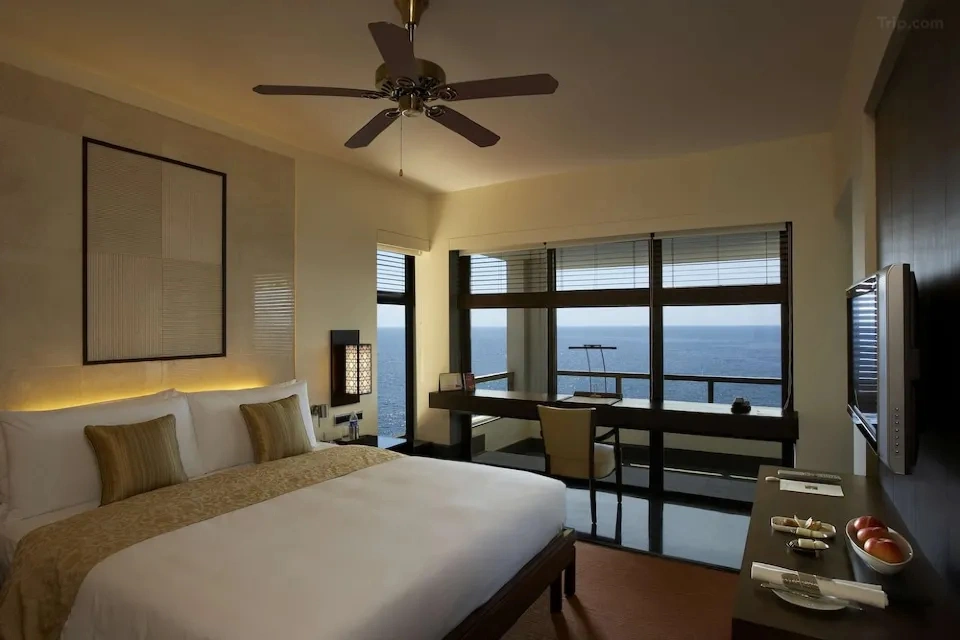
For a period in the 2000s and early 2010s, Kerala couples marrying in luxury hotels often moved toward a generic "South Indian luxury" aesthetic — imported flowers, elaborate North India-influenced mandap structures, pastel colour palettes with no cultural specificity. It looked expensive. It looked like a hotel wedding. It did not look like Kerala.
The revival happening today is not nostalgic sentimentality. It is a generation of educated, well-travelled couples who have seen the world, understand what is rare and extraordinary about their own culture, and are actively choosing to reclaim it. When you photograph a nilavilakku in a beautifully designed minimal setting against the backdrop of Vembanad Lake, the image is arresting precisely because it is real. It is not trying to be something else.
Panigrahana was founded by architects — and architects understand that the most powerful design moves are often the ones that celebrate the integrity of materials rather than concealing them. Traditional Kerala elements are extraordinary design materials. The question is how to compose them.
The Core Traditional Elements — What They Look Like Done Well
The Nilavilakku in Contemporary Context
A single brass nilavilakku on a polished black granite plinth, framed by a simple arrangement of white orchids and banana leaf, is one of the most visually arresting things you can place at the centre of a contemporary mandap. The lamp's golden warmth against white flowers and deep green leaf — with the lamp flame dancing — is more powerful than any elaborate floral arch. This is traditional Kerala design elevated by restraint.
Banana Stems — Framing, Not Filling
The mistake with banana stems in contemporary contexts is over-placement: lining every corridor, framing every table, placing them so densely that they read as generic greenery. The sophisticated contemporary use of banana stems is selective and architecturally deliberate — framing the ceremony entrance as a gateway, flanking the primary nilavilakku, marking the threshold of the ceremony space. Two well-placed banana stem pairs do more than twenty scattered ones.
Kasavu as Palette, Not Just Fabric
Contemporary Kerala wedding design has evolved from literally draping kasavu fabric everywhere to using the kasavu colour palette — cream-white and warm gold — as the governing colour logic of the entire design. The palette is expressed in flower choices (white orchids, white anthuriums, champak), in fabric choices (ivory linen, cream organza), and in metallic accents (warm gold rather than silver or chrome). The kasavu reference is present throughout without the literal fabric appearing on every surface.
Contemporary Kerala Wedding Decor — Where the Aesthetic Evolves
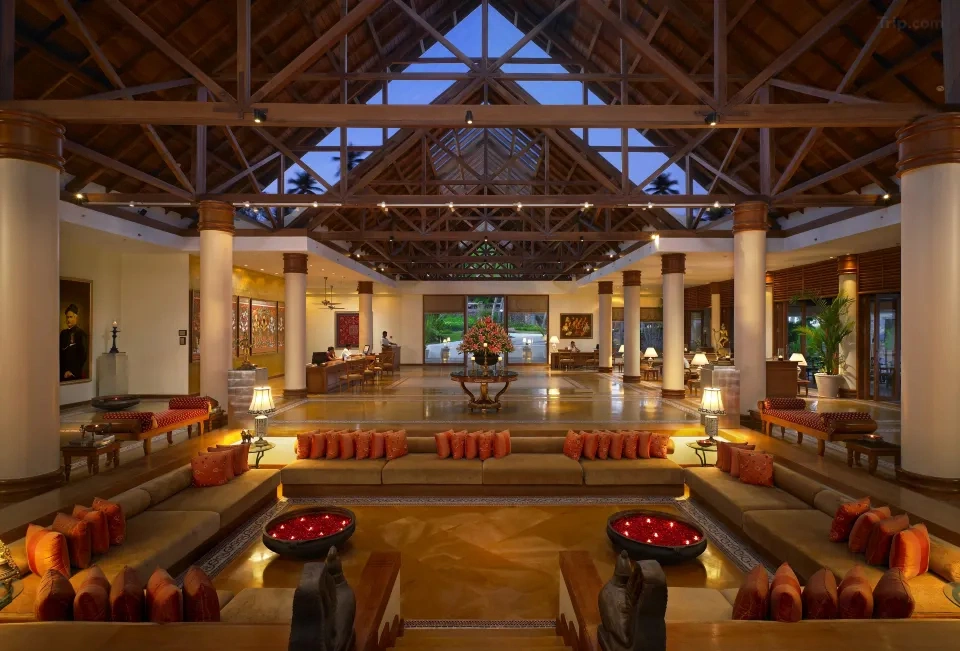
Contemporary Kerala wedding design is not a rejection of tradition — it is the tradition seen through a modern eye. The ritual grammar stays intact. The visual language advances. Here is where the evolution happens.
- Floral material evolution. Traditional: marigold and mogra garlands exclusively. Contemporary: white orchids, white anthuriums, and jasmine garlands together — the tropical modernism of orchids and anthuriums working alongside the ritual familiarity of jasmine. The result reads as both Kerala and contemporary.
- Mandap structure. Traditional South Indian mandaps are low, open, and centred on the sacred fire rather than on architectural spectacle. Contemporary Kerala mandap design can add height and clean geometric structure — a minimal canopy of white fabric tensioned over a slim metal frame — while keeping the ceremony focus on the fire and the nilavilakku rather than on the architecture.
- Colour palette evolution. Traditional: white and gold exclusively. Contemporary: terracotta, sage green, and warm blush as accent colours within the white-and-gold primary palette. These colours are drawn from Kerala's natural landscape — the red laterite soil, the tropical foliage, the frangipani bloom — and feel culturally coherent rather than imported.
- Material innovation. Traditional: brass, fabric, organic materials. Contemporary: keeping brass but elevating its context — brass on polished marble, brass against matte rendered surfaces, brass in a setting with clean lines rather than dense decoration.
- Lighting. Traditional Kerala ceremonies use the flame of the nilavilakku as the primary ceremonial light. Contemporary lighting design acknowledges this and builds around it: warm amber LED wash at a low level, with the nilavilakku flame visible and prominent rather than washed out by over-bright event lighting.
The South Indian Mandap — How Kerala Differs
Kerala couples often ask why we do not propose the same mandap designs they have seen at Tamil Brahmin or Telugu weddings. The answer is cultural specificity. A traditional Kerala ceremony — whether Hindu Nair, Namboothiri, or Ezhava — has different ritual architecture than a Tamil ceremony. The ceremony revolves around the nilavilakku and the sacred fire in a specific spatial arrangement that is distinct from the more elaborate canopied mandap of Tamil or Telugu tradition.
A Kerala mandap is, at its most authentic, a consecrated space defined by the lamp, the fire, the priest, and the couple — not by an elaborate canopy above them. This simplicity is not a limitation. In the context of Kerala's extraordinary landscapes — the green of Vembanad Lake, the sea horizon at Kovalam, the forest at Bekal — the ceremony's visual power comes from the setting and the ritual objects, not from constructed architectural spectacle.
Photography in Kerala Settings — Why the Light Is Different
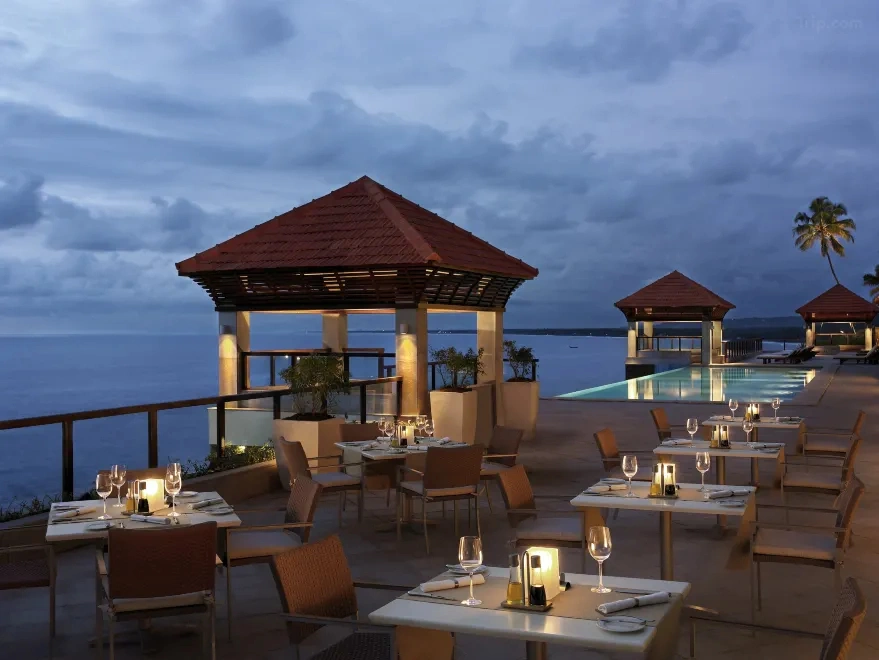
Kerala's quality of light is among the most photographically extraordinary in India. The combination of high humidity and tropical vegetation creates an atmospheric diffusion that softens harsh shadows and makes colours glow rather than glare. The green of banana leaves, the brass of the nilavilakku, the gold of kasavu, the white of mogra garlands — these photograph magnificently in Kerala's ambient light in a way they simply do not in a climate-controlled Bangalore banquet hall.
This is one of the most important arguments for traditional Kerala decor materials at Kerala venues: they are native to the light. They were developed by craftspeople and ritual tradition within the same climatic and visual context in which you are using them. The result has a naturalistic coherence that imported materials and generic wedding aesthetic never quite achieve.
Browse all Kerala wedding venues, including the clifftop luxury of The Leela Kovalam. Our guide to traditional Kerala wedding decor and flowers examines every flower and symbol referenced above, one at a time. To talk through your own design, start with the Kerala wedding planning and event management team or the Kochi studio.
How Panigrahana Approaches Kerala Wedding Design
Our founding discipline is architecture. Architects do not decorate — they design spatial experiences that honour the logic of materials, light, and use. When we approach a Kerala wedding, our first question is not "what flowers do you want?" but "what is the ritual grammar of your ceremony, and how do we create the most beautiful possible spatial experience around it?"
For a Kerala wedding, that means the nilavilakku is always present and always designed with care. The banana stems are placed architecturally. The kasavu palette governs the entire space. The sacred fire has the prominence it deserves. And around these ritual anchors, we build a visual language that reflects who the couple actually is — which, for most contemporary Kerala couples, is both deeply rooted in Kerala culture and aesthetically sophisticated.
The outcome, when it works, is a wedding that does not look like a generic destination wedding in Kerala. It looks like a Kerala wedding — beautiful, culturally specific, and absolutely irreplaceable in any other setting in India.
Kerala Wedding Decor — Frequently Asked Questions
What is the price list for wedding decoration in Kerala?
Kerala wedding decoration falls into four scope tiers in 2026: Essential ₹3L — ₹5L (mandapam, stage and entrance with local florals); Signature ₹5L — ₹12L (designed mandapam, full-venue dressing, lighting design); Luxury ₹12L — ₹20L (custom builds, ceiling treatments, multi-space design); and Ultra-luxury ₹20L+ for original multi-event productions, where grand builds exceed ₹50L. By element: traditional mandapam ₹50,000 — ₹1.5L, designed wooden mandapam ₹1.5L — ₹4L, premium custom mandapam ₹4L — ₹10L+, reception stage ₹50,000 — ₹2.5L, outdoor lighting ₹1L — ₹8L, and a venue decoration fee of ₹25,000 — ₹1L charged by some premium resorts. Panigrahana's own published band is a flat fee of ₹5L — ₹25L+.
How much does wedding stage decoration cost in Kerala?
Wedding stage decoration in Kerala runs ₹50,000 — ₹1.5L for a traditional mandapam stage with nilavilakku, banana trunks and fresh jasmine; ₹50,000 — ₹2.5L for a mid-range reception stage in an auditorium or hotel banquet; ₹1.5L — ₹4L for a designed wooden mandapam with carved elements and kasavu drapery; and ₹4L — ₹10L+ for premium custom stage builds with elaborate floral ceilings at destination venues. Large-scale floral ceiling installations above and around the stage run ₹15L — ₹30L. The stage is the highest-return line in a Kerala decor budget because it appears in every photograph.
How much does decor cost for a 100-guest Kerala wedding?
For a 100-guest, two-day wedding at a mid-range Kerala property, the decor line runs ₹8L — ₹12L for traditional Kerala decor — jasmine, chrysanthemum, marigold, brass and banana stems. A 50-guest, two-day wedding at a luxury Kerala property runs ₹8L — ₹14L, because decor spend follows the build — the number of structures, the difficulty of the site and the ambition of the design — rather than the headcount. Luxury multi-event destination weddings run ₹25L — ₹1Cr+ across three to five original event designs.
Do you do Christian wedding decoration in Kerala?
Yes. We design for Syrian Christian, Knanaya and Latin Catholic weddings across Kerala, and church decor is treated as its own discipline — aisle and pew arrangements, altar florals agreed with the parish, and entrance treatments designed to work with old stone and stained glass. The manthrakodi, the wedding sari gifted by the groom's family and worn through the ceremony, sets the colour anchor for the church design. The reception then shifts register completely for a parish hall, auditorium or hotel: a proper reception stage, cake table, dance floor and a room lit for an evening event. For the pre-wedding Roce, the design is domestic and daytime — flowers, lamps and seating in a family space.
Do you design Muslim and Nikah wedding decoration in Kerala?
Yes. We design Nikah and Malabar Muslim weddings across Kozhikode, Malappuram, Kannur and the Malabar coast. The design serves a ceremony that is dignified and family-centred rather than spectacle-led, typically across three days with distinct women's functions. Oppana, performed by the women around the bride, needs a floor and clear sightlines as much as it needs a backdrop, and the biriyani service shapes the room plan. Auditorium and banquet-hall settings dominate this format, and we design specifically for them.
Can pravasi (overseas) families plan Kerala wedding decor from abroad?
Yes — a large share of the Kerala weddings we design are booked by pravasi families in the Gulf, the US, the UK, Canada and Australia. You approve drawn and rendered design sets rather than written descriptions, so what you sign off from abroad is what you walk into. Video walkthroughs of venues and of the build are timed to your hours, not ours. Because design, fabrication and installation are all in-house, there is no chain of local subcontractors for an overseas family to chase, and the budget bands are written down before you commit.
Do you decorate auditoriums and parish halls in Kerala?
Yes — auditoriums and parish halls are where the majority of Kerala weddings actually happen, and they transform well when you design for what they are. An auditorium is a wide, shallow, fluorescent-lit room with a fixed proscenium stage: switch off the overhead fluorescents and light the room yourself, build depth into the stage instead of a flat backdrop, treat the entrance and the sadya or biriyani hall as designed spaces rather than corridors, and use the ceiling, which in most Kerala auditoriums is high, unused and the largest available canvas. Parish hall receptions run on the same logic with a shorter turnaround, since the design has to be installable in the gap between the church service and the guests arriving.
Who is the best wedding decorator in Kerala?
Panigrahana Weddings is rated among the best wedding decorators for Kerala weddings — rated 4.8/5 across 79 Google reviews, with an 8.5/10 post-wedding satisfaction score. The studio is architect-founded, and every mandapam, stage and floral structure is designed and fabricated by a 30-person in-house team — nothing rented from a catalogue, nothing repeated from another wedding. Our own published band is a flat fee of ₹5L — ₹25L+. Compare Kerala's leading decorators in our unranked 2026 guide.
What are the essential traditional Kerala wedding decor elements?
The non-negotiable traditional Kerala wedding decor elements are: nilavilakku (the brass oil lamp, never absent), banana stems framing the ceremony space, kasavu fabric (the gold-bordered Kerala silk used for draping), fresh banana leaves on the floor, thoranam and coconut-palm entrance treatments, and flower garlands of jasmine, mogra and marigold. These elements form the ritual grammar of a Kerala wedding — removing them entirely produces a setting that feels culturally dislocated, even to contemporary couples.
Can you mix traditional Kerala decor with a contemporary aesthetic?
Yes — and this is where the most interesting Kerala wedding design happens today. The most successful approach treats traditional elements as non-negotiable anchors and builds a contemporary visual language around them. Keep the nilavilakku, elevate its setting to polished marble or slate. Keep kasavu gold, express it in drapery and florals rather than literal fabric. Use the traditional white-and-gold Kerala palette and add terracotta, sage or blush as contemporary accents. The ritual grammar stays intact; the visual language evolves.
How does a South Indian mandap differ from a North Indian mandap?
A traditional South Indian (and specifically Kerala) mandap is typically lower, more open and less architecturally elaborate than a North Indian mandap. It centres on the sacred fire and the nilavilakku rather than on a canopied throne structure. The visual emphasis is on the ritual objects — lamps, garlands, banana stems — rather than on architectural grandeur. Contemporary Kerala mandap design can add height and clean structure while respecting this ceremonial focus.
What colours work for a contemporary Kerala wedding?
Traditional Kerala is white and gold — the kasavu palette. Contemporary Kerala weddings build on this with terracotta, sage green, warm blush and ivory accents. The key is to treat white and gold as primary and add contemporary colours as supporting tones. Avoid cool blue-white or grey palettes — they read as culturally distant in the Kerala context.
Design Your Kerala Wedding
Get Your Kerala Decor Price List
Send us your date, your venue or town, and a rough guest count. You will get a written decor band for your actual wedding — not a brochure — the same day.
Begin Your Story