The best pre-wedding shoot locations in Sri Lanka are Sigiriya Rock at dawn, the Nine Arches Bridge in Ella, Galle Fort's lighthouse at sunset, the Weligama stilt fishermen at 5:30am, and Amanwella's 300-metre private bay — five standouts among the fifteen locations this guide maps across the cultural triangle, highlands, and south coast. December to April delivers the best light island-wide, and UNESCO sites (Sigiriya, Dambulla, Polonnaruwa) require commercial photography permits plus USD 25–35 entry per person, which Panigrahana obtains in advance. A typical multi-location shoot runs 3–5 days. For the full Sri Lanka context, read our complete Sri Lanka destination wedding guide; photography costs are in our Sri Lanka wedding cost breakdown.
The Cultural Triangle — Ancient Civilisation as Backdrop
1. Sigiriya Rock (UNESCO World Heritage): The 5th-century fortified rock palace rises 200 metres straight out of the jungle, and nothing else in Sri Lanka photographs like it. Climb the 1,200 steps to the summit and you get 360-degree views over the cultural triangle's jungle plains, with the outline of Pidurangala Rock in the distance. Shoot immediately after the 7am opening: mist still sits on the plains and the low sun lights the rock face at its warmest. A commercial photography permit from the Cultural Triangle Fund is needed on top of the standard entry ticket, which is why Panigrahana's logistics team books permits well in advance.
2. Dambulla Cave Temple (UNESCO World Heritage): Five cave temples hold 153 statues of the Buddha and murals covering 2,100 square metres of ceiling. Light enters through small openings in the ancient ceilings and gets diffused by incense smoke, so the interiors carry a golden haze you will not find at any other location on this list. The terrace at the cave entrance, with jungle behind it, works just as well for exterior portraits. A commercial photography permit is required, and flash is not permitted inside — your photographer needs proper low-light capability.
3. Polonnaruwa ruins: The medieval capital of Sri Lanka, spread across a vast archaeological park of stone temples, Buddha statues, and royal palaces in slow decay. The Gal Vihara, four colossal Buddha figures carved directly into a single granite face, is the subject photographers cross Asia for. Shoot in early morning or late-afternoon golden hour, when the stone glows amber.
The Highlands — Railway Bridges, Tea Estates, World's End
4. Nine Arches Bridge, Ella: Nine stone arches span a deep valley of tea-green jungle in the Ella highlands, and this is Sri Lanka's most photographed railway viaduct for a reason. Trains cross approximately every 1–2 hours; time your shot so the steam train passes while you stand on the bridge or the path below, and you have the composition everyone comes for. No permit required, and you can walk here from Ella town.
5. Horton Plains — World's End: A 4km walk across high-altitude grassland at 2,100 metres brings you to World's End, a cliff edge that drops 880 metres to the lowland plains below. Get there by 6am: cloud typically rolls in before 9am, and on a clear morning the view runs all the way to the Indian Ocean on the southern horizon. National park entry fee applies.
6. Tea estates of Nuwara Eliya: The highland tea country around Nuwara Eliya gives you Tamil tea pluckers in colourful sarees against the green geometry of the tea bushes, mist-filled estate valleys, and the red-and-cream architecture of colonial estate bungalows, all under a soft, diffused highland light the coast never gets. No specific permit is needed for shooting on private estate paths; Panigrahana arranges estate access through our highland vendor relationships.
7. Ella Gap viewpoint: The Ella Gap is a deep valley notched through the highlands, with the distant southern plains visible through the notch. Come in early morning, when mist fills the valley floor and the highland light is still soft and golden.
The South Coast — Lighthouses, Bays, Stilt Fishermen
8. Galle Fort lighthouse at sunset: The colonial lighthouse stands above the Indian Ocean at the southern tip of Galle Fort. At golden hour the white tower catches the light, the ocean crashes on the rocks below, and the fort walls recede to the left of frame; few locations in Sri Lanka compose themselves this readily. No permit required, and it sits right on the fort's public rampart walk.
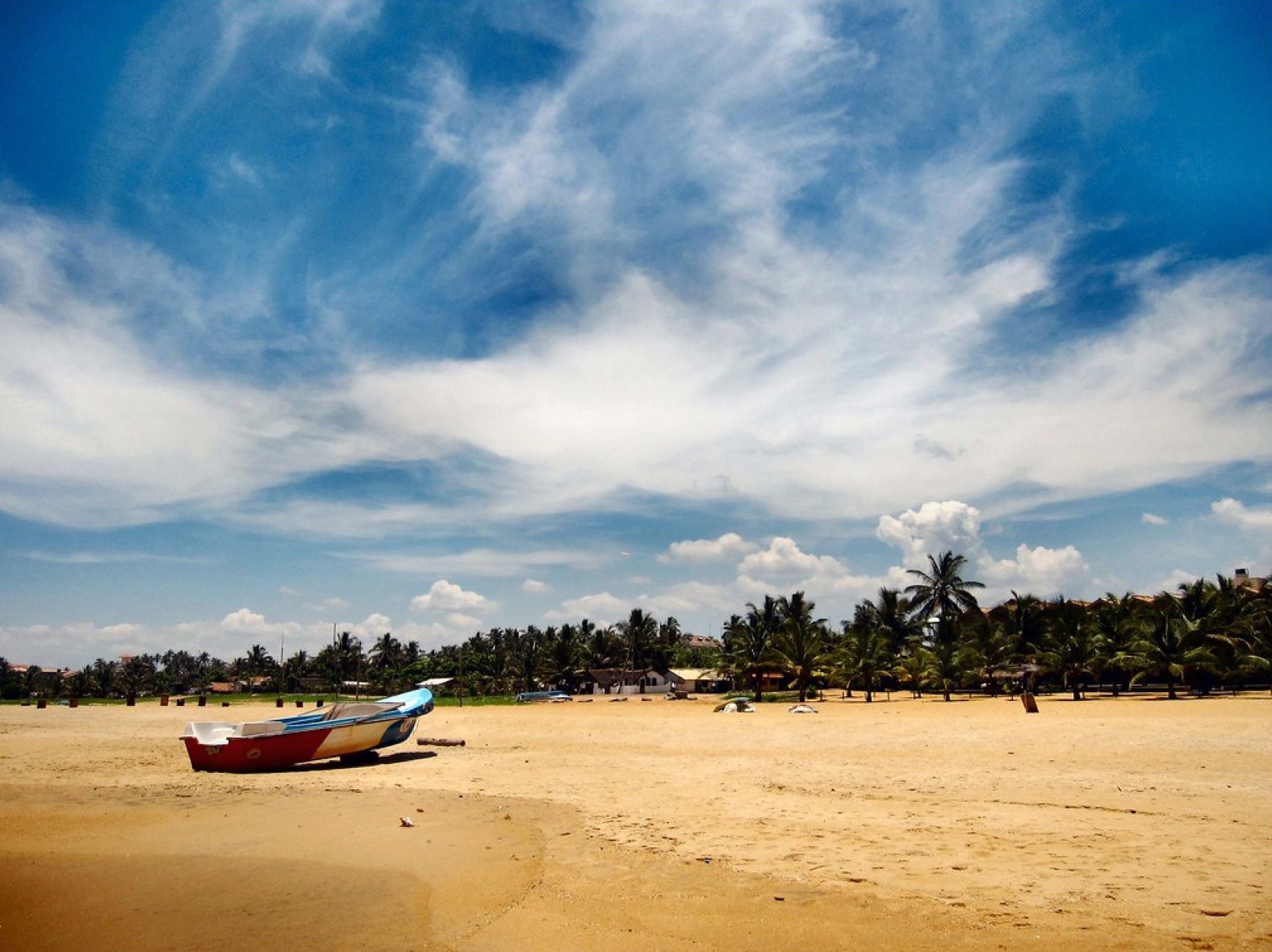
9. Mirissa Beach at sunrise: Arrive at Mirissa Beach between 5:30 and 6am, before the day-trippers, and the crescent of sand sits wide and pale in the first light of dawn. The fishing boats returning from overnight trips give you something real to put in the background of the frame.
10. Weligama Bay — stilt fishermen at dawn: The stilt fishermen of Weligama balance on poles in the shallow surf, fishing in the traditional manner, and you will recognise them even if you have never set foot in Sri Lanka. Put the couple in the foreground with the fishermen silhouetted against the dawn sky and you get a composition nobody else's album has. Shoot at 5:30–6:30am in the peak fishing months, November to April.
11. Amanwella's curved private bay: Amanwella's 300-metre private beach is open only to guests, which for couple photography means no tourists wandering into your frame and no commercial infrastructure behind you — just pale sand, the Indian Ocean, and the surrounding headlands framing both ends of the bay. Golden hour here runs 6–7pm, and that is when to shoot.
12. Cape Weligama clifftop: The headland above Weligama Bay sits 60 metres over the Indian Ocean, with sea views in every direction. At sunset the sky goes orange over blue water, with the arc of the bay curving away in the distance; it is one of the strongest sunset positions on the south coast.
13. Kirinda lighthouse: A remote lighthouse on a rocky promontory at the eastern edge of Yala, with surf crashing on the rocks around it and the wild south coast beyond. The whitewashed tower against the rock formations and the open Indian Ocean makes for photographs with a solitude the busier south-coast spots cannot give you. You reach it by road from Tissamaharama.
The Sacred and the Urban
14. Kandy Lake and Temple of the Tooth reflection: The sacred lake in the centre of Kandy reflects the Temple of the Tooth's ancient roofline and the mountains behind it. Come at dawn, before the city traffic begins: the lake surface is still, the mist has not yet cleared from the surrounding hills, and the double-image holds.
15. Colombo rooftops and Dutch Quarter: Colombo's colonial Dutch Quarter, on Pettah's western edges, and the new generation of Colombo rooftop bars give you urban couple photography with the Indian Ocean visible on the horizon. If you want a modern city chapter in your Sri Lanka shoot alongside the rock fortresses and beaches, this is where you get it.
Permits and Seasons — Planning Your Shoot
- UNESCO sites (Sigiriya, Dambulla, Polonnaruwa): Commercial photography permits required — obtained in advance through Panigrahana's logistics team. Entry tickets for foreign nationals: USD 25–35 per site.
- National parks (Horton Plains, Yala): National park entry fees apply; photography is covered under standard entry. No separate photography permit for personal shoots.
- Private estates (tea estates): Access arranged through estate management; Panigrahana has standing relationships with several highland estates for photography access.
- Beaches and public locations (Galle Fort, lighthouses): No permits required for personal photography.
- Best season: December to April for south and west coast; year-round for cultural triangle with December–April being driest.
Read our complete Sri Lanka destination wedding guide for the full planning overview. Explore our Sri Lanka wedding venues guide to understand which venues offer on-property shoot access. Talk to Panigrahana to begin planning your Sri Lanka pre-wedding shoot.
Frequently Asked Questions
Do you need permits for pre-wedding photography at Sigiriya and other UNESCO sites?
Yes — commercial photography at UNESCO sites in Sri Lanka (Sigiriya, Dambulla) requires a commercial photography permit in addition to standard entry tickets. Permits are issued by the Cultural Triangle Fund. Panigrahana's photography planning team obtains all permits in advance. Early morning shooting (from 7am opening) is strongly recommended for Sigiriya — best light and fewer tourists.
What is the best time of year for a Sri Lanka pre-wedding shoot?
December to April is generally best across most locations — clear skies, excellent light, and manageable temperatures for the south and west coasts. The central highlands are clearest December–April, with beautiful morning mist January–March. The cultural triangle is accessible year-round. For maximum location flexibility across the island, January–March offers the most consistently favourable conditions.
Can Panigrahana plan a multi-location pre-wedding shoot across Sri Lanka?
Yes — Panigrahana plans multi-location Sri Lanka pre-wedding shoots covering 3–5 days across the cultural triangle, highlands, and south coast. A typical 3-day shoot covers Sigiriya and Dambulla (Day 1), Nine Arches Bridge and Horton Plains (Day 2), and Weligama stilt fishermen and Galle Fort lighthouse (Day 3). We coordinate all transport, accommodation, permits, and scheduling. The result is a pre-wedding collection representing Sri Lanka's full photographic diversity.
Sri Lanka Pre-Wedding Photography — Panigrahana's Complete Planning
15 Locations. One Island. A Lifetime of Photographs.
Panigrahana plans Sri Lanka pre-wedding shoots with full logistics coordination — permits, transport, accommodation, and photography scheduling across the island's most extraordinary locations.
Begin Your Story