Sri Lanka wedding decor inspiration is a richer subject than most couples initially realise. The instinct, looking at Sri Lanka from the outside, is to assume a single "tropical" aesthetic — white flowers, palm leaves, ocean backdrop. But Sri Lanka contains three genuinely distinct aesthetic worlds within a single island, each with its own authentic material vocabulary, colour palette, and emotional character. Panigrahana designs Sri Lanka weddings to be deeply rooted in one of these worlds — or to create deliberate dialogue between them — rather than defaulting to generic "destination wedding tropical." This guide maps each aesthetic in detail and explains how Panigrahana translates them into mandap designs, ceremony settings, and reception atmospheres that feel unmistakably Sri Lankan. For planning context, read our complete Sri Lanka destination wedding guide; decor costs are in our Sri Lanka wedding cost breakdown.
Aesthetic One — Tropical Beach: White Lotus, Frangipani, Teak
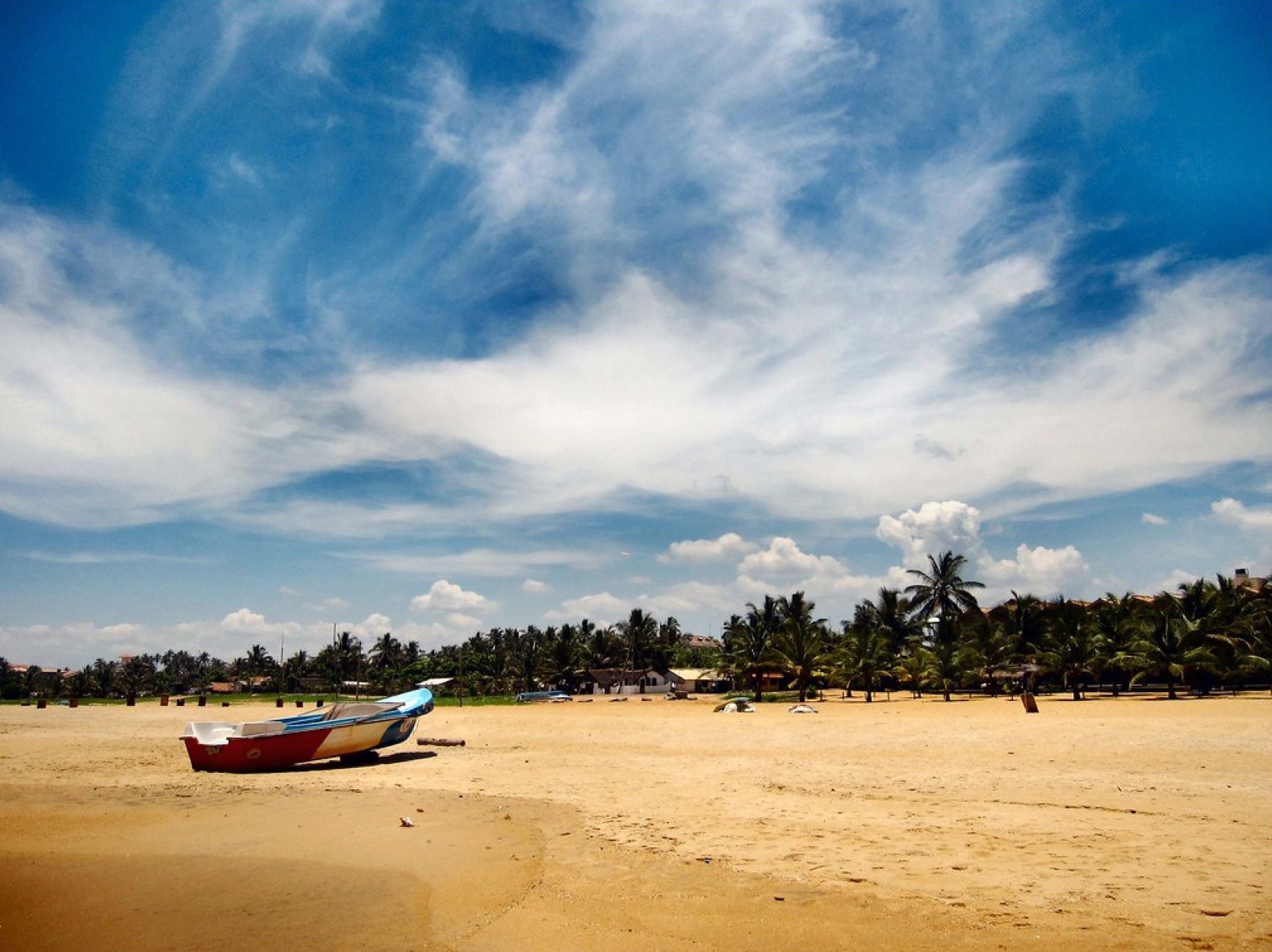
The tropical beach aesthetic draws from the natural vocabulary of Sri Lanka's south coast: the white lotus that floats on Buddhist temple tanks (and is deeply sacred in both Buddhist and Hindu traditions), the frangipani tree that scents the hot sea air with its waxy white and yellow flowers, the smooth grey-brown of ocean-polished granite boulders, the warm amber of teak and the silver-grey of driftwood, and the woven natural fibres — rattan, cane, hemp, banana fibre — that characterise coastal Sri Lankan craft. The colour palette is spare and natural: white, cream, pale gold, warm wood tones, and the deep blue-green of the Indian Ocean as the dominant backdrop.
A Panigrahana Tangalle beach mandap in this aesthetic: a teak frame with cross-beams hung with cascades of white lotus and frangipani garlands; the four pillars draped in natural linen with gold thread edging; the floor of the mandap set with river-smoothed white pebbles and floating lotus candles in terracotta bowls; hurricane lanterns in hand-blown glass hanging from driftwood branches; jasmine strings along the aisle. The Indian Ocean at sunset completing the picture in a way no installation can improve upon.
Aesthetic Two — Dutch Colonial: Galle Fort, Antique Lanterns, Ivory and Gold
The Dutch colonial aesthetic draws from Galle Fort's extraordinary architectural vocabulary: the whitewashed plaster walls of the 17th-century buildings, the black-and-white stone floors, the dark teak furniture worn smooth with centuries of use, the antique glass lanterns of the fort's restaurants and hotels, the muted palette of aged colonial elegance — ivory, bone white, dark teak brown, aged brass, dusty gold, and the occasional deep colonial green. It is an aesthetic of restraint and depth: nothing shiny or synthetic, everything aged and earned.
For a Galle Fort reception in this aesthetic: the Amangalla garden set with round tables draped in raw ivory linen, centrepieces of aged brass lanterns surrounded by white gardenia and trailing moss, votive candles in antique glass vessels, dark teak chairs with woven cane backs. The ceremony space in the historic hall: white lotus and gardenia arrangements in terracotta urns, hand-painted table numbers on aged parchment, the architectural details of the colonial building as the primary visual statement. Indian ritual elements — the mandap, the floral garlands, the sacred fire — integrated into this colonial framework with deep respect for both traditions.
Aesthetic Three — Ancient Highland: Kandy Spices, Temple Flowers, Red and Gold
The ancient highland aesthetic draws from Kandy's cultural and spiritual identity: the deep crimson and gold of the Kandyan royal tradition, the white and yellow of Buddhist temple offerings, the rich spice palette of cinnamon, cardamom, and cloves that grow on highland estates surrounding the city, the lotus and jasmine offerings placed before the Temple of the Tooth, and the elaborate ornamentation of Kandyan classical dance costumes and royal regalia. This is an aesthetic of richness, depth, and ceremonial grandeur — more aligned with the Indian wedding's own traditions of colour and ornament than the restrained coastal aesthetics.
A Panigrahana Kandy mandap in this aesthetic: a frame of carved teak and gilded bamboo with draped red and gold silk, jasmine and marigold garlands hung in the South Indian tradition, tall brass oil lamps at the four corners (echoing the Kandyan ceremony's oil lamp ritual), the ground covered in turmeric-stained white cotton cloth, spice-filled terracotta pots as floral vessels, and the deep green of the Kandy hills as backdrop. The effect is simultaneously familiar to Indian guests and distinctively Sri Lankan — a convergence of two great South Asian civilisations in a single ceremony space.
Locally Sourced Materials — The Sri Lanka Advantage
One of the genuine practical advantages of Sri Lanka wedding decor is the richness of locally sourced natural materials. Sri Lanka's tropical gardens, coconut palm forests, river systems, and highland spice estates produce a decor material inventory of extraordinary variety at lower cost than imported alternatives. Panigrahana sources the following locally for Sri Lanka weddings: white lotus, frangipani, jasmine, orchids, heliconia, bougainvillea, banana leaf, palm frond, teak and bamboo, river pebbles, terracotta, hand-blown glass from Colombo craft studios, handwoven rattan and cane from south coast workshops, and cinnamon and clove spices from highland estates. The result is decor that is authentic, sustainable, fragrant, and significantly less expensive than equivalent imported arrangements.
Mandap Design on Sri Lanka Beaches and Hills
The Indian mandap — the ceremonial canopy under which the bride and groom are married — requires adaptation for Sri Lanka's varied settings. On Tangalle's beaches, the primary engineering challenge is stability in coastal wind and sand anchorage: Panigrahana's beach mandap frames use deep-buried steel ground stakes with teak or bamboo visible frames, and all floral elements are secured against sea breeze with concealed structural supports. In Kandy's highlands, the mandap is designed to work with the cooler, moister air — flower choices shift toward varieties that hold better in lower temperatures (orchids, birds-of-paradise, garden roses). In Galle Fort, the mandap is integrated into the architectural character of the historic buildings — smaller in scale, more restrained in colour, deeply considered in how it dialogues with the colonial surroundings without overwhelming them.
Explore our curated Sri Lanka wedding venues guide to understand how each setting shapes the decor possibilities. Read the complete Sri Lanka destination wedding guide for the full planning context. The Sri Lanka wedding cost breakdown — decor budget context. Talk to Panigrahana to begin designing your Sri Lanka wedding decor.
Frequently Asked Questions
What flowers are available in Sri Lanka for wedding decoration?
Sri Lanka's local floristry supply is excellent: white lotus (sacred in Buddhist and Hindu traditions), frangipani in white, yellow, and pink, bougainvillea, bird-of-paradise, orchids, jasmine, anthurium, heliconia, and abundant tropical foliage. Imported flowers (roses, peonies) can be sourced from Colombo at higher cost. For most Sri Lanka wedding aesthetics, locally sourced flowers provide superior authenticity, fragrance, and value. Panigrahana designs entirely around local materials where possible.
Can Panigrahana create an Indian mandap on a Sri Lanka beach?
Yes — beach mandap construction is part of our standard Sri Lanka service. We use deep-buried steel ground stakes for stability in coastal sand and wind, with teak or bamboo visible frames and all floral elements secured against sea breeze. The combination of a traditional Indian mandap with the Indian Ocean as backdrop produces photographs that are genuinely extraordinary. We have designed beach mandaps across Amanwella, Cape Weligama, and Anantara Peace Haven Tangalle.
How does Sri Lanka wedding decor differ from Bali wedding decor?
Bali has a codified and immediately recognisable decor vocabulary — gold and white, temple references, ceremonial parasols. Sri Lanka offers three distinct aesthetic worlds (tropical beach, Dutch colonial, ancient highland) with their own authentic material vocabularies. This actually gives Panigrahana more creative latitude in Sri Lanka — we can design decor that is unmistakably specific to its setting rather than matching a well-established visual genre. The result is weddings that feel genuinely original rather than stylistically familiar.
Sri Lanka Wedding Decor — Panigrahana's Design Studio
Three Aesthetic Worlds. One Island. Infinite Beauty.
Panigrahana designs Sri Lanka wedding decor rooted in the island's genuine aesthetic heritage — tropical, colonial, or ancient highland. Let us create something that could only happen here.
Begin Your Story