After more than 500 weddings, we have photographed couples in Tuscany, Bali, and across India. The most consistently extraordinary wedding photographs we have produced have been in Kerala. Not in spite of its specific character — the humidity, the tropical light, the density of the landscape — but because of it. Kerala gives photographers things that nowhere else in India provides: still reflective water, saturated tropical greens, ancient fishing structures at sunrise, colonial heritage streets of extraordinary quality, and clifftops above an Arabian Sea that glows amber and gold at the right time of day. For venue context, read our complete Kerala weddings guide; photography costs are covered in our Kerala wedding cost breakdown.
This guide is organised by region within Kerala — covering the backwaters, the Trivandrum coast, the north Kerala coastline, the hill stations, and Fort Kochi. For each, we cover the specific locations, the best times of day, and any permit or access considerations your photographer needs to know.
The Alleppey and Kumarakom Backwaters — India's Most Reflective Canvas
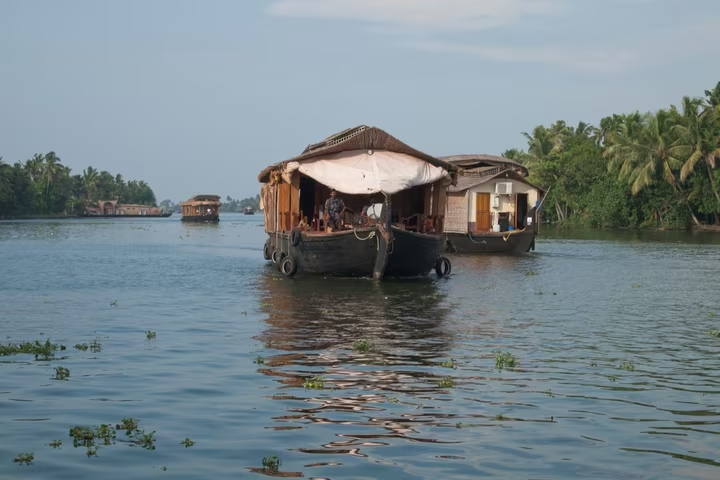
The backwaters of Kuttanad, Alleppey, and Kumarakom are the most photographically distinctive environment in India. The defining element is the water surface — still, reflective, creating a second world below every image. Nothing in India photographs like the Kerala backwaters.
- Sunrise on Vembanad Lake. The single most extraordinary photography moment in Kerala. Arrive on the lake as the sun comes over the Eastern Ghats horizon, when the mist is still on the water and the surface is perfectly still. The silhouette of a couple on a traditional kettuvallam, backlit by the sunrise, reflected in the lake below — this is the image. Golden window: 6:00am–7:30am.
- Traditional kettuvallam on still water. A decorated houseboat moving slowly through the wider canals, with coconut groves on both banks. The angle from a second boat or from the bank, with the couple on the bow deck against the canal receding in perspective behind them.
- Rice paddy walks. The rice paddies (paadam) of Kuttanad are below sea level — a flat green landscape of extraordinary visual regularity, with the distant line of coconut palms marking the canal edges. The walk through a rice paddy field in traditional Kerala attire, shot from a low angle against the sky, produces a genuinely distinctive visual.
- Canal bends at dusk. The narrow canals leading from the main lake into the villages, where the coconut palms lean over the water from both banks, provide intimate close-framing shots of the couple that are completely different from the open-water compositions. Best at the golden hour (5:30–6:30pm).
Kovalam and Trivandrum Coast — Clifftop, Lighthouse, Arabian Sea
The Leela Kovalam Clifftop
The clifftop at The Leela Kovalam provides one of the most dramatic wedding photography compositions in India. The infinity pool at the cliff edge, with the Arabian Sea visible through and beyond it, is a globally recognised setting. The ceremony lawns on the upper clifftop, with the sea 40 metres below and the horizon stretching to infinity, produce photographs with a scale and drama that indoor venues cannot approach. Best at golden hour: 5:30–6:30pm in the peak season (November–February).
Niraamaya Surya Samudra Clifftop
The rocky headland at Niraamaya, with the antique Kerala cottages visible among the trees and the sea on three sides, provides a different compositional vocabulary from The Leela — more intimate, more architecturally layered. The rocks at the cliff edge, with the sea churning below and the couple standing against the sky, create images with enormous visual power. The private beach at the base of the cliff adds a secluded beach setting only accessible to property guests.
Kovalam Lighthouse at Golden Hour
The Vizhinjam Lighthouse on the Kovalam headland is a working lighthouse visible from multiple angles. The curved crescent of Lighthouse Beach, photographed from the lighthouse promontory at golden hour, with the beach's characteristic fishing boats and the warm amber light, produces images with a timeless quality. Not a private setting — but early morning (6:00–7:30am) before the beach fills is quiet enough for an effective shoot.
Fort Kochi and Ernakulam — Heritage Lanes, Chinese Nets, Dutch Architecture
Fort Kochi is one of the most visually layered heritage destinations in India — a 500-year palimpsest of Portuguese, Dutch, British, Chinese, and Jewish architectural and cultural influences, compressed into a small peninsula. The quality of the streets, the architecture, and the waterfront here is extraordinary for editorial-style wedding photography.
- Chinese fishing nets at sunrise. The Chinese cantilever fishing nets (cheena vala) at Fort Kochi's waterfront are one of the most iconic images in India. At sunrise, when the light comes across the water from the east and the fishermen are operating the nets, the silhouette of the nets against the amber sky produces photographs of extraordinary quality. Arrive by 6:00am. The nets are on the public waterfront — no permits required.
- Mattancherry Dutch heritage streets. The narrow lanes of Mattancherry's Dutch heritage quarter — running between the Dutch Palace and the Jew Town road — are lined with 17th and 18th-century Dutch and Portuguese buildings in various states of beautiful decay. The quality of the surface materials (laterite stone, whitewashed plaster, weathered wood), the lane geometry, and the absence of modern visual intrusion make these streets extraordinary for editorial photography.
- Jewish Synagogue lane (Jew Town). The lane leading to the Paradesi Synagogue in Mattancherry — cobblestoned, with antique shops on both sides, ending at the 1568 synagogue — provides a unique heritage setting. The area is busiest in the afternoon; early morning (before 9am) provides the cleanest shots without tourist traffic.
- Princess Street, Fort Kochi. The main colonial-era street of Fort Kochi, with its Portuguese bungalows and British-era shophouses, provides a more pastel, less gritty visual than Mattancherry. The bougainvillea that grows over many walls and gates adds colour. Early morning is essential — the street fills with tourists and vehicles by 10am.
Browse all Kerala wedding venues to pair your photography locations with the right property. Begin planning your Kerala wedding with Traditional Kerala wedding decor and flowers — the flowers and decor that make every Kerala photograph distinctive. Backwater wedding decor — Kerala's most photogenic setting in full. Kerala Wedding Planning.
Taj Bekal — The Tri-Landscape
Taj Bekal in north Kerala provides a photography setting that is unique in India — three completely different landscapes in visual proximity: the Arabian Sea (western boundary of the property), the Bekal backwater estuary (eastern boundary), and the Western Ghats foothills (visible to the east). No other single property in India offers this range of visual contexts from one location.
- Backwater-and-sea composition. From the right position on the Taj Bekal property, the photographer can frame the couple with the sea to one side and the backwater to the other — a genuinely impossible combination at most venues. This requires local knowledge of the specific viewpoints; the Taj Bekal photography team knows them.
- Sunrise from the resort lawn. The eastern-facing lawn at Taj Bekal, with the backwater estuary in the foreground and the first light coming over the western ghats, produces a completely different dawn composition from the west-facing coastal venues. Best: 6:30–7:30am.
- The ancient Bekal Fort backdrop. Bekal Fort — one of Kerala's largest forts, dramatically positioned on a rock headland above the sea — is visible from the Taj Bekal property. The fort, with its ancient laterite walls, provides a heritage backdrop of extraordinary power for editorial photography. (External photography of the fort from the public area is permitted; confirm current regulations for professional equipment.)
Munnar — Tea Terraces and Mountain Mist
Munnar provides the most distinctive non-coastal photography setting in Kerala — the tea estate terraces at 1,600 metres elevation, with the cool mist, the altitude light, and the extraordinary regularity of the tea-bush rows. This visual vocabulary is completely different from the backwater and coastal settings that dominate Kerala wedding photography.
- Tea estate terraces at dawn. The mist is thickest in the early morning, when the tea terraces appear to float above a cloud layer below. The quality of light at Munnar in the first hour after sunrise — cool, soft, diffused by the mist — is extraordinary. Best time: 6:00–8:00am.
- Eravikulam National Park grasslands. The high-altitude Shola grasslands of Eravikulam (home to the Nilgiri tahr) provide a completely open, high-altitude landscape with 360-degree views of the Western Ghats. Permits are required to enter the national park — book in advance. Photography here has an alpine quality not found anywhere else in South India.
- Tea pickers in the fields. With permission from the estate management, the visual of tea pickers working the rows — in their traditional coloured sarees against the green of the bushes — provides an extraordinary human element in the composition. This requires advance coordination with the estate.
Seasonal Considerations
Kerala's two-monsoon climate creates specific photography conditions that must be factored into planning.
- October–February (peak season). Ideal photography conditions across all locations. Clear skies, gentle light, the post-monsoon green at its most vivid. The backwaters are at their most still and reflective.
- March–May (pre-monsoon). Still good conditions, slightly harder light by midday. Good for morning and evening shoots. The Kerala landscape is slightly less vivid than immediately post-monsoon.
- June–September (monsoon). The most dramatically beautiful visual conditions in Kerala — intense greens, dramatic cloud formations, mist everywhere, the waterfalls of the Western Ghats at full flow. Unpredictable rain makes outdoor event photography difficult. Pre-wedding shoots during the monsoon are an option for adventurous couples; wedding ceremony photography in the monsoon requires covered or weather-protected settings.
The Kerala Pre-Wedding Shoot — A Separate Creative Opportunity
Many couples who are getting married at a Kerala venue build in a pre-wedding shoot at one of the locations in this guide — sometimes at the same venue, sometimes at a location that requires a half-day excursion. The most popular pre-wedding shoot combinations at Kerala weddings we have managed:
- Kumarakom wedding + backwater canal sunrise shoot (30 minutes from the resort)
- Kovalam/Niraamaya wedding + Fort Kochi heritage shoot (2.5 hours by road — best as a separate trip)
- Taj Bekal wedding + Bekal Fort pre-wedding shoot (15 minutes from the resort)
- Munnar wedding + tea estate sunrise shoot (on the estate property)
Frequently Asked Questions
What is the best time of day for wedding photography in Kerala?
The golden hour (30–60 minutes before sunset) and sunrise are the best times for wedding photography across Kerala's coastal and backwater locations. Sunrise at backwater locations — the light on still water before the humidity haze builds — produces the most extraordinary reflective photographs. Midday (11am–2pm) is the least favourable time due to harsh overhead light and deep shadows. Plan ceremonies and photography sessions for early morning or late afternoon.
Do I need permits for wedding photography at historic sites in Kerala?
Photography regulations vary by site. The Chinese fishing nets at Fort Kochi can be photographed freely from the public waterfront. The Dutch Palace and Jewish Synagogue area are in a public heritage zone. Heritage properties managed by the Archaeological Survey of India may require a paid photography permit for professional camera equipment. Padmanabhaswamy Temple prohibits photography inside the complex. Your photographer should confirm site-specific regulations before building a shoot plan.
Is the Kerala monsoon good for wedding photography?
The Kerala monsoon (June–September) produces dramatically beautiful photography backdrops — saturated greens, dramatic cloud formations, Western Ghats mist. For pre-wedding photography, adventurous couples sometimes specifically choose the monsoon for this dramatic quality. For the main wedding ceremony, the monsoon creates real logistical challenges for outdoor events. The ideal wedding season (October–March) still provides extraordinary photography conditions with clear light and vivid greenery.
Plan Your Kerala Wedding Photography
The Most Extraordinary Wedding Photographs in India Are Made Here
Panigrahana works with Kerala's finest wedding photographers and knows every one of the locations in this guide intimately. Tell us your vision and we will build a photography plan around it.
Begin Your Story