Bali wedding photography locations are what make Bali destination weddings genuinely irreplaceable. The island offers a concentration of extraordinary natural and cultural backdrops — cliff-tops above open ocean, ancient temple gates framing volcanic peaks, terraced rice paddies cascading down jungle hillsides — that no other single destination can match. After thirty-plus Bali weddings, Panigrahana's photography teams have developed specific knowledge of each location: the exact timing, the ideal angle, the logistical requirements, and the permit or access considerations that separate extraordinary images from merely good ones. This guide is that knowledge in written form. These locations exist within venues — our guide to the best Bali wedding venues covers which properties give direct access to the strongest photography settings.
The Ten Essential Bali Wedding Photography Locations
1. Uluwatu Cliffs at Sunset
The Uluwatu cliff-top is Bali's most iconic wedding photography location — and it fully deserves the reputation. The Indian Ocean stretches to the unbroken horizon 200 metres below; the sun sets directly to the west in a clear sky during dry season; and the warm amber light of the 45 minutes before sunset creates conditions that are simply extraordinary for couple photography. The ideal shooting window is 5:15–6:30pm. The rock formations at the cliff's edge provide natural framing elements. The infinity pools of Alila Villas and Bulgari Resort create additional foreground interest. For ceremony photography specifically, the timing of a 5:00pm ceremony start positions the formal moments in perfect golden hour light.
2. Tegallalang Rice Terraces
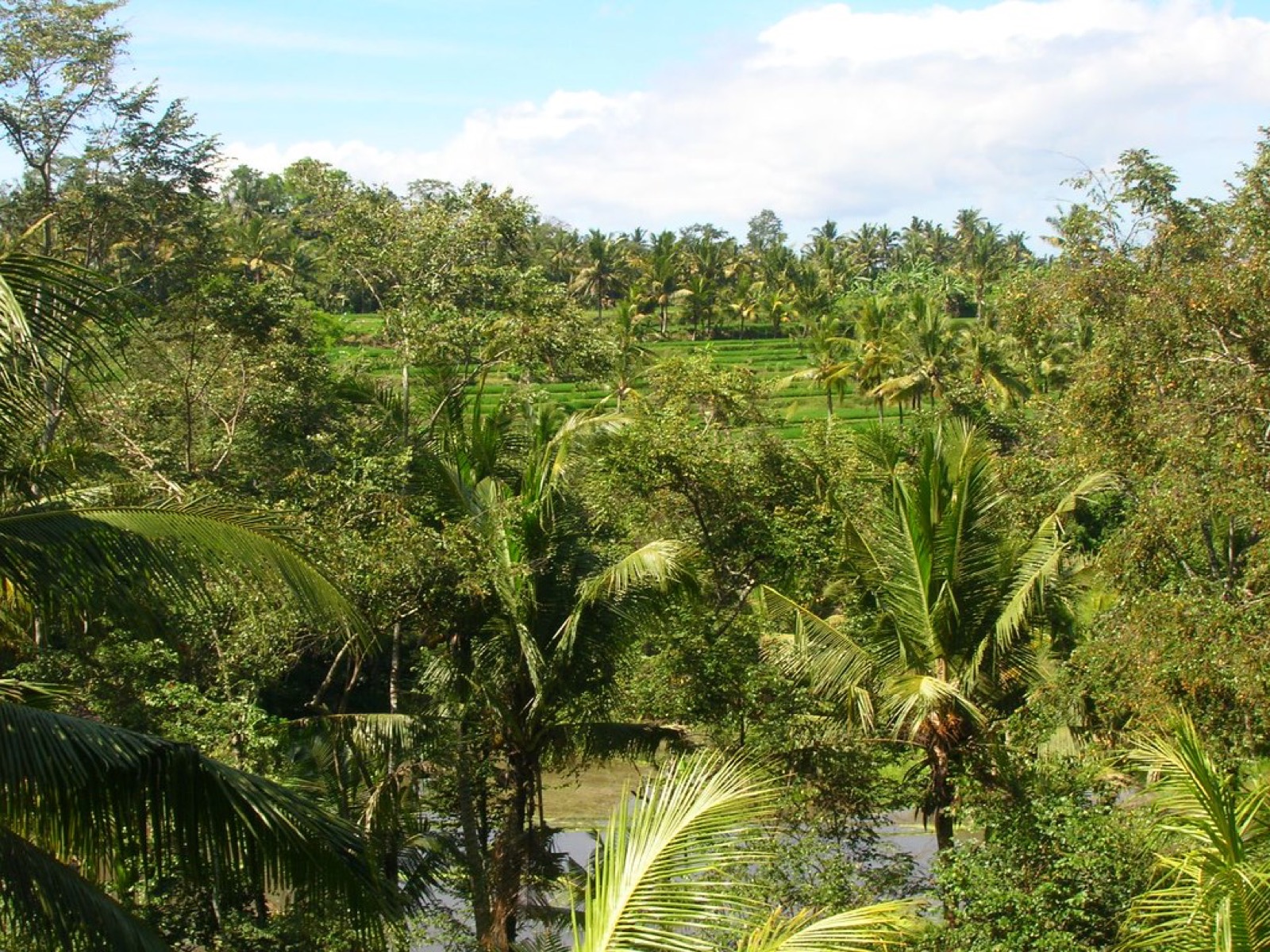
Tegallalang is Ubud's UNESCO-listed rice terrace landscape — cascading green terraces stepping down a river valley, filled with the quiet sounds of water irrigation and birdsong. For pre-wedding sessions, the shooting window is 5:45–8:00am. The mist-filtered morning light, the absence of tourist crowds, and the saturated green of the terraces (most vivid in May–October) produce images with a quality of light and colour that is simply unavailable after 9am. Panigrahana schedules Tegallalang sessions at dawn as a standard element of every Ubud-based wedding programme.
3. Tirta Empul Temple Gates
Tirta Empul, the sacred spring temple near Tampaksiring, has outer courtyard gates of extraordinary carved stone architecture — tall, intricately decorated split gates (candi bentar) that create one of the most visually distinctive frames in Bali photography. The carved volcanic stone, the tropical garden setting, and the quality of light in the early morning (7–9am) before the tour groups arrive make this one of Bali's most arresting cultural photography settings. Couples are not permitted in the inner sacred areas, but the outer courtyard and gate areas are accessible with respectful conduct and appropriate clothing (sarongs are provided at the entrance).
4. Besakih Volcano and Temple
Pura Besakih — the "Mother Temple of Bali" — sits on the slopes of Mount Agung, Bali's sacred and active volcano, at 1,000 metres altitude. The dramatic combination of ancient temple terraces rising toward the volcanic peak, with the frequent volcanic mist creating an atmosphere of extraordinary drama, makes Besakih one of Bali's most ambitious photography locations. Access requires a guided local arrangement and is weather-dependent (cloud cover can obscure Agung for hours at a time). For couples willing to make the journey and commit to an early start, the images are among the most extraordinary in Bali's photography repertoire.
5. Seminyak Beach at Sunrise
Seminyak's black volcanic sand beach at sunrise — typically 6:00–6:30am — offers a completely different character from the sunset beach photography that most visitors experience. The beach is empty, the light is clean and directional from the east, and the volcanic black sand creates a dramatic contrast with light fabrics and skin tones that is entirely unlike white sand beach photography. For couples based in Seminyak for their wedding, a sunrise beach session is one of the most accessible and most beautifully surprising photography experiences Bali offers.
6. Alila Villas Uluwatu Infinity Pool
The Alila Villas Uluwatu infinity pool — a slim infinity edge pool stretching toward the ocean horizon — is among the most photographed swimming pools in Asia for good reason. The geometry of the pool edge, the infinite blue of the ocean, and the quality of the late afternoon light from the west create a composition that requires almost no photographer intervention to be extraordinary. For couples staying at Alila, a private pool session at 5:00–6:00pm is typically part of the pre-wedding programme.
7. Ubud Jungle Waterfalls
The Ayung and Wos river gorges around Ubud contain multiple waterfall locations accessible by short jungle trek. Tegenungan Waterfall, Kanto Lampo, and Tibumana Falls are the most accessible. The quality of light in the jungle gorge — filtered, green-tinted, and ambient — is unique to this kind of enclosed forest setting and produces images with a romantic, otherworldly quality. Best visited 8:00–10:00am on clear days. The humidity requires careful consideration for the bride's hair and makeup.
8. Tanah Lot Temple at Low Tide
Tanah Lot — the sea temple on a rocky islet connected to the mainland by a rock causeway at low tide — is one of Bali's most iconic visual landmarks. The temple itself is a protected religious site and couples cannot enter, but photography from the surrounding coastal rock formations at low tide — particularly at sunset — produces images of extraordinary cultural and natural richness. The timing is tide-dependent: Panigrahana's logistics team checks the tide chart for each couple's shooting date and schedules the session accordingly.
9. Jimbaran Beach at Night
Jimbaran Bay, with its calm, sheltered beach and the lights of fishing boats reflecting on the dark water, is Bali's finest beach photography location after dark. The famous Jimbaran seafood restaurants create warm, candlelit foreground light against the blue-dark ocean background. For couples doing a full day of photography culminating in an evening reception, a sunset-to-night session transitioning from Jimbaran Bay's golden hour to its candlelit evening character covers an enormous range of photographic moods in a single location.
10. Munduk Lake and Morning Mist
Munduk, in Bali's northern highlands at 800 metres, is the island's most dramatic misty mountain landscape. Lake Tamblingan and Lake Buyan sit in extinct volcanic calderas surrounded by jungle, with morning mist rising from the water surface in the early hours. For couples whose wedding programme includes a north Bali excursion — and who want photographs at the absolute extreme of Bali's landscape range — Munduk offers images that are completely unlike anything available in south Bali. Best photographed 6:30–9:00am when the mist is active.
Golden Hour — Timing Your Photography
Bali's golden hour runs approximately 45–75 minutes before sunset year-round. In the dry season (April–October), sunset over Uluwatu is typically 6:15–6:45pm, placing the golden hour at 5:15–6:30pm. This timing shapes everything: ceremony start times, reception setup, and the logistics of moving between locations. Panigrahana's event timelines are built around maximising golden hour photography as a primary constraint, not an afterthought.
Browse all Bali wedding venues and their photography settings. Read our complete Bali destination wedding guide for Indian couples. The best Bali pre-wedding shoot locations uses many of the same backdrops for engagement sessions. Choosing a Bali wedding photographer for Indian couples covers how to brief your photographer on these locations. Begin planning your Bali wedding photography programme with Panigrahana.
Frequently Asked Questions
What time should we shoot at Tegallalang rice terraces for wedding photos?
5:45–8:00am. By 8am tourist crowds arrive. The mist-filtered morning light at 6am is arguably Bali's finest photography light. Panigrahana schedules Tegallalang pre-wedding sessions for 5:45am departure from Ubud hotels, arriving at 6:00–6:15am for an empty terrace in perfect light.
Can Indian couples do a pre-wedding shoot at Bali temple locations?
Several Bali temple locations are accessible for photography with appropriate permits and respectful conduct. Tirta Empul's outer courtyard, the Lempuyang Gates, and Tanah Lot's surrounding rock formations are all accessible. Panigrahana's local coordination team secures permits and identifies right timing for temple photography that respects Balinese religious practice.
What is the golden hour timing at Uluwatu for wedding ceremony photography?
At Uluwatu, golden hour runs approximately 5:15–6:30pm throughout dry season. The most dramatic light is typically 45–60 minutes before sunset, around 5:20–5:40pm. Ceremony start times at Uluwatu venues are ideally set at 5:00–5:15pm to capture the full golden hour through the ceremony and into the early reception.
Plan Your Bali Wedding Photography
Every Location. Perfect Timing. Images That Last a Lifetime.
Panigrahana builds photography programmes into every Bali wedding timeline from day one — because the images are part of the celebration, not an afterthought.
Begin Your Story