Why Food Defines the Wedding Memory
In Indian culture, hospitality is synonymous with feeding. An Indian wedding is, among other things, a grand act of hospitality — and the quality of the food is taken as direct evidence of the hosts' care for their guests. We have attended weddings where everything was beautiful but the food was mediocre — and those weddings are remembered primarily for their mediocre food. Getting the catering right is non-negotiable.
Planning this yourself? Send us your name and a number, and a planner will reply within 24 hours to talk it through with you, whoever you end up booking.
Panigrahana is a wedding design and planning studio with 500+ weddings since 2018, rated 4.8/5 on Google (checked 27 September 2026). Planning starts at ₹2 lakh per day for two events + GST and decor at ₹5 lakh + GST, quoted for the agreed scope rather than as a percentage of what you spend.
Types of Wedding Catering
Hotel In-House Catering
At five-star venues, the hotel's in-house culinary team handles all catering. The advantage: seamless coordination with venue operations; quality consistency; no logistics complexity. The limitation: menus are more standardised, and custom requirements require more advance planning. Cost: typically ₹2,500–8,000 per plate depending on menu complexity and hotel tier.
External Caterer
For private villa weddings, outdoor events, and venues that permit external catering — bringing in a specialist Indian wedding caterer. The advantage: more menu flexibility; potentially better authentic Indian cuisine (particularly for South Indian specialities); often more personal service. The challenge: requires kitchen access, equipment rental, and logistics coordination.
Live Stations
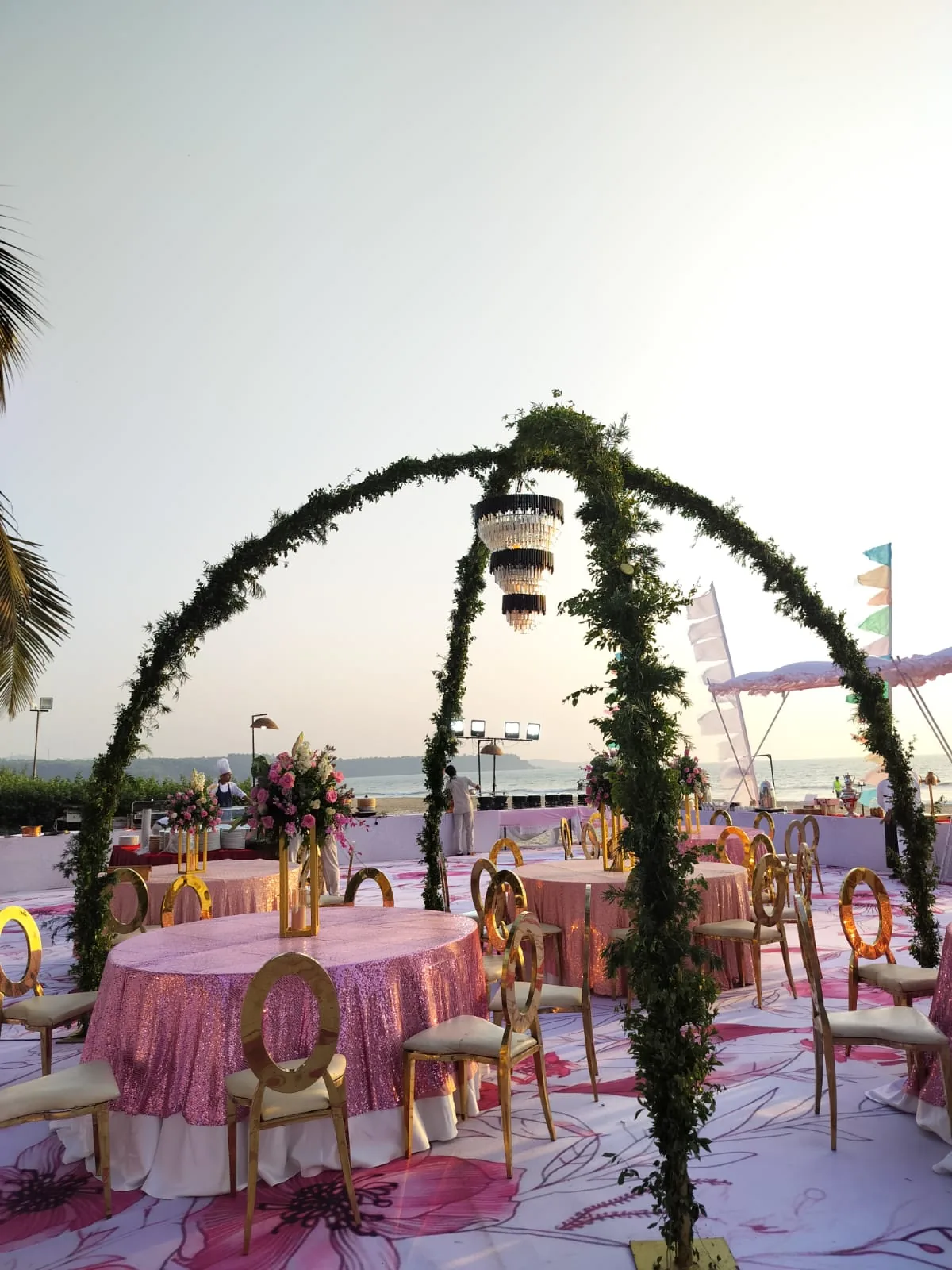
Live cooking stations — chaat, dosa, pasta, biryani, kebab, dessert — add interactivity, theatre, and freshness to wedding catering. They also prevent the long queue problem at buffet-style service. We recommend a minimum of 2 live stations at any wedding reception of 150+ guests.
Menu Planning for Multi-Day Weddings
A multi-day wedding requires careful menu planning to avoid repetition and monotony. Our approach:
- Mehendi lunch: Light, colourful, festive — chaat, sandwiches, finger foods, fresh juices
- Sangeet dinner: High-energy, crowd-pleasing — rich Punjabi curries, tandoori dishes, crowd-favourite biryanis, live chaat station
- Wedding ceremony: Traditional South or North Indian depending on family heritage — saatvik options for ritual timing
- Reception dinner: The showpiece meal — the most elaborate menu, the live stations, the spectacular dessert display
- Farewell brunch: Light, comfortable, nourishing — the antidote to the previous day's excess
Dietary Accommodation
A contemporary Indian wedding will have guests with an extraordinary range of dietary requirements — Jain (no root vegetables, no meat), vegetarian (many sub-variants), vegan, gluten-free, halal, and various allergies. Tracking and genuinely accommodating these is a basic hospitality requirement. We maintain a full dietary tracking system for every wedding group.
The Catering Budget
Total catering typically represents 35–50% of the total wedding budget — the single largest line item. Per-plate costs (₹2,500 to ₹8,000) × guest count × number of events gives a quick estimate. For a 300-person reception dinner at a five-star venue: ₹5,000 per plate × 300 = ₹15 lakhs for that single event alone.
Panigrahana Coordinates Your Complete Catering Experience
We negotiate menus, taste-test on your behalf, and ensure every dietary requirement is met. Start your wedding planning conversation.
Plan My Wedding Catering