18-Month Wedding Planning Timeline — The Gold Standard
Last updated: June 2026
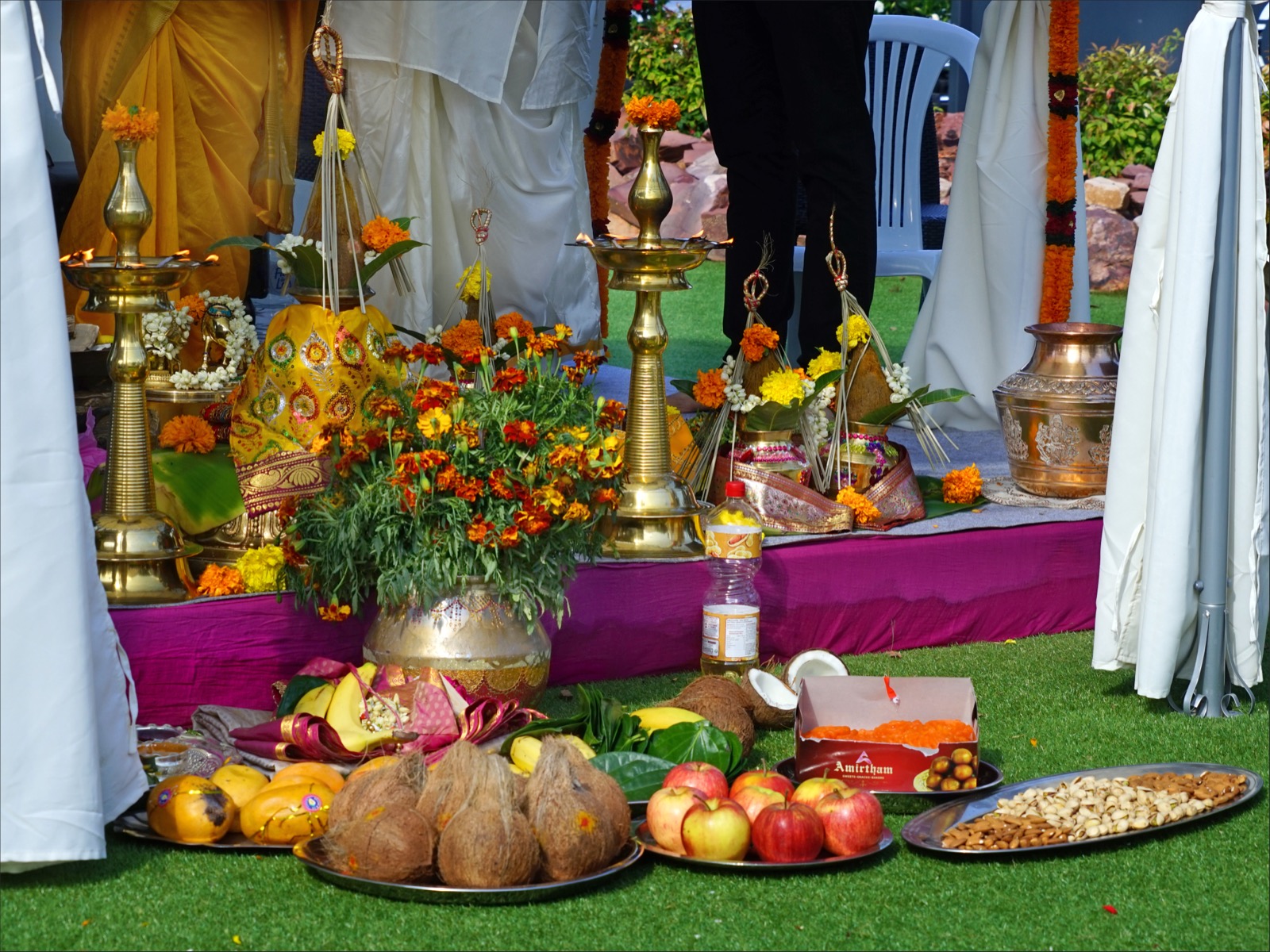
Photo: Jean-Pierre Dalbéra from Paris, France / CC BY — image credits
18 months is the ideal window for a luxury Indian destination wedding. Every top venue is available. Every first-choice vendor is bookable. You have time to be deliberate.
An 18-month wedding planning timeline gives Indian couples maximum flexibility for venue choice — the top Goa, Bali, and Bangalore venues book 12–24 months ahead — photographer availability, bridal designer timelines (10–12 months for custom couture from leading Indian designers), and complete decor design without rushing. Couples who begin 18 months out consistently access their first choices across every category. Those who begin at 12 months make compromises. Those at 6 months make significant compromises. 18 months is the window at which the entire wedding can be exactly what you envisioned. For destination-specific planning timelines: our Bali destination wedding guide, complete Goa weddings guide, and complete Kerala weddings guide each contain destination-specific planning sequences.
The Complete Month-by-Month Timeline
Below is the full 18-month plan — each month with specific tasks, the reasoning behind the sequence, and notes for NRI couples managing the process across time zones. The checkboxes are functional — use this page as your working checklist.
Month18
Vision, Budget, and First Conversations
This is the foundation month. Align on vision as a couple, set a realistic budget, and begin conversations with the planning studios who can execute it. Start broad; get specific only on the decisions that drive everything else.
Align on wedding vision as a couple — scale (intimate to grand), aesthetic (traditional, contemporary, fusion), priority destinations
Set a realistic total budget — include venue, planning and decor, catering, photography, bridal wear, guest travel support, and a 15% contingency buffer
Research 2–3 wedding planning studios whose portfolio genuinely matches your aesthetic — study full case studies, not only Instagram highlights
Schedule initial consultations (video or in-person) — assess their understanding of your vision, their production capability, and their communication style
NRI Note — Month 18
NRI couples should begin 18–24 months out. The complexity of coordinating across time zones, planning India visits efficiently, and managing extended family involvement requires the maximum lead time. Begin studio consultations over video call — a planning studio experienced with NRI clients will accommodate international schedules comfortably.
Month17
Engage Your Wedding Planning Studio
Month 17 is when you make the single most important decision of the planning process: who leads it. The right studio changes everything — access to venues that aren't publicly listed, quality of vendor network, ability to execute your vision at scale without compromise.
Make your final decision on your planning and decor studio — review contracts carefully, understand exactly what is included and what costs extra
Sign the engagement agreement and pay the initial retainer
Onboarding session with your lead planner — share inspiration images, family structure, cultural requirements, non-negotiables
Begin preliminary venue research — your planner guides you to options matching your aesthetic and budget before formal shortlisting begins
NRI Note — Month 17
Ensure your planning agreement clearly specifies how remote communication works — cadence of update calls, response time commitments, how decisions are documented and confirmed. Ask to speak to two or three previous NRI clients before signing. A studio with genuine NRI experience will have structured remote workflows, not ad-hoc communication.
Month16
Shortlist Venues — Site Visits — Book Your Venue
At 16 months, the best venues still have availability for your preferred date window. Every month you wait narrows your choices at the top end. This is the month to move decisively on venue selection.
Develop a shortlist of 4–6 venues with your planner — mapped to guest count, aesthetic, and budget including minimum spends
Conduct site visits or virtual tours arranged by your planner — assess ceremony spaces, natural light at different times of day, guest flow, on-site accommodation
Receive formal proposals from top 2–3 venues — compare like-for-like (in-house catering vs. external, room blocks, setup access windows)
Book your venue. Sign the contract. Pay the holding deposit. Confirm your date in writing.
NRI Note — Month 16
If you cannot travel to India for site visits, your planning studio should conduct them on your behalf with detailed video walkthroughs and written reports. Many Panigrahana NRI clients book venues without visiting in person — the planner's experience at that venue is the assurance. Schedule your first India visit for months 12–14, when multiple meetings can be consolidated into one efficient trip.
Month15
Book Photographer and Videographer
The finest wedding photographers in India are fully booked 12–18 months in advance for peak season dates. Month 15 gives you access to your first choice. Do not treat photography as a secondary decision.
Review complete portfolios (not just highlights) from 4–5 photographers whose aesthetic genuinely matches your vision
Introductory calls with top 2–3 — assess their personality and chemistry (you will spend 12+ hours with them), their destination wedding experience, how they handle multi-day events
Confirm your photographer and sign the contract — most require 30–50% advance on booking to hold the date
Begin discussing pre-wedding shoot location, timing, and visual direction
NRI Note — Month 15
If you want one photographer for both your Indian wedding and any international pre-wedding events or functions, discuss this scope and cost upfront. International travel for photographers involves flights, accommodation, equipment transport, and insurance — these costs should be clearly defined in the contract before signing.
Month14
Bridal Designer — Begin Consultations and Book
Full custom bridal couture from India's leading designers requires 10–12 months from first consultation to final delivery. Month 14 gives you the full runway. Begin now.
Research bridal designers for the main ceremony outfit and all pre-wedding functions (mehendi, sangeet, haldi) — these may be the same designer or different studios
Visit designer studios — bring inspiration references but remain open to their design direction, which will be informed by your specific requirements
Book your designer and confirm the design brief, timeline, and payment schedule
Map out outfit requirements across all functions — total number of looks, approximate budget allocation for each
NRI Note — Month 14
Plan this India visit as a focused bridal shopping trip. Most leading designers in Mumbai and Delhi require in-person consultations for custom work. Schedule 3–5 days of consecutive appointments to cover multiple designers in one trip. Some designers now offer virtual consultations for international clients as an initial step — ask each studio about their NRI process before planning your travel.
Month13
Decor Briefing — Mood Boards — Concept Development
With venue confirmed and vision clear, this is when decor design begins in earnest. The best wedding decor is not assembled in weeks — it is conceived, refined, and built over 12+ months.
Deep-dive creative session with your Panigrahana design team — share your vision, references, and equally important, what you want to avoid
Develop mood boards for each wedding event separately — ceremony, reception, mehendi, sangeet — each with its own distinct aesthetic story
Align on the overarching design narrative that connects all events with coherence without making them look identical
NRI Note — Month 13
Creative briefing sessions work very effectively over video call with shared screens and digital mood boards. Panigrahana uses collaborative digital tools that let you review and comment on design directions on your schedule, regardless of timezone — so being based internationally does not mean losing control of the creative process.
Month12
Send Save-the-Dates — Guest List Finalisation Begins
Twelve months out, it is time to formally notify guests. For destination weddings and any wedding with significant out-of-city or international attendance, 12 months' notice is the minimum for guests who need to book flights and plan leave.
Send save-the-dates — digital is appropriate at this stage; physical save-the-dates can follow for especially formal celebrations
Begin formal guest list development — separate confirmed guests from "considering" and set a firm target number for catering and seating planning
Identify guests requiring special logistics — elderly guests needing specific accommodation, guests with mobility requirements, guests travelling internationally for the first time
Begin preliminary hotel and accommodation research near the venue for different budget tiers
NRI Note — Month 12
For NRI weddings with significant international guest contingents, 12 months' notice is essential for guests who need to plan around school calendars and book flights at reasonable prices. Consider creating a wedding website with travel information, accommodation suggestions, visa guidance, and a local guide to the destination — this reduces the hundreds of individual questions you would otherwise field.
Month11
Catering Consultation — Entertainment Brief
Catering for a luxury Indian wedding spans multiple events over multiple days, with complex menus, dietary requirements, and service standards. The process begins now.
If your venue has in-house catering: first menu consultation session with the executive chef — share cuisine preferences, regional specialties, family dietary requirements, any signature dishes with sentimental significance
If using external caterers: shortlist 2–3 catering companies recommended by your planner — review their event portfolios, staff-to-guest ratios, equipment capabilities
Entertainment brief — what do you want guests to feel at each event? Discuss live musicians, DJ profiles, sangeet choreography support, special acts or experiences
Identify any high-lead-time entertainment requirements — specific classical musicians, celebrity performances, theatrical elements requiring custom build
NRI Note — Month 11
If family members will be performing at the sangeet or other functions and they are based internationally, discuss their requirements now: stage size, sound equipment specifications, rehearsal space needs, and arrival timing relative to the wedding. This is especially important when performers are travelling from multiple countries and need to coordinate travel with rehearsal schedules.
Month10
Decor Design Finalised and Signed Off
Month 10 is the creative milestone: the full design direction for every event is confirmed. Not every individual prop and flower — but the vision, palette, structures, and aesthetic story are locked and production can begin where needed.
Review and sign off on the complete decor direction for all events — mandap design concept, reception stage architecture, mehendi setting, sangeet stage
Confirm colour palette, floral profile (flower varieties, colour ratios, scale, whether fresh or mixed with preserved elements), and lighting philosophy for each event
Identify bespoke elements requiring early production — custom furniture, hand-embroidered fabrics, specialised sculptural installations
Begin sourcing specialty materials with long lead times — certain fabrics, imported flowers, or custom-made props that require 4–6 months to produce
NRI Note — Month 10
If you want to incorporate elements from your country of residence — specific flowers not grown in India, design objects, custom-printed materials — identify them now so they can be imported or shipped with adequate lead time. Customs and import logistics for event materials can be time-consuming; your planner manages this, but only with adequate runway.
Month9
Bridal Wear First Fitting — Grooming and Beauty Bookings
The first structured fitting milestone for bridal wear. The garment may only be in early construction — muslin or base fabric — but these sessions ensure the silhouette and foundation are correct before embellishment work begins.
First fitting session with your bridal designer — assess fit and silhouette on the foundation garment before embroidery and embellishment begins
Discuss any modifications to the original design concept based on how the garment is developing — this is the moment to adjust, not after embellishment is complete
Book grooming appointments — facial treatments, skin consultations, and hair care routines should begin 6–9 months before the wedding for best results on camera
Research and shortlist makeup and hair artists — book your preferred artist now before their calendar fills for your season
NRI Note — Month 9
Plan this India visit to coincide with your bridal fitting, a venue walkthrough, catering tasting (if available), and meeting your photography team in person. Consolidating multiple meetings into one well-planned India trip is the most efficient use of your travel. Your planner can coordinate the full itinerary for this visit to maximise every day.
Month8
Wedding Invitations Sent — RSVP Management Begins
Formal wedding invitations go out at 8 months. This gives domestic guests strong advance notice and international guests adequate time to confirm plans, book flights, and apply for visas if needed.
Finalise invitation design, text, and production specifications — paper weight, finishing techniques (foiling, letterpress, embossing), envelope design, inner card suite
Include accurate logistics information — venue address, accommodation options, shuttle timing, dress code for each event
Send invitations — physical invitations by courier, digital versions available for international guests who need them for visa applications
Set up RSVP tracking — your planner manages this systematically; you need a clear picture of confirmed numbers by month 5
NRI Note — Month 8
International guests needing Indian visas should receive their invitation with sufficient lead time for the application process — typically 6–8 weeks for most nationalities, though this varies significantly. Provide an official invitation letter with full event dates, venue details, and host contact information. Your planning team prepares these letters on your behalf.
Month7
Guest Accommodation Blocked — Travel Coordination
For destination weddings, guest accommodation and travel logistics are a significant project in themselves. Month 7 is when these are formally structured.
Negotiate group accommodation blocks at the venue hotel and 2–3 nearby properties spanning different price points
Create a guest accommodation guide with rates, booking instructions, and proximity to the venue
Plan transport logistics — airport transfers, inter-hotel shuttles, within-venue movement, accessible transport for guests with mobility requirements
If guests require charter flights or group travel bookings, begin these negotiations now with adequate lead time
NRI Note — Month 7
For NRI families with large international guest contingents, consider designating a family travel coordinator — one person per family group who fields questions from extended family about flights and accommodation. Your planning team provides all information; the family coordinator distributes it and answers questions, dramatically reducing the planning burden on you as the couple.
Month6
Trial Makeup and Hair Session
Six months before the wedding, your beauty team is confirmed and the trial session gives you meaningful time to adjust the look, explore alternatives, and arrive on your wedding day completely confident in how you will look.
Trial hair and makeup session with your confirmed artist — wear your veil, dupatta, or similar if possible to see the complete picture
Photograph the trial look in natural light and artificial light — these can look dramatically different, and your photographer can advise on what reads best on camera
Provide specific, honest feedback — a skilled artist welcomes precision, not vague approval
Confirm the full wedding morning beauty timeline — how many hours required, how many people are getting ready with you, the order of preparation
NRI Note — Month 6
If you plan to have a makeup artist from your country of residence do your wedding look, ensure they have specific experience with the types of bridal wear you will be wearing — particularly for heavily embellished lehengas where the overall aesthetic balance between makeup and outfit is quite specific. Trial photos shared with your photographer in advance allows them to calibrate their lighting approach for your look.
Month5
Menu Finalisation and Tasting
At five months, the guest count is approaching final. Menu planning is now specific: every course, every live station, every dietary requirement, every beverage programme for every event.
Full menu tasting session with your caterer or venue chef — evaluate every dish, assess presentation and quantity, request modifications
Finalise menus for every event — mehendi, haldi, sangeet, ceremony, reception — each with its own food story reflecting the event's tone
Confirm dietary requirement counts from RSVP data — vegetarian, vegan, Jain, gluten-free, nut-free, halal — ensure these are mapped to specific tables, not just overall counts
Confirm bar and beverage programme for each event, including non-alcoholic options for guests who don't drink
NRI Note — Month 5
International guests often have dietary habits that differ from Indian wedding catering norms — guests accustomed to lighter portion sizes, different vegetable preparations, or allergies uncommon in the Indian diet. Work through every dietary requirement with your caterer now, with specific dishes confirmed for specific requirements rather than a general "we'll accommodate."
Month4
Final Vendor Confirmations — Detailed Day-of Schedule Drafted
Four months out, the wedding is no longer distant. Every vendor relationship needs a formal reconfirmation. The detailed day-of schedule is drafted for the first time — not just the broad strokes, but minute-by-minute logistics.
Formal reconfirmation with every vendor — venue, photography, catering, decor, entertainment, transport, beauty — confirm scope, timing, and any changes since booking
Draft detailed day-of timelines for every event — vendor setup times, guest arrivals, ceremony timing, meal service windows, speeches, first dance — every significant moment sequenced
Share timelines with all vendors and request their feedback — a caterer may need 20 extra minutes for a specific service; a photographer may flag a light quality window that affects the ceremony timing
Identify any remaining open decisions and close them this month — the final two months should be execution, not decision-making
Month3
Second Bridal Fitting — Final Decor Production Begins
The bridal outfit is close to final. The mandap and major decor structures are beginning physical production. The wedding is taking tangible form.
Second fitting for main ceremony outfit — embellishment work is complete or nearly complete; assess the complete look, weight distribution, and movement in the garment
Begin fittings for all pre-wedding function outfits — every outfit should have at least one fitting scheduled
Confirm with decor team that all bespoke production elements — custom furniture, embroidered fabrics, specialised installations — are on schedule
Begin seating chart development using confirmed RSVP list — group guests by relationship, language, and comfort level, not only by family
Month2
Final Wedding Party Coordination — Pre-Wedding Shoots
The pre-wedding shoot happens now. Wedding party coordination is complete. Vendor payments are being cleared on schedule. The production machine is running.
Pre-wedding shoot at your chosen location — ensure the visual direction is clearly different from the wedding day aesthetic
Final briefing with wedding party on their specific roles, timings, dress codes, and any ceremonial responsibilities for each event
Clear all vendor payments per agreed schedules — no vendor should have outstanding payments or unresolved issues entering the final month
All stationery items (menus, seating cards, favour tags, welcome notes, ceremony programmes) finalised and delivered
Month1
Final Walkthrough — Rehearsal — Final Payments — Rest
All decisions are made. All vendors are confirmed. Production is running. The final month is for one final walkthrough, the rehearsal, and — importantly — protecting your energy and presence for the week itself.
Final venue walkthrough with your planning team — confirm all setup positions, lighting scenarios, sound levels, and guest flow logic
Ceremony rehearsal with officiant, wedding party, and immediate family — walk through every moment so the day itself feels familiar, not new
Final payments cleared for all vendors — nothing should be outstanding on the day
Welcome bags for out-of-city and international guests assembled, labelled, and ready for distribution at check-in
NRI Note — Month 1
Plan your arrival in India at least 5–7 days before the first wedding event. This allows time to adjust to the timezone, handle any last-minute logistics, and begin the emotional transition into the celebration week. Arriving jet-lagged two days before your wedding is one of the most common and avoidable mistakes for NRI couples. The planning work is done. Your job in the final week is to be present.
Week ofWedding
Our Team Takes Over Completely
The week of your wedding, Panigrahana's on-ground team manages every logistical detail — so you experience your own wedding as a guest. Fully present. Not managing anything.
Complete decor production and setup supervised across all event spaces — our team is on site from the first truck arriving to the last light being packed
All vendor coordination and arrival management — every supplier is briefed, their access windows confirmed, their setup requirements met
Guest management — arrivals, accommodation check-in assistance, transport coordination, welcome bag distribution
Real-time timeline management across every event — every minute is tracked and coordinated by a dedicated timeline manager
NRI couple? See our NRI wedding planning guide — designed specifically for couples based internationally.
Frequently Asked Questions
18 months is the gold standard for planning a luxury Indian destination wedding. At 18 months, every top venue in Goa, Bali, and Bangalore still has availability. Every first-choice photographer is bookable. Your bridal designer has full runway for custom couture (10–12 months). The decor concept can evolve organically rather than under deadline pressure. Couples who begin 18 months out consistently access their first choices across every category — with no meaningful compromises.
For a peak-season Goa destination wedding (November through February), book your venue 14–18 months in advance. The top venues — Taj Exotica, The Leela Goa, W Goa, St. Regis Goa — fill their premium wedding dates 18–24 months ahead. December and New Year's Eve dates at the finest properties can be booked 2 years out. Starting at 18 months, act on venue within the first 6–8 weeks — not months.
The best wedding photographers in India book 12–18 months in advance for peak season dates. At the 18-month horizon, you have your choice of photographers. By month 15 of your plan, photography should be confirmed. Waiting beyond 12 months remaining meaningfully reduces your options at the top tier — the photographers who shoot for Vogue and Harper's Bazaar are simply not available for peak dates at short notice.
Full custom bridal couture from India's leading designers requires 10–12 months from first consultation to final delivery. This includes design sessions, fabric selection, embroidery work (which can take 4–6 months alone for heavily embellished pieces), multiple fittings, and finishing. Semi-custom work from established designers takes 6–8 months. At 18 months, you have ideal runway for full custom work with time for adjustments.
NRI couples should start planning their Indian wedding 18–24 months before the date, and engage a planning studio at least 18 months out. The additional lead time accounts for coordination across time zones, fewer visits to India for meetings, the need to block international flights and accommodation for extended family early, and bridal designer consultations scheduled around India visits. NRI couples who engage Panigrahana at 18 months can plan the entire wedding with just 1–2 India visits before the wedding week.
18 Months. Every First Choice Available.
Begin Your Wedding Story Today
The best planning starts with a conversation. Tell us your date, your dream destination, and the scale you're imagining — we'll show you exactly what's possible.