Seven stages. One belief — that a wedding should be designed with the rigour of a building, from a blank page, never a rented catalogue.
India's luxury wedding market is built around logistics — booking vendors, filling dates, renting the same décor sets that appeared at a hundred other weddings. Panigrahana was founded by a trained architect on a different premise: that every wedding is an original spatial design problem, solved the way a building is. The Panigrahana Method is how we hold that promise across 500+ weddings — a repeatable path from a blank page to a finished celebration, with the same in-house team carrying the design from first sketch to the last guest.
Before a single idea is drawn, we understand who this wedding is really for.
The couple searches and dreams; the parents hold the budget and the final yes. We design for both. Discovery is where we map the family, the real budget, and the guest count — the single largest lever on what a wedding costs — so every decision that follows is grounded in truth rather than a template.
The wedding is treated as a spatial design problem — resolved on paper first.
This is where our founding discipline shows. An architect-led design blueprint sets the palette, the moodboard, the flow of guests through the space, and the sightlines to every important moment. Getting the architecture right on paper is what lets the build feel effortless in the room.
One narrative thread, carried across every function — expressed in original work.
A sangeet, a ceremony and a reception should feel like chapters of one story, not three unrelated events. We design an original mandap and décor concept for this couple — drawn, not pulled from a rental catalogue — so the design says something that belongs only to you.
Design becomes buildable — with drawings, structure and in-house fabrication.
A beautiful render means nothing if it cannot be built safely and on time. We translate the design into production drawings and structural detailing, then fabricate in-house. Because the people who designed it also build it, nothing is lost in translation.
Our own 30-person team runs the build and the days — vendors at cost, zero markup.
On the ground, a written control plan governs every hour. Our in-house team leads the install and calls the show, coordinating outside vendors transparently — passed through at cost, with no hidden markup. The design you approved is the design that appears.
Hospitality and logistics, designed with the same care as the décor.
A wedding is remembered as much for how guests were looked after as for how it looked. We design travel, stay and movement — with remote-first coordination for families abroad managing a wedding across time zones — so the people you love arrive relaxed and leave delighted.
The work continues after the last guest leaves.
A clean finish matters. We handle strike and handover, coordinate the delivery of your photography and film, and close the books with a transparent final account — so the celebration ends the way it was designed, with nothing left hanging. Every wedding also runs on the Panigrahana Couple Portal — design approvals, meeting minutes, decisions and payments in one private workspace.
Here is what the seven stages look like compressed into a single decision. In Discovery, Minole and Mir mentioned they met at Hampi — one sentence. In Architecture, that sentence became a geometry study: a pushkarani, the stepped tank beside Hampi's temples, descends toward the water in tiers, so the reception stage could descend toward the couple instead of towering behind them. In Engineering, those tiers went into production drawings and were skinned in patchwork panels sewn in our own workshop from old sarees and tailoring offcuts, lotus motifs appliquéd by hand; the suspended lotus canopy above the ceremony platform was signed off only after the venue confirmed its ceiling load points. Six designers carried that one idea from the first meeting to the final stitch, with both founders holding the vision the whole way. The brief gives us a sentence. The research turns it into a form. The build is done by the same hands that drew it.
“We treat every wedding as an original spatial design problem — not a coordination task. The Method is simply how we keep that promise, wedding after wedding.”
Chaithanya Ganesha · Architect & FounderTell us about the couple, the family and the celebration you're imagining. There's no template waiting — only a blank page and an architect's process for filling it.
Discovery is the part of the Method that is easiest to claim and hardest to show, so here is the proof. Minole and Mir told us they met at Hampi. The reception stage at Mukta Hall was then built as a pushkarani, the stepped tank that sits beside the temples there, so it steps down towards the couple in tiers instead of standing behind them as a backdrop.
No catalogue produces that. It came out of one sentence in a first meeting, which is why we ask where you met before we ask what your colours are.
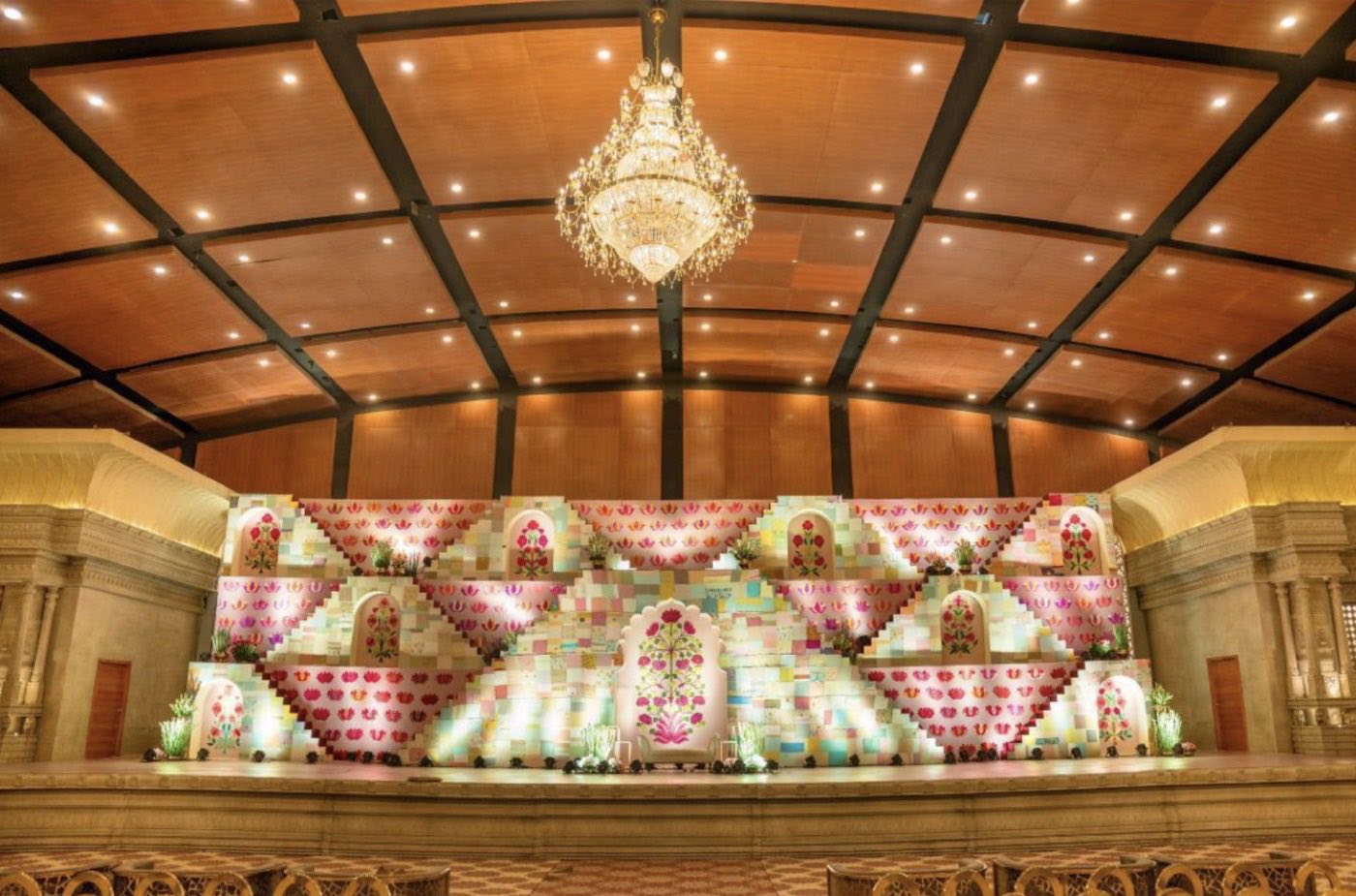
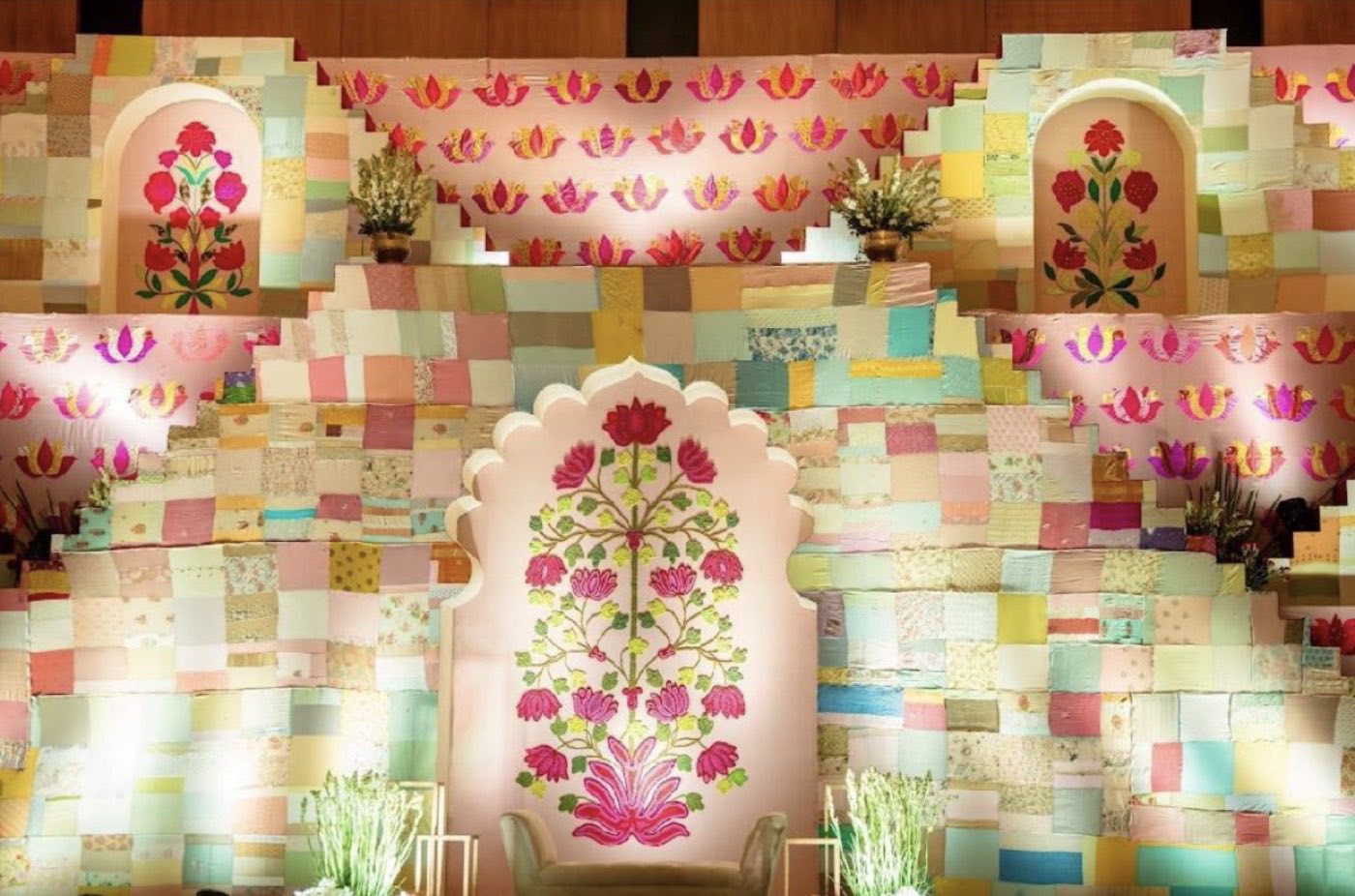
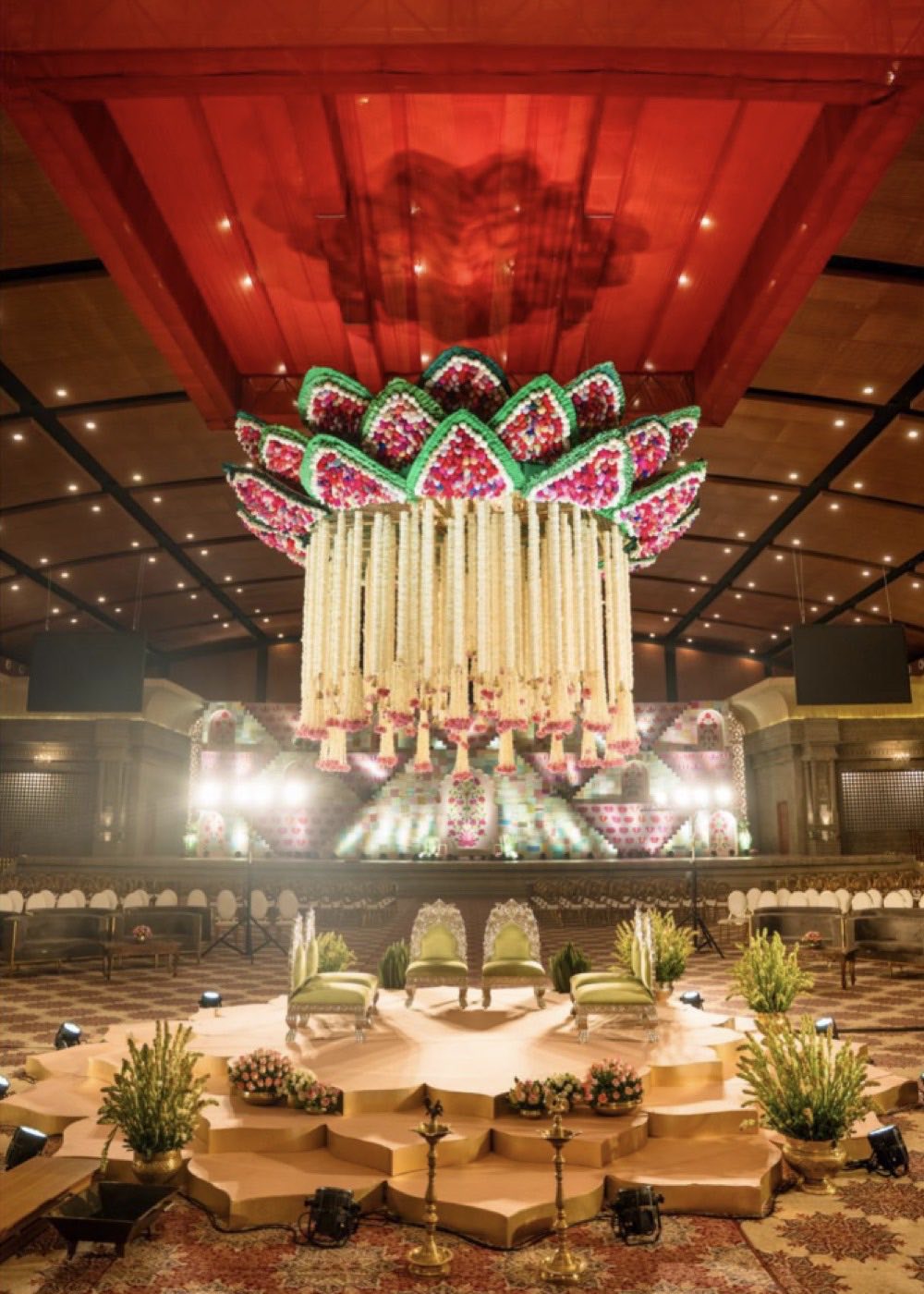
Every wedding designed and fabricated in-house — this is what that looks like.
Colour and theme, most often. That is exactly what the four concept rounds are for — you should feel free to move the palette and the mood until it is genuinely yours, which is why we do not cap revisions.
Not a call centre and not a sales desk — the planner and designer who would run your wedding. Tell us the date, the city and roughly how many people, and you will get a real answer about what is possible and what it costs.