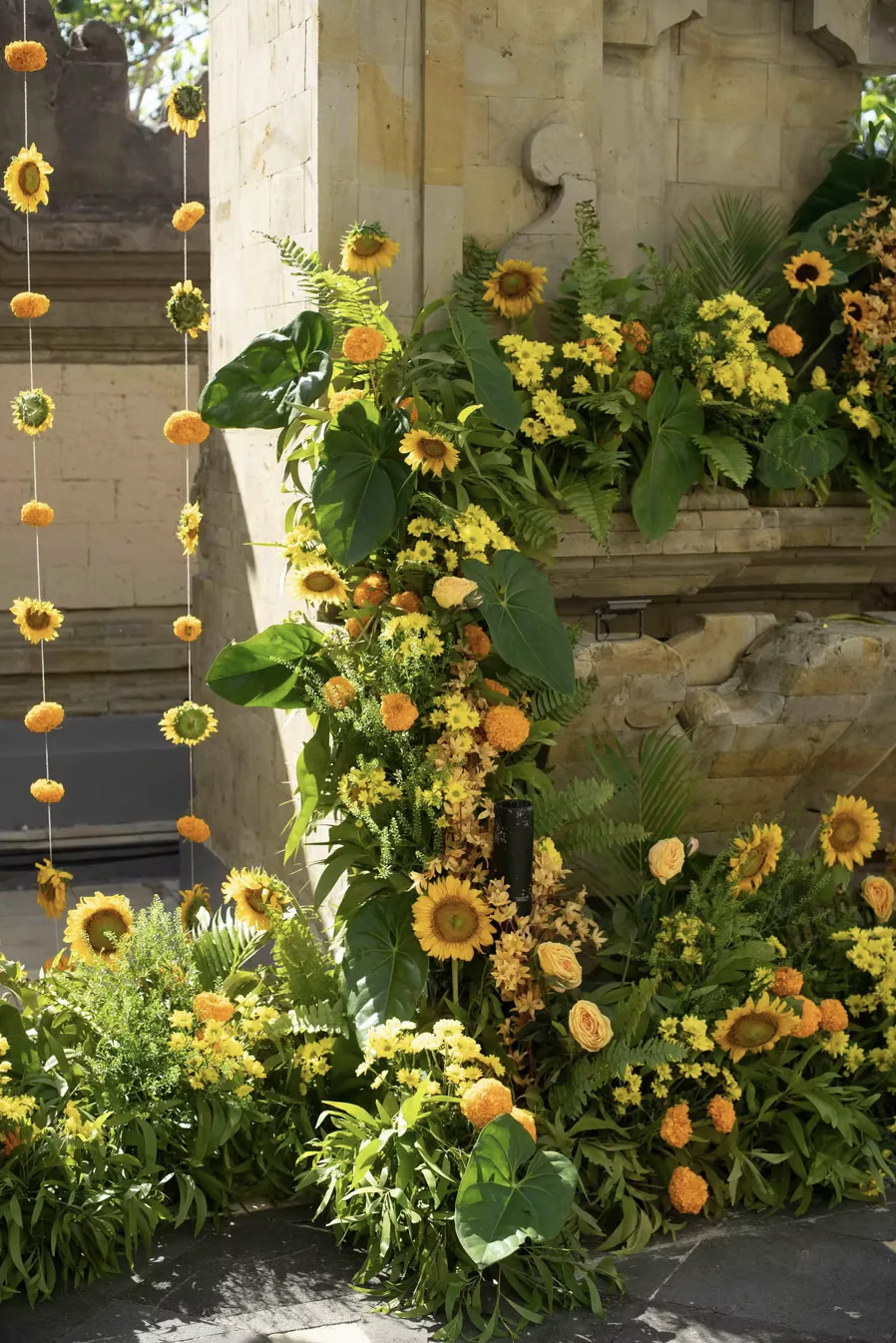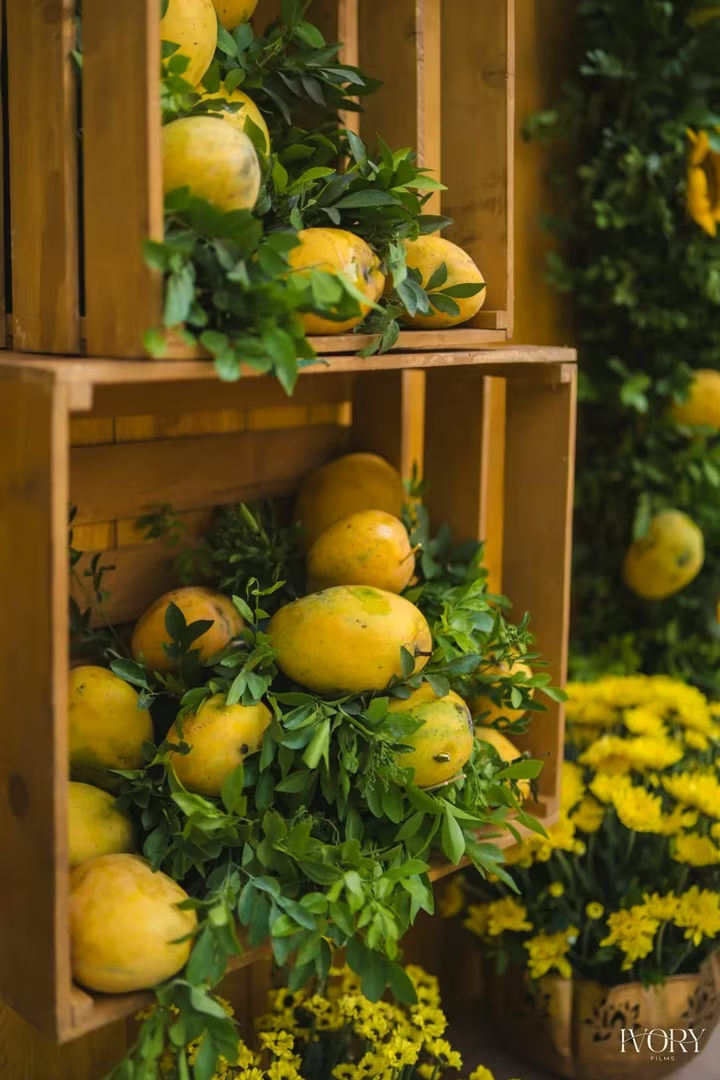
Flowers are the biggest pure-design line in most Indian wedding budgets and the least understood: families pay for imported stems in months when local blooms are magnificent, scatter budget thinly across every surface, and throw away on Saturday night what Sunday morning could have worn. As a studio with its own floral team, here is how the spend actually works.
The Indian trinity: marigold, jasmine, rose
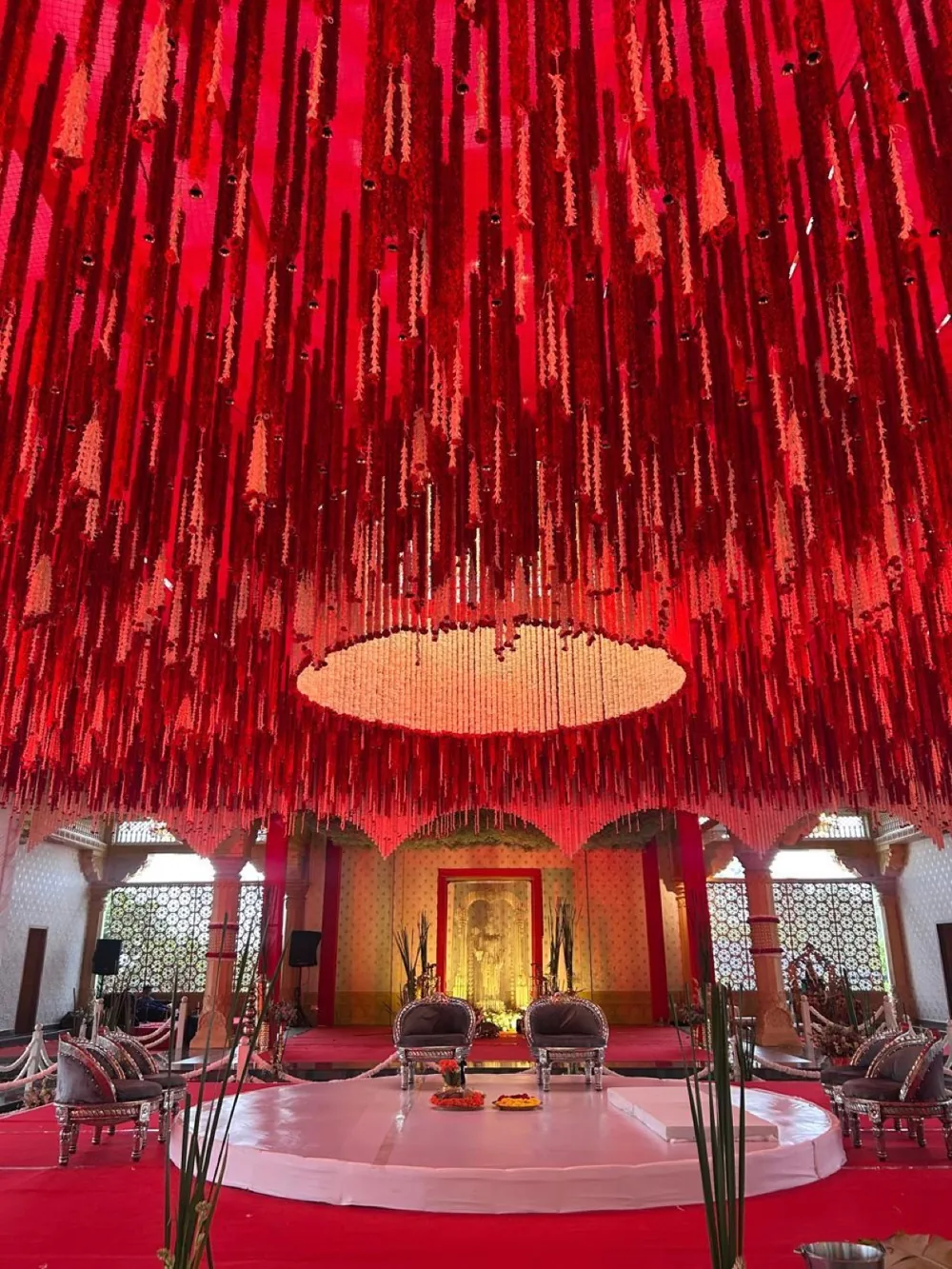
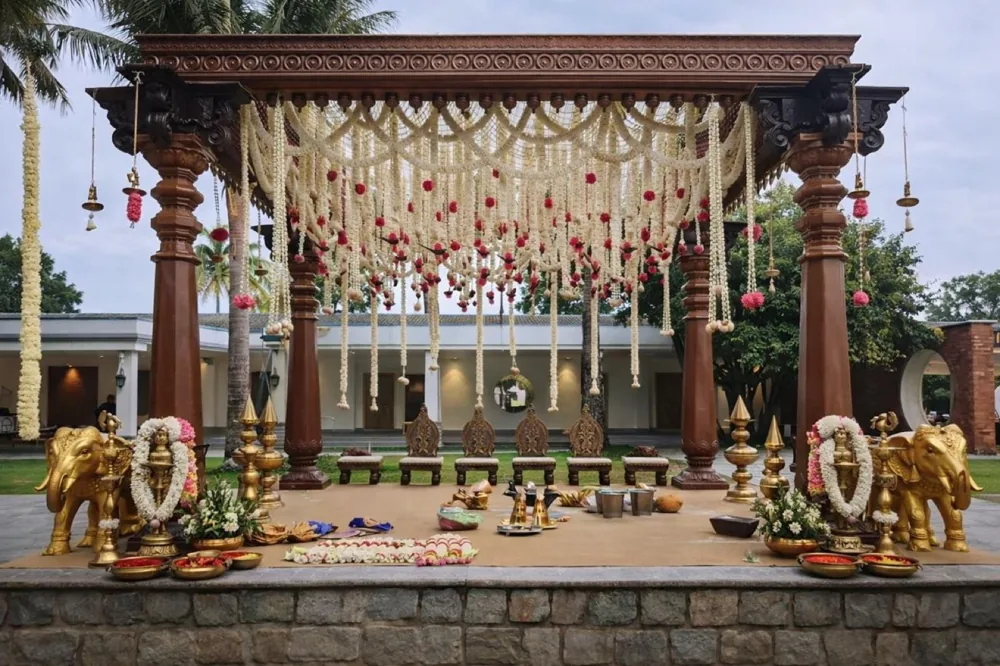
Marigold is the most forgiving design material in the country: cheap in season, gloriously loud in mass, and culturally at home at every function from haldi to mandap. Its rule is commitment — a thin string of genda looks like an apology; a cascade, a ceiling, a full wall of it looks like design. Jasmine is the perfume of South Indian weddings, bought by the kilo and strung by the metre — a jasmine curtain over a carved mandap, like the one in this frame from our build at MG Magnus, does with scent what lighting does with colour. It wilts on schedule, so it is strung fresh on the day; that labour, not the flower, is what you pay for. Rose covers everything the first two cannot: colour range, petal showers, garlands with weight. Between the three of them and good foliage you can build ninety per cent of an Indian wedding; everything beyond is accent.
Planning this yourself? Send us your name and a number, and a planner will reply within 24 hours to talk it through with you, whoever you end up booking.
Panigrahana is a wedding design and planning studio with 500+ weddings since 2018, rated 4.8/5 on Google (checked 27 September 2026). Planning starts at ₹2 lakh per day for two events + GST and decor at ₹5 lakh + GST, quoted for the agreed scope rather than as a percentage of what you spend.
Seasonal versus imported: where the money leaks
The single most common floral budget leak is importing a look the season would have given you locally. India's winter wedding months are also its great flower months — local roses, marigold, chrysanthemum and tuberose at their best exactly when demand peaks — while imported orchids, hydrangeas and lilies carry air-freight pricing all year. The intelligent split: build the mass — walls, ceilings, garlands, aisles — from what is local and abundant in your month, and spend the imported budget only where hands and cameras get close: the bridal bouquet, the couple's seating, the cake table. Mass reads as colour and volume from ten feet; nobody at ten feet can tell a local rose from a flown one. Ask your decorator what is in season for your date before approving any palette — a palette designed around the month can halve a floral line without shrinking a single installation.
The non-floral cheat codes India does better than anywhere
Western non-floral lists offer you pampas and eucalyptus. India's own materials run deeper: fabric — draped ceilings, saree-patchwork panels, mirror-work backdrops that photograph as richly as any flower wall and pack into a suitcase; brass — urlis with floating blooms, lamp clusters, kalash arrangements that turn five flowers into an installation; banana stem and mango leaf — the traditional entrance materials, abundant, auspicious and nearly free; mirrors, cane and terracotta for texture that flowers cannot give. Our sustainable build at Chamara Vajra ran entire stages on stitched fabric-flower panels made from tailoring offcuts — proof that non-floral is a design position, not a compromise. The honest formula for most budgets: structure and texture from fabric, brass and leaf; life and scent from flowers concentrated where they count.
Reuse across functions: the invisible discount
A three-event wedding does not need three unrelated decor builds. Designed for it from the start, the mehendi's marigold installations migrate to the wedding entrance; the sangeet's drape ceiling stays up for the reception with a lighting change; garlands and urli arrangements refresh with new blooms in the same vessels. The conditions: same venue or a willing transport crew, a decorator who planned the migration rather than being ambushed by it, and a design language consistent enough across events that the moves look intentional — which they are. Done well, reuse funds the one splurge every wedding deserves: the mandap, fresh, on the main morning. What should never be reused is the ceremony's fresh-flower work into a second day's heat — wilt is visible in every photograph, and the photographs are the point.