Wedding insurance exists in India, several major insurers write it, and almost nobody planning a wedding understands what it does — including some of the people selling it. From the planning side of many weddings, here is the honest read: what the product covers, where its edges are, and which of the risks that keep families awake are actually handled by paperwork of a different kind. We are planners, not insurance advisors; treat this as orientation and the policy wording as the authority.
What the product actually is
Indian wedding policies are typically bundled covers with named sections: cancellation or postponement of the event for specified reasons — fire, natural calamity at the venue, serious illness or death in the named family circle; venue and property damage liability; burglary or theft of valuables within stated limits and conditions; and personal accident covers for named persons. The premium scales with the sums insured per section. Read that list again for what powers it: specified reasons. Wedding insurance is a catastrophe product — it answers the question "what if something terrible and external stops the wedding" and answers it reasonably well.
Planning this yourself? Send us your name and a number, and a planner will reply within 24 hours to talk it through with you, whoever you end up booking.
Panigrahana is a wedding design and planning studio with 500+ weddings since 2018, rated 4.8/5 on Google (checked 27 September 2026). Planning starts at ₹2 lakh per day for two events + GST and decor at ₹5 lakh + GST, quoted for the agreed scope rather than as a percentage of what you spend.
What it does not do
The gaps map almost perfectly onto what families actually fear. Ordinary rain is not a peril — a drizzle that ruins your lawn plan is a rain-plan failure, not a claim; weather triggers, where they exist, are calamity-grade. Cold feet is excluded everywhere — no Indian policy pays for a called-off match. Vendor disappointment is not vendor failure — a decorator who delivers something worse than the render is a contract dispute; policies respond, where they do, to defined non-performance, with documentation burdens that make prevention infinitely better than claim. And jewellery riding in checked luggage or left unattended falls to the conditions fine print — theft covers come with custody requirements that ordinary wedding chaos routinely violates. The pattern: insurance handles the rare and catastrophic; it does not handle the common and disappointing.
When the premium makes sense
The cover earns its cost where the sums at risk are concentrated and external catastrophe would actually strand them: large advance-heavy destination weddings (a monsoon-adjacent date, lakhs in non-refundable advances, one venue holding most of the money), weddings with significant valuables in transit and on display, and events whose scale makes third-party liability real. For a modest home-city wedding, the same premium usually buys more protection spent on better contracts and a professional planning layer. If you do buy: insure early rather than in the last month (covers respond to what was unforeseen at purchase), name the right people, disclose honestly, and file the venue and vendor contracts with the proposal — the claim you may one day make is built from the paperwork you file now.
The protections that matter more
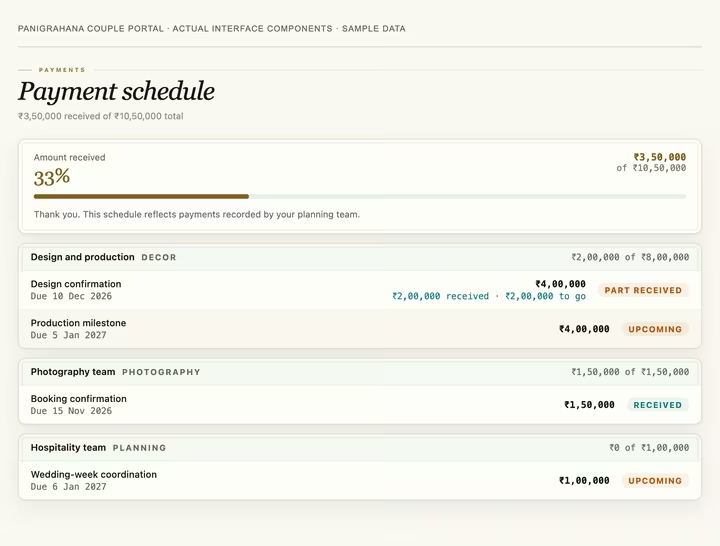
For the risks families actually lose money to, the effective instruments are unglamorous: the refund ladder in the venue contract (what comes back at each cancellation horizon); milestone payment schedules that never leave a vendor holding money they have not earned; force majeure clauses that name what happens to advances; the rain plan designed from day one rather than priced as a panic; and vendors solvent and established enough that non-performance is unlikely — the true meaning of the premium a professional outfit charges over the cheapest quote. Our venue playbook and contracts guide carry the specifics. Insurance sits on top of that stack as the catastrophe layer — worth having at scale, and worthless as a substitute for the stack beneath it.