Kerala wedding guest logistics is the operational challenge that determines whether a destination wedding feels effortless and joyful for your guests, or exhausting and disorganised. Kerala's geography is exquisitely beautiful and simultaneously complex for large-group travel: three separate international airports serving different parts of a long coastal state, backwater venues that require boat transfers, remote clifftop resorts with limited road access, and a road network that requires advance planning for large vehicle movements. Across 500+ weddings since 2018, including weddings in Kerala, Panigrahana has developed a systematic approach to every element of this challenge. This guide shares what we know. For the full Kerala destination overview, read our complete Kerala weddings guide; guest logistics costs are in our Kerala wedding cost breakdown.
Working out guest accommodation? The guest room calculator turns your guest count into rooms, room-nights, a budget band and transfer waves in about a minute.
Understanding Kerala's Three Airports — Which Gateway for Which Guests
The single most important piece of information to communicate to outstation guests is which airport to fly into. Using the wrong airport can add three to five hours to a guest's journey — and in Kerala's peak season traffic, road transfer times from the wrong airport can be genuinely disruptive to the wedding schedule.
- Kochi International Airport (COK). The busiest and best-connected airport in Kerala. Serves weddings in the backwater heartland — Alleppey (Alappuzha), Kumarakom, Kottayam, Marari Beach — and Fort Kochi. Transfer time from COK to the backwater zone is 1.5 to 2.5 hours depending on traffic and specific venue. Direct flights from Mumbai, Delhi, Chennai, Bangalore, Hyderabad, and most Gulf cities. The correct airport for the majority of outstation guests attending a central Kerala backwater wedding.
- Thiruvananthapuram International Airport (TRV). Serves south Kerala including the Kovalam coast, Varkala, and the Neyyar Dam / Poovar region. Transfer time from TRV to Kovalam is 20 to 40 minutes. For weddings at The Leela Kovalam, Niraamaya Surya Samudra, or Turtle on the Beach, guests should fly into TRV rather than COK — the difference in transfer time is substantial. Direct flights from Mumbai, Delhi, Singapore, Dubai, and Gulf cities.
- Calicut International Airport (CCJ). Serves north Kerala including Kozhikode (Calicut), Wayanad, and Bekal. For weddings at Taj Bekal, this is the correct arrival airport — transfer time from CCJ to Bekal is approximately 3.5 to 4 hours. However, CCJ has fewer connections from Indian metros and more guests may find it necessary to transit through COK or TRV. Plan accordingly and check the latest flight schedules when communicating arrival guidance to your guest list.
Airport Transfer Management — The System That Works
For a Kerala wedding with 150 or more outstation guests, the airport transfer operation is a significant logistics exercise. The approach we use at Panigrahana is to establish a coordinated fleet operation rather than leaving guests to arrange individual taxis.
Six weeks before the wedding, we collect all guest arrival flight details via a shared form sent with the save-the-date or invitation. We cluster guests by airport, arrival date, and arrival time window, then allocate them to vehicles based on group size and VIP priority. Large coaches (24-seater and 40-seater) handle groups with aligned arrival times. Twelve-seater vans handle smaller clusters. Premium sedans and SUVs are reserved for immediate family, grandparents, and VIP guests. A Panigrahana ground coordinator is present at each active airport for the arrival window — typically a 36-hour period ending on the morning of the wedding day.
The coordinator holds a printed manifest of all expected arrivals, monitors flight status in real time, and manages the inevitable changes — delayed flights, missed connections, guests who booked different itineraries from the ones they shared. Every vehicle has a WhatsApp contact for the ground team. A central operations number is communicated to all guests so that anyone who arrives unexpectedly or misses the organised transfer can reach us immediately.
Houseboat Accommodation for VIP Guest Groups
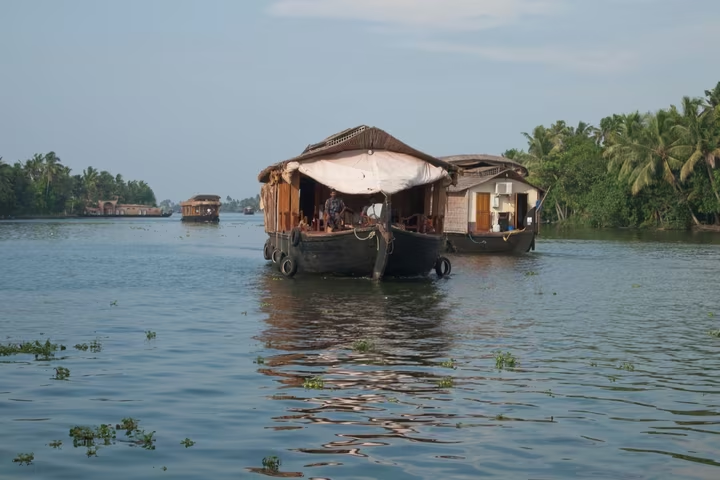
For backwater weddings at properties like Raviz Kadavu, Coconut Lagoon, or Marari Beach, one of the most memorable accommodation options for small VIP guest groups is the traditional Kerala kettuvallam houseboat. These converted rice barges — fitted with 1 to 4 air-conditioned bedrooms, private bathrooms, a living area, a sun deck, and staffed with a crew and an onboard cook — provide an accommodation experience that is completely unique to Kerala.
The houseboat moored alongside a resort's private jetty becomes a floating guest villa — with the immediate access of a resort room but the complete privacy of a separate vessel. For the parents of the couple, grandparents, or close family from overseas, the houseboat is an extraordinary statement of hospitality. An onboard Kerala breakfast served at dawn on the backwater is a memory that outlasts almost any other element of the wedding experience.
- Premium houseboat specifications. Look for vessels with proper air conditioning (not just fans), western-style en-suite bathrooms (not shared), a generator for overnight power, and an experienced cook. Premium houseboats typically charge ₹20,000–₹35,000 per night all-inclusive. Inspect the vessel in advance or rely on a trusted agent's recent verification.
- Mooring logistics. Confirm with the venue whether private houseboats can moor at the resort jetty for the wedding period. Most backwater resorts are familiar with this request and can accommodate it; some have preferred houseboat partners.
- Book 3–4 months ahead. Premium houseboats in Alleppey and Kumarakom are heavily booked during peak season (November–February). Last-minute availability is limited.
Resort Block Bookings — Securing Rooms and Managing the Room Block
Most luxury Kerala wedding venues (Taj Bekal, The Leela Kovalam, Niraamaya, Raviz Kadavu) have a finite number of rooms. For large weddings, it is common — and often necessary — to block-book a significant portion of the property. This means negotiating a room block agreement with the hotel that reserves rooms at an agreed rate for your guests, with a pickup deadline and a release date after which unsold rooms return to the hotel's inventory.
The room block should be confirmed at least 4 to 6 months before the wedding. Panigrahana manages the room block on behalf of the couple — communicating room categories and rates to guests, collecting preferences, allocating rooms according to family hierarchy and relationship priority, and managing the inevitable last-minute changes and extensions. The room allocation is a significant part of the guest management operation and one of the areas where experienced coordination saves enormous time and family stress.
Welcome Kits — The First Impression at Their Room Door
The welcome kit placed in each guest's room on arrival is one of the highest-impact per-rupee investments in guest experience at a Kerala wedding. It signals care, attention to detail, and genuine hospitality — and it orients guests immediately with the practical information they need. A thoughtfully assembled Kerala welcome kit typically contains the following elements.
- Printed event schedule. A clean, well-designed schedule of all wedding events — ceremony times, venue locations, transport pickup times, dress code guidance for each event, and the wedding website QR code. Printed on quality paper with the wedding design.
- Emergency contact card. A small card with the names and WhatsApp numbers of the Panigrahana day-of coordinator, the venue front desk, and the couple's point-of-contact family member. Guests should be able to reach someone immediately for any requirement.
- Kerala flavour experience. A small selection of Kerala artisan items: fresh Kerala banana chips (a vacuum-packed local variety, not commercial), a packet of Kerala black pepper or cardamom from a local estate, and a small bottle of cold-pressed coconut oil. These items cost very little but create a strong sense of place and local authenticity.
- Local Kerala artisan gift. For premium weddings: a piece of handmade Kerala craft — a small bronze Nataraj figure, a hand-woven Kasavu cotton item (a small pouch or a bookmark), or a single-estate Kerala tea tin. The artisan origin should be noted on a small card.
- Local experiences guide. A printed card listing three to five locally recommended activities for guests with free time: the nearest backwater ferry point, the local temple open for morning prayer, a recommended local restaurant for a casual lunch. Keep it concise and curated — five genuine recommendations are more useful than a comprehensive tourist pamphlet.
Day Trips and Guest Activities — Making the Most of Kerala
A Kerala destination wedding typically brings guests from Mumbai, Delhi, Bangalore, the Gulf, and overseas who may never have been to this part of the country before. Building optional guest activities into the wedding schedule — on the day before the ceremony or during free time on the wedding day — transforms the wedding from a one-day event into a genuine Kerala experience for guests who would otherwise simply be sitting in the resort.
- Backwater boat cruise (2–3 hours). A guided tour of the narrow backwater canals by small boat, stopping at a coir-making village and a toddy shop. Ideal activity for the morning before the ceremony or the day before. Universally beloved by first-time visitors to Kerala.
- Ayurveda introduction session. Most premium Kerala resorts have an Ayurveda centre. A group session — an introductory consultation and a short synchronized massage for 10 to 20 guests — is a uniquely Keralite experience that guests find both novel and genuinely restorative before a long wedding day.
- Fort Kochi heritage walk. For weddings in the backwater zone with Fort Kochi accessible by road or ferry, a half-day heritage walk of the Dutch lanes, the Chinese fishing nets, and the Jewish Synagogue area is excellent for culture-focused guests. Best managed with a professional heritage guide rather than self-guided.
- Kathakali performance. A private Kathakali performance at the venue — with the performer arriving in advance to apply the full facial makeup in front of an audience (a performance in itself) — is a culturally extraordinary experience for guests who have never encountered Kerala's classical dance-drama tradition.
Browse Kerala wedding venues to understand the specific logistics of each property. Planning from overseas? Read our guide to Traditional Kerala wedding decor and flowers — briefing guests on the floral and ceremonial traditions they will witness. Kerala backwater wedding for 100 guests — the logistics-intensive backwater format at this scale. overseas Kerala wedding planning from the UK and US. Ready to begin? Talk to our team.
Panigrahana's Concierge Approach to Guest Logistics
At Panigrahana, guest logistics is not a separate service — it is an integral part of every wedding we plan. We assign a dedicated guest logistics coordinator to every wedding, separate from the wedding day coordinator. This person is responsible for the airport transfer operation, room block management, welcome kit sourcing and assembly, the activities programme, and real-time communication with all outstation guests from the moment they confirm their attendance. The couple receives a single daily update with the status of the entire guest logistics operation, so they are never in the dark about who has arrived, who is delayed, and what needs attention.
Frequently Asked Questions
Which airport should outstation guests fly into for a Kerala wedding?
Kerala has three international airports serving different regions. Kochi International Airport (COK) is the most connected and serves backwater weddings (Alleppey, Kumarakom) and Fort Kochi. Thiruvananthapuram Airport (TRV) serves south Kerala coast weddings at Kovalam and Varkala. Calicut Airport (CCJ) serves north Kerala including Bekal. Always advise guests on the correct airport based on your specific venue location — using the wrong airport can add 3–5 hours to their journey.
Can we book houseboat accommodation for wedding guests?
Yes — houseboat accommodation for small VIP guest groups is one of the signature Kerala wedding guest experiences. Premium kettuvallam houseboats with 1 to 4 air-conditioned bedrooms, en-suite bathrooms, and an onboard cook range from ₹20,000–₹35,000 per night. They moor at the resort jetty and provide complete privacy while remaining adjacent to the wedding venue. Book 3 to 4 months ahead during peak season (November–February).
How do we manage airport transfers for 150+ outstation wedding guests?
The most effective approach is a coordinated fleet management system: collect guest arrival flight details 6 weeks ahead, cluster guests by airport and arrival window, allocate coaches, vans, and premium sedans accordingly, and place a ground coordinator at each active airport. A central operations WhatsApp contact is communicated to all guests for real-time support. This eliminates individual taxi chaos and ensures no guest waits longer than necessary or faces confusion on arrival.
What should a Kerala wedding welcome kit contain?
A Kerala wedding welcome kit should include a printed event schedule with venue addresses, transport times, and dress codes; an emergency contact card with the coordinator's WhatsApp; local Kerala artisan food items (fresh banana chips, black pepper, coconut oil); a handcrafted Kerala artisan gift for premium weddings; and a concise guide to three to five recommended local experiences. The kit signals genuine hospitality and orients guests immediately, reducing the coordinator's workload on the wedding day.
Plan Your Kerala Wedding Guest Experience
Every Guest Arrives Smoothly. Every Guest Leaves Transformed.
Panigrahana manages every element of Kerala wedding guest logistics — airport transfers, houseboat bookings, resort blocks, welcome kits, and activities — so you can focus on your wedding, not your guests' travel plans.
Begin Your Story