Most planners will tell a couple like this to blend the two traditions into a single ceremony. It sounds efficient and inclusive. In practice it means the Hindu rituals get cut for time, the Western ceremony gets absorbed into somebody else's structure, and both sets of parents come away feeling their side was the one that compromised.
Lindsay and Dharmin did the opposite at The St. Regis Goa. An American bride, an Indian groom, 250 guests, and two complete ceremonies with nothing borrowed between them. It made the programme longer and it made the wedding considerably better. Their full story is here.
Two Ceremonies Cost Less Than Families Expect
The objection to two ceremonies is almost always budget, and the arithmetic is usually wrong. A destination wedding already runs several days. The guests are already flown in and housed, the venue is already contracted, the crew and the production kit are already on site. A second ceremony adds a set, a floral scope and a meal service. It does not add the expensive part, which is everything around it.
What it does add is planning load, and that is the real cost. Two ceremonies means two rehearsals, two sets of expectations to manage, and two families who each need to feel their day was the important one. That is a planning problem rather than a money problem, and it is the part worth paying someone to hold.
The Hindu Ceremony, Built to Be Legible
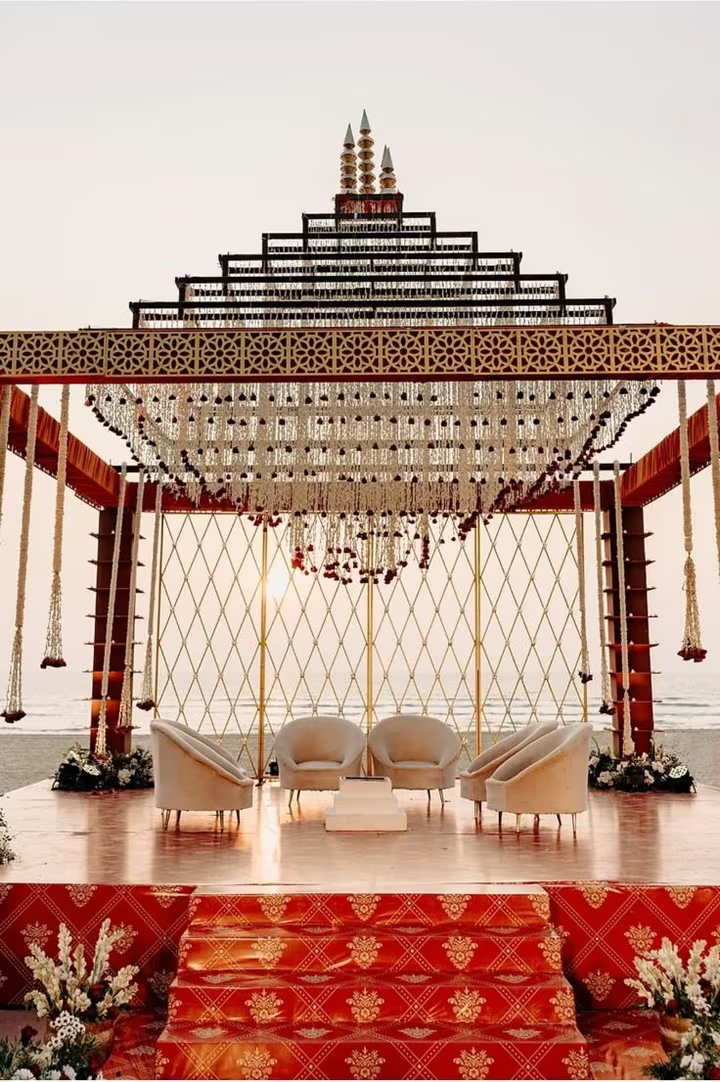
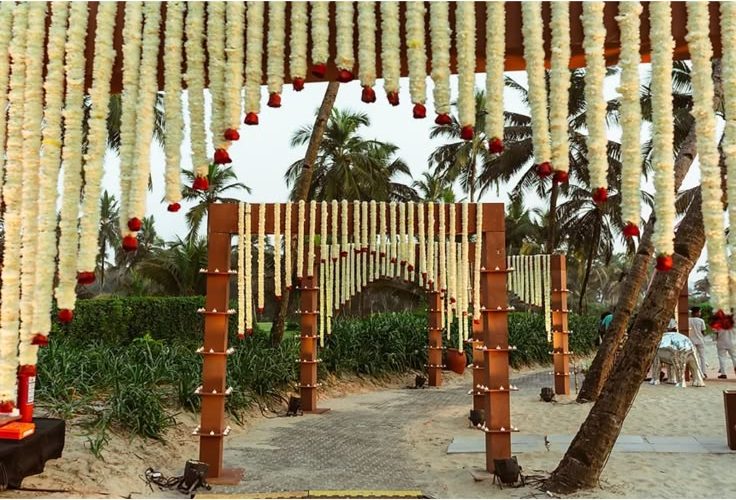
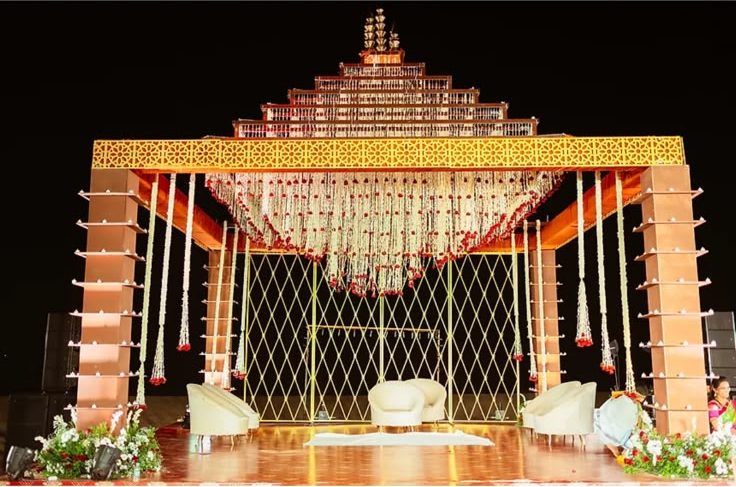
A traditional South Indian ceremony in front of guests who have never seen one is a design problem as much as a ritual one. We built the mandap on the sand with a tiered gopuram silhouette rising above the canopy, hung it with jasmine and rose garland curtains, and faced it at the sea so the ceremony ran into the sunset. Guests came down through a corridor of hanging jasmine on timber frames, past brass lamps standing in the sand, which does more to signal something significant is about to happen than any amount of explanation.
- Sightlines before decor: a mandap seen from one side only leaves most guests watching backs — seat on two or three sides where the site allows it
- A running order in guests' hands: what each ritual is and roughly how long the ceremony lasts, so nobody is quietly wondering when it ends
- Length is not the enemy: guests sit happily through a long ceremony they understand, and badly through a short one they do not
- Arrival sequence does the work: the walk in sets the register, and it is cheaper to build than anything on the stage
- Shade and water: obvious, routinely forgotten, and the single most common complaint from guests at an outdoor Indian ceremony
Let the Western Ceremony Be a Western Ceremony
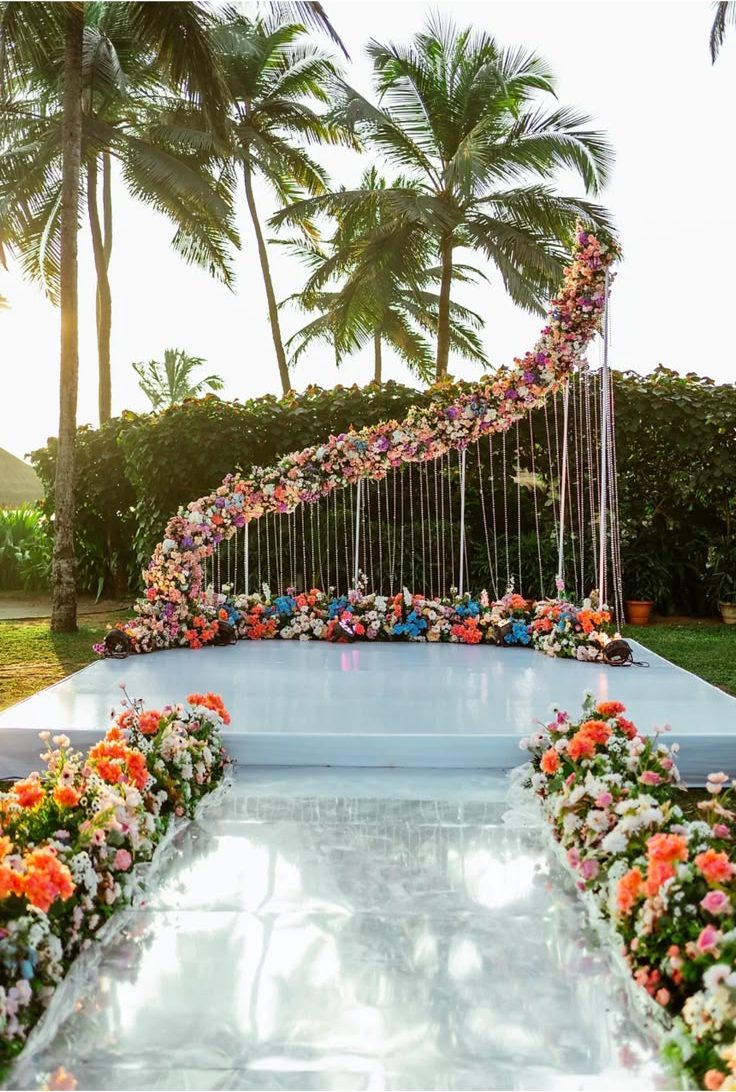
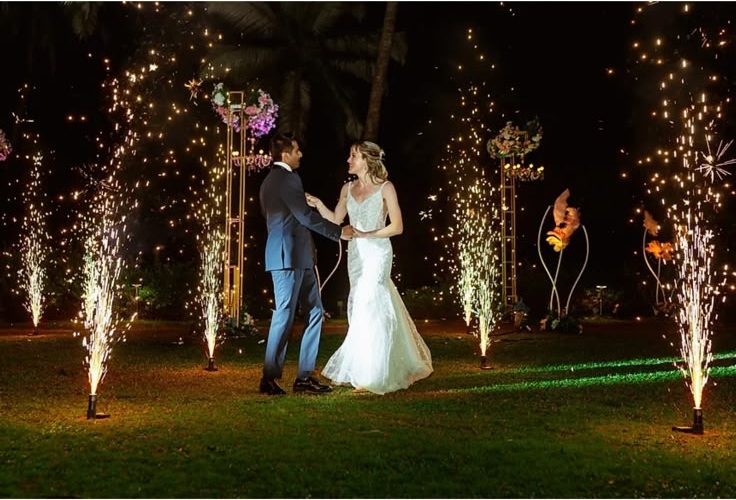
The temptation with the second ceremony is to Indianise it a little, so it feels connected. Resist that. The American ceremony here was a sweeping pastel floral arc over a mirrored aisle with crystal strands falling from it, chairs tied in blush ribbon on the lawn under the palms, and no Indian motifs anywhere in it. It was the most restrained set of the wedding, and it was the one guests from the bride's side recognised as theirs.
What ties a wedding like this together is not a repeated colour. It is that both ceremonies are produced to the same standard, and that the guest experience between them is seamless. Nobody remembers whether the palettes rhymed.

The Haldi Is the Best Introduction You Have
If overseas guests are going to meet Indian wedding culture somewhere, the haldi is the right place. It is participatory, it is funny, it has no solemnity to violate, and everybody ends up looking the same by the end of it. Guests who have already been covered in turmeric are not nervous at the ceremony two days later.
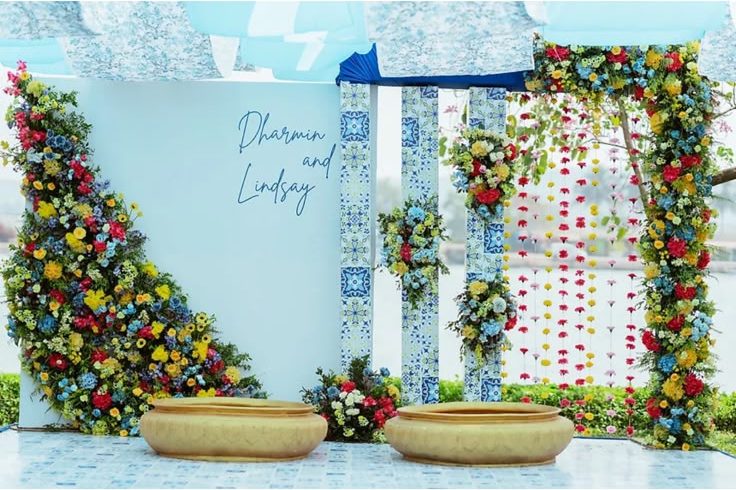
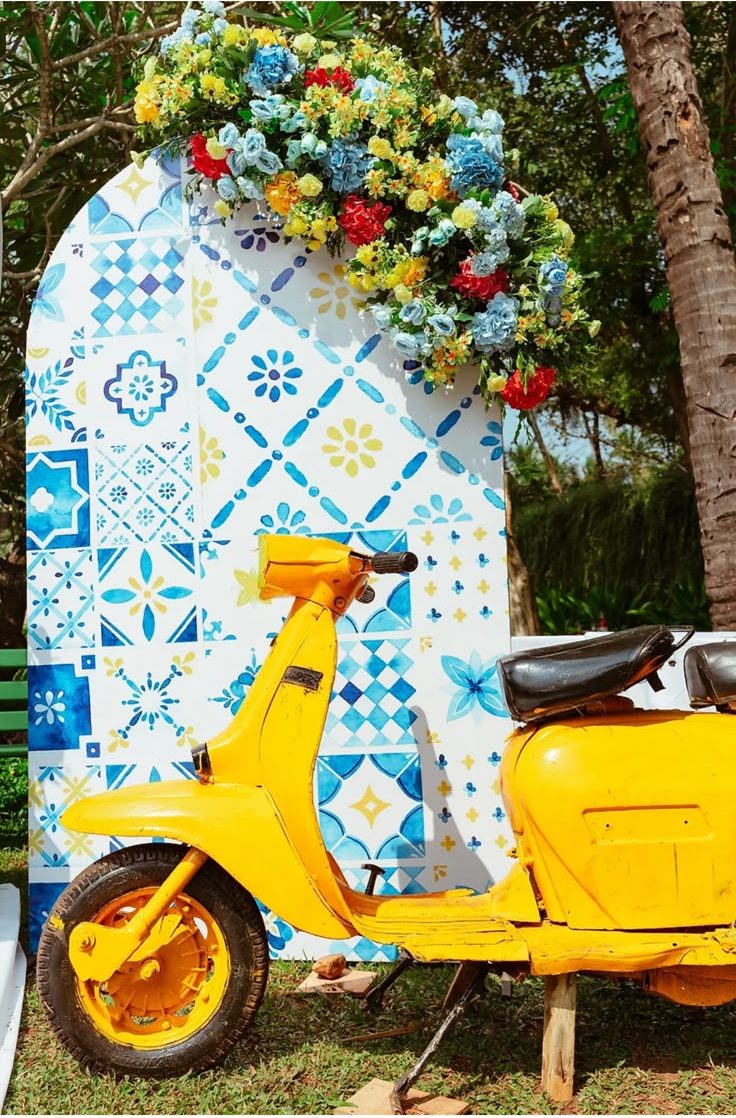
We built this one in blue and white azulejo rather than the usual marigold yellow — the Portuguese tilework that is Goa's own visual language — and left the turmeric to be the only yellow in the frame. Hand-painted giraffes along the walkway, a yellow scooter against a tile arch, flower carts, and a full run of lawn games: parrot astrologer, giant jenga, bottle striker. It read as a garden party that guests could simply walk into, with a ritual happening inside it. Our Goa haldi decor guide covers the conventional approach if you want the contrast.

The Overseas Half of Your Guest List
A cross-cultural wedding has a guest list where one half has done this before and the other half is making its first trip to India. Those two groups need different things, and planning for the average of them serves neither.
- One unstructured half-day: guests who have flown twenty hours need a morning with nothing scheduled, and they will enjoy everything else more for it
- Say what to wear, specifically: "traditional Indian" is not instruction to someone who has never bought Indian clothes — name the garment, and arrange a way to buy or borrow one
- Airport transfers, every arrival: the first hour in an unfamiliar country sets the tone for the whole trip
- Food that is labelled: heat level and whether it contains meat, on a card, at every station
- Legal timing decided early: confirm current requirements with a lawyer before you fix dates
Why Goa Handles This Well
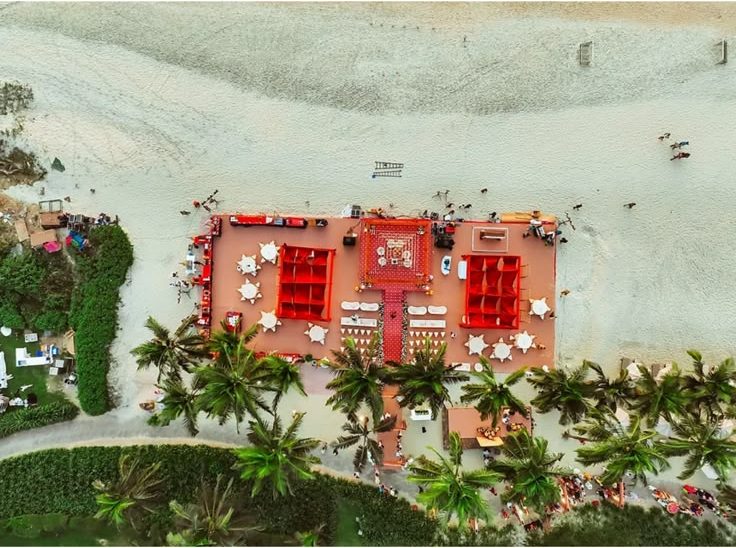
The practical reason a wedding this shape works at St Regis Goa is that the property has a beach, a lawn and indoor space, so each ceremony gets a genuinely different setting without moving anyone anywhere. That is rarer than it sounds. Plenty of resorts have one good setting and three compromises.
Goa is also the gentlest introduction to India for guests who have never been. International connections are straightforward, the hotels are at international standard, and the pace of the place does not overwhelm anyone in their first forty-eight hours. Our Goa weddings hub covers venues and seasons, and Goa wedding costs covers the money.
Read the full Lindsay & Dharmin story. For the venue, see The St. Regis Goa. For cross-cultural weddings in Bangalore, see Cross-Cultural Weddings Bangalore. For guest logistics, read Goa Wedding Guest Logistics.
Frequently Asked Questions
Should an American–Indian couple have one blended ceremony or two separate ones?
In our experience two separate ceremonies work better, and the objection to them is usually budget rather than taste. A blended ceremony forces both traditions to give something up, and the result often satisfies neither family. Two ceremonies let the Hindu rituals run at full length with the right priest and the right mandap, and let the Western ceremony be a Western ceremony. Because a destination wedding already runs across several days, the second ceremony usually costs less to add than families expect — the guests, the venue and most of the production are already on site.
How do you make a Hindu ceremony understandable for guests who have never seen one?
Three things do most of the work. A printed or spoken running order so guests know what is happening and roughly how long it lasts. A seating and sightline plan that lets people actually see the rituals rather than the backs of heads, which for a mandap means seating on more than one side. And an earlier function — a haldi or mehendi — that gives overseas guests a low-stakes, participatory introduction before the ceremony itself. Guests who have already been covered in turmeric are not intimidated by the wedding.
Can a foreign national legally marry in India?
Yes, but the process has notice periods and documentation requirements that are worth confirming well ahead of your date, and the rules differ depending on whether either partner is resident in India. Many cross-cultural couples handle the legal registration in the partner's home country and treat the Goa ceremonies as the wedding itself, which removes the timing risk entirely. See our guides on legal marriage in Goa and marriage registration from abroad, and confirm current requirements with a lawyer before you commit to dates.
Why is Goa a good choice for a cross-cultural wedding?
It handles the two-ceremony problem better than most Indian destinations because the good resorts have several usable settings on one property — a beach, a lawn, a ballroom — so each ceremony can have a genuinely different setting without moving anyone. Goa is also the easiest part of India for first-time overseas visitors: international connections through Mumbai or direct, hotels at international standard, and a relaxed setting that does not overwhelm guests who have never been to India.
How long should the wedding programme be?
Three days is the usual shape for a cross-cultural wedding, and it is the minimum that works without exhausting people. The St Regis wedding ran three days for 250 guests. A typical run is arrival and a welcome lunch on day one, the Western ceremony that evening; a sangeet and afterparty; then haldi and games in the morning of day two with the baraat and the Hindu ceremony that evening; departures on day three. Overseas guests have travelled a long way and will want at least one unstructured half-day.
Does the decor for the two ceremonies need to match?
No, and trying to make it match is usually what makes both look compromised. At the St Regis wedding the Hindu ceremony was a traditional South Indian mandap in red and gold with jasmine and rose garland curtains, and the American ceremony was a pastel floral arc over a mirrored aisle with no Indian motifs in it at all. They shared a location and a guest list, not a mood board. What holds a wedding like this together is the guest experience and the production quality, not a repeated colour.
Plan a Two-Ceremony Wedding
Two Traditions, Neither One Diluted
We plan and build cross-cultural weddings in Goa end to end — both ceremonies, the guest programme, and the overseas side of the guest list.
Start the Conversation