Monsoon Wedding Planning · Bangalore
Last updated: June 2026
A June–September monsoon wedding in Bangalore works with the right venue and a contingency plan: covered capacity, clear trigger criteria, and a calendar that is wide open. Cooling rains and lush green gardens come with it.
We will not tell you a monsoon wedding is risk-free, and we will not tell you it is a bad idea. Here is the honest picture from a studio that has planned dozens of them.
Panigrahana's assessment: a monsoon wedding with a strong indoor venue and a well-designed contingency plan is an excellent choice, particularly for couples who prioritise venue access, savings, and the extraordinary visual quality of Bangalore's green season. A monsoon wedding without those elements is a risk we would counsel against.
Not all venues carry the same risk profile in June–September. Here is how Panigrahana classifies Bangalore venues for monsoon weddings.
These properties have complete indoor event infrastructure — ballrooms, covered event spaces, climate-controlled ceremony venues — that can host the entire wedding day without any outdoor dependency. For a couple who wants zero weather risk during the monsoon, a major 5-star hotel is the definitive answer. The outdoor gardens and lawns remain available as beautiful pre-event or cocktail spaces, with the indoor venues as guaranteed fallback. Practically speaking, a beautiful candlelit ballroom ceremony during a monsoon evening has its own distinct atmosphere — intimate, warm, entirely sheltered from the drama outside.
These venues have significant covered outdoor infrastructure — permanent canopy structures over event lawns, covered walkways, and outdoor spaces that function in light rain. The Corinthians in particular has well-developed semi-outdoor event spaces that offer the aesthetic of being outside while providing real weather protection. Panigrahana can also install premium tented solutions over most garden lawns — a well-designed clear-span tent with transparent roof panels and polished concrete or wooden flooring is a genuinely beautiful alternative to a bare garden, and provides complete weather protection.
Tamarind Tree and Samavana are garden venues that require careful monsoon planning — but both are genuinely extraordinary in the rainy season. Tamarind Tree has covered spaces between its garden zones where guests can be sheltered during a passing shower; the mature trees create natural umbrella coverage; and the lush green of the gardens in July and August produces photography that no peak-season version can match. Samavana's forested setting is, if anything, most beautiful in the rain — the sound of rain on a forest canopy, the smell of wet earth, the quality of diffused green light. Both require solid Plan B execution from Panigrahana, and we plan and staff for this specifically.
Every monsoon season wedding that Panigrahana produces has a Plan B that is not a compromise — it is a fully-designed alternative event space that is pre-configured, pre-decorated, and ready to execute at one hour's notice. This is not standard industry practice; most wedding producers do not think about Plan B until it is forced on them. We think about it from the first venue site visit.
The specifics: from 72 hours before the wedding, our production team monitors Bangalore's hourly weather forecast. We track rainfall probability in the ceremony time window. If the probability exceeds 40%, we move to Plan B proactively — not reactively. The indoor space is set up and ready. Guests are notified smoothly. The ceremony proceeds on schedule. Families do not experience this as a crisis because we have been managing toward it since the day we signed the contract.
The other piece of the puzzle is understanding Bangalore's monsoon pattern. The city's rainfall is not continuous — it tends to arrive in distinct events, often in the afternoon or evening, and then clear. Morning ceremonies during the monsoon are considerably lower risk than afternoon or evening ceremonies. Panigrahana can advise on ceremony timing as part of the monsoon planning process, and we review historical weather data for your specific month when making recommendations.
A monsoon wedding in Bangalore does not fight the season — it works with it. The season offers a specific set of visual conditions that, when embraced, produce some of the most distinctive wedding aesthetics possible: deep emerald greens, slate blues, warm amber and gold tones that glow against the humid atmosphere, and the extraordinary visual quality of warm tungsten light in moist air.
The colour palette that works best for a monsoon wedding is not the vivid reds and bright yellows of a peak-season Tamil wedding, nor the ivory and white of a summer garden ceremony. It is richer and deeper: forest green saris complementing banana leaf and jasmine decor; deep indigo and teal fabric backdrops; copper and brass lamp-stands that glow warmly against grey skies; marigold and amber flowers that read as warm against the cool blue-green of a monsoon garden. This palette is extraordinarily photogenic.
For florals, the monsoon calls for specific choices. Closed-petal flowers hold up significantly better in high humidity than open flowers: jasmine (ideal — it thrives in humidity), tight marigold buds rather than fully open marigold, unopened or lightly opened roses, tuberose (strong and humidity-resistant), and chrysanthemum (excellent durability). We avoid fully open peonies and open roses as primary elements in a monsoon setup — they wilt visibly in 2–3 hours under humid conditions. Orchids, surprisingly, perform exceptionally well in humidity and last longer than in dry conditions.
For structural decor, banana stem and bamboo are excellent choices — both natural materials actually benefit from humidity rather than being damaged by it. Canvas and jute fabric draping also holds up well; avoid silk and synthetic fabrics that can sag and lose form. LED lighting specifically earns its premium in a monsoon setup — the warm tungsten quality of modern LEDs in a humid, moist-air environment creates a magical glow effect that no dry-season wedding can replicate.
The discounts are real. Here is an approximate season-by-season comparison for a premium Bangalore venue wedding.
On a ₹60-lakh peak-season venue rental, the same date in July or August lands closer to ₹57 lakh. That is the whole of the seasonal saving, and it sits on the venue and room-block lines. Decor, florals, catering and crew cost the same in the monsoon as they do in December. Pick these months for the dates you can actually get and the attention you will actually receive, not for the number at the bottom of the venue quote.
September is generally better. In June, the Southwest monsoon is at its most active — rainfall is frequent and unpredictable. By September, the monsoon is receding: rainfall events are less frequent, Bangalore is lush and green, and temperatures are ideal (22–25°C). Late September can feel close to peak season in character. That said, June offers the softest venue rates of the year, about 5%, and the widest choice of dates, precisely because demand is lowest. If budget is the primary driver and you have a strong indoor venue, June works well. If you want the best balance of off-season savings and manageable weather risk, September is the clearer choice.
With Panigrahana managing your wedding, a rain event during an outdoor ceremony means executing the Plan B we have had in place since the planning stage. An indoor backup space is pre-configured and ready. Our team monitors weather in real time. If the forecast shows significant rain probability in the ceremony window, we execute Plan B proactively. The transition is seamless; guests are guided; the ceremony proceeds. Many couples who have experienced their monsoon wedding in a beautiful covered space with rain falling outside report it as more intimate and romantic than the open-air alternative would have been.
Venues with the most robust rain coverage include The Leela Palace (permanent covered walkways, canopy coverage, full indoor ballroom as immediate backup), ITC Gardenia (covered outdoor terraces and complete indoor capability), and The Corinthians Resort (large permanent tented outdoor spaces). Garden venues like Tamarind Tree have covered structures between garden zones. Panigrahana can also install premium tented solutions over most lawn venues — a well-designed clear-span tent with transparent roof panels is not a compromise but a genuinely beautiful monsoon wedding option.
Yes — and many excellent photographers actively prefer the visual conditions of monsoon season. Overcast skies produce soft, even light with no harsh shadows — ideal for wedding photography. The lush green backgrounds of a Bangalore garden venue in July or August are extraordinary. The only limitation is unpredictability of outdoor timing, which is why our photographers are briefed on the Plan B structure and are experienced with flexible timeline management. The photographs from well-executed monsoon weddings in Bangalore are, in our view, consistently among the most visually striking in our portfolio.
The saving is real, but far smaller than the folklore suggests. On the venue line it is about 5%. The Leela Palace, Taj West End and ITC Gardenia all publish off-season rates, and room blocks soften a little alongside them. Nothing else moves — catering, flowers, decor, crew and photography cost the same in July as in December. What does change is attention: fewer weddings are running, so venues and vendors have more time for yours, and the calendar is wide open. Choose June to August for the dates and the calm, not for a discount.
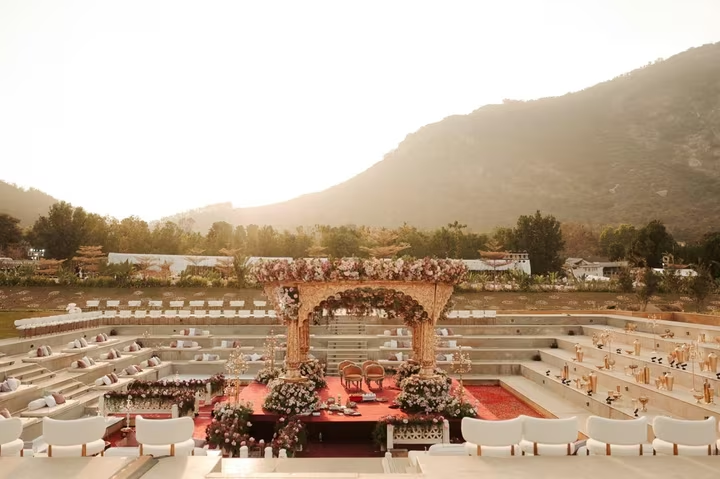
Tell us your date, your venue preference, and your vision. We'll assess the specific weather risk, design the contingency, and plan a wedding that works beautifully whatever the weather.
Start the Conversation