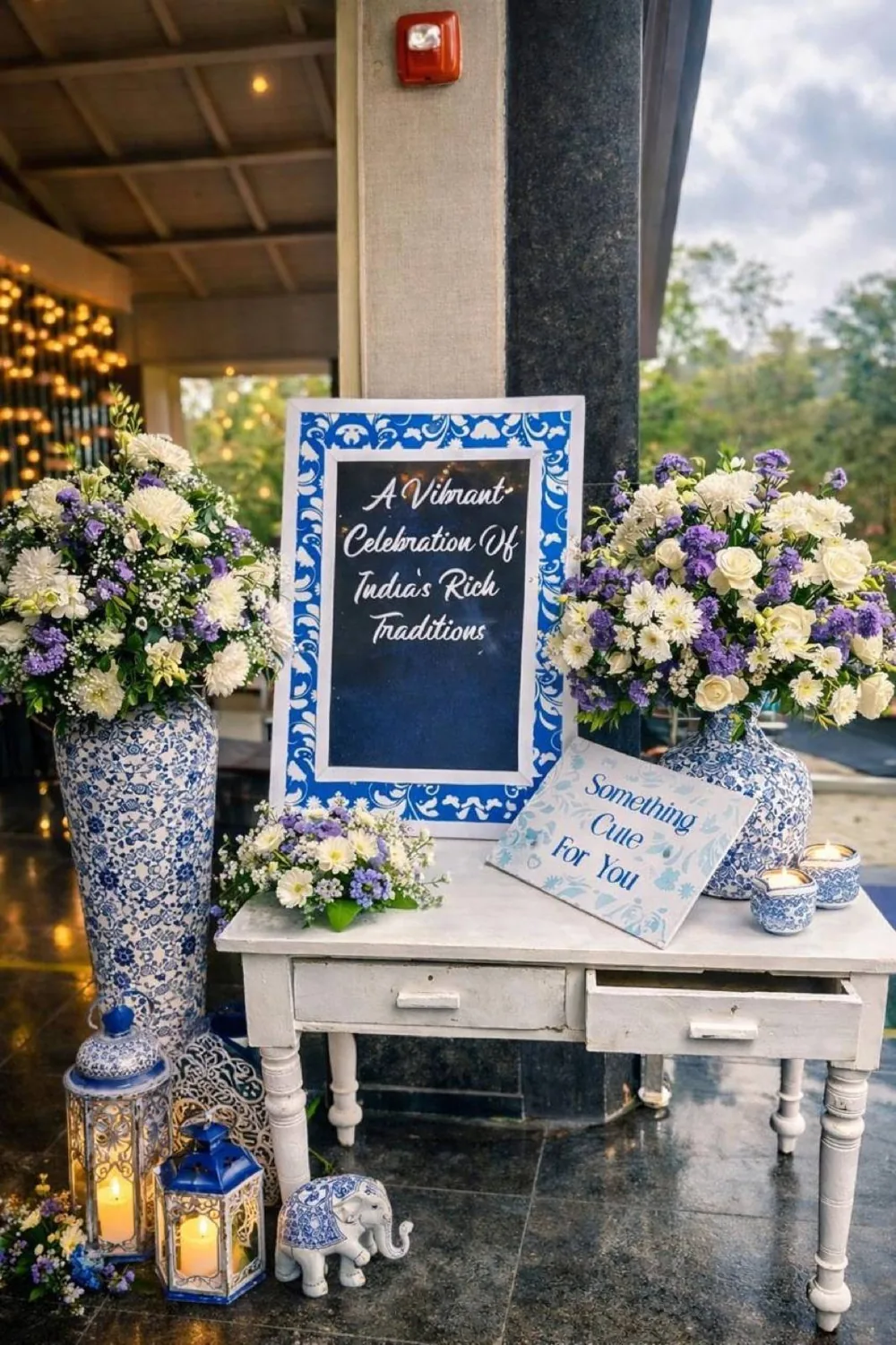
The complete Indian wedding checklist for 2026 is a 12-month, month-by-month task list: planner, venue, and budget locked in Month 12, core vendors signed by Month 11, guest list frozen at Month 9, and no new decisions in the final month — with separate tracks for the bride, groom, parents, and couples living abroad. A typical metro wedding for 200–300 guests costs ₹25–50L, and the couples who execute with the least stress are not the ones with the biggest budgets; they are the ones with the clearest checklists and the most disciplined timelines. This guide is built from the planning frameworks we use at Panigrahana across hundreds of weddings in Bangalore, Goa, Kerala, and Bali — adapted here for couples at any budget level. For deeper timeline guidance, see our 12-month planning timeline and 18-month planning timeline.
88.2% of the weddings we run need more than one day. Across 51 weddings with a dated function flow logged in our system since January 2026, 88.2% ran two days or longer and 43.1% ran three or more, with a median of five separate functions (n=54). If you are building this checklist around one ceremony date, you are roughly four events and a full day of logistics short of what the wedding will actually be.
Month 12: Foundation Decisions
The first month sets the trajectory for everything that follows. The decisions you make now — planner, venue, and budget — will constrain or enable every choice downstream. Move quickly and decisively.
- Set your total wedding budget (include a 10–15% contingency buffer). Use our budget-setting guide for a framework.
- Hire your wedding planner. Interview 3–4 planners, check recent work (not just portfolio highlights), and sign a contract. Planner fees: ₹2–5L for coordination, ₹5–15L for full-service planning.
- Shortlist and visit venues. For peak season (Nov–Feb), you may have limited date availability already. Visit 4–6 venues, understand their F&B minimums, cancellation policies, and noise curfews.
- Confirm your wedding date with family pandit/priest. Coordinate muhurat timing with your planner so venue and vendor schedules align.
- Begin photographer research. Shortlist 5 photographers based on portfolio, style (candid vs. traditional vs. editorial), and availability.
- Draft your preliminary guest list — divide into Must Invite, Should Invite, and Nice to Invite categories.
- Decide on the number of functions: engagement, mehendi, haldi, sangeet, ceremony, reception. Each additional function adds ₹3–10L to the budget.
Month 11: Lock Core Vendors
- Confirm and sign venue contract. Pay the advance (typically 25–40% of the total). Read every clause — especially cancellation, force majeure, and noise restrictions.
- Confirm photographer with signed contract. The best photographers book 12–18 months ahead. Delay here means settling for your second or third choice.
- Begin design and decor conversations. If your planner has an in-house decor team, this happens naturally. If not, shortlist 3 decor studios and brief them on your aesthetic.
- Begin bridal outfit research. For custom couture from designers like Sabyasachi, Manish Malhotra, or Anita Dongre, you need 8–10 months. Book your consultation appointment now.
- Start a shared planning document (Google Sheet or Notion) with your partner. Track budget, vendors, tasks, and decisions in one place.
Month 10: Design Direction Finalised
- Finalise your overall design direction — colour palette, theme (if any), and the visual story across all functions.
- Commission invitation design. If using printed invitations, the design-to-print cycle takes 6–8 weeks. Digital invitations can be done in 2–3 weeks.
- Begin catering discussions. If the venue has in-house catering (most hotels), schedule a menu tasting. If using external caterers, shortlist 3 and schedule tastings.
- Research and shortlist videographers. Video has become nearly as important as photography — budget ₹1.5–5L for a good wedding film team.
- If destination wedding: begin guest logistics planning — hotel blocks, flight booking guidance, and local transportation.
Month 9: Guest List Locked
- Finalise your guest list. This number now drives every downstream decision: venue setup, catering quantity, invitation print run, room block size, and transport fleet.
- Send save-the-dates (digital is standard in 2026). Include: date, city, and a wedding website URL.
- Create your wedding website (Withjoy, The Knot India, or a custom-designed site). Include: event schedule, travel information, accommodation options, dress code guidance, and RSVP form.
- Confirm videographer with signed contract.
- Begin sangeet choreography planning. If you are hiring a choreographer, book them now — popular choreographers fill up 3–4 months ahead.
Month 8: Catering, Outfits & Entertainment
- Finalise catering menus for all functions. Conduct tasting sessions — taste everything you plan to serve. Confirm per-plate costs and minimum guarantees.
- First bridal outfit fitting. If custom, this is the measurement and design confirmation stage.
- Begin groom's outfit research. For custom sherwanis, you need 4–6 months. For designer purchases, 3–4 months is sufficient.
- Book entertainment — DJ, live band, emcee, any professional performers for the sangeet.
- Book your makeup artist and hairstylist. Top bridal MUAs in metros book 6–8 months ahead. Schedule a trial for Month 5.
- Begin jewellery shopping or selection if purchasing new sets.
Month 7: Guest Accommodation & Transport
- Negotiate and confirm hotel room blocks for out-of-town guests. Aim for 3–4 hotel options at different price points. Most hotels offer complimentary rooms for the couple if the block exceeds 30 rooms.
- Plan all guest transport — airport transfers, inter-venue shuttles, parking management for local guests. Budget: ₹1–3L for 200-guest weddings.
- Confirm decor concepts for each function with your design team. Approve mood boards, material palettes, and floor plans.
- Book mehendi artist. Top mehendi artists charge ₹15,000–₹50,000 for the bride and ₹500–₹2,000 per guest.
- Begin trousseau shopping if applicable.
Month 6: Halfway Point — Reconfirm Everything
- Reconfirm every vendor in writing — dates, times, deliverables, and payment schedules. This is the single most important administrative task of the planning process.
- Finalise groom's outfits for all functions.
- Send formal invitations (printed or digital). Include: full schedule, venue addresses, accommodation details, dress code, and RSVP deadline.
- Confirm bar and beverage arrangements — brand selections, quantity estimates, and service format.
- Begin planning any pre-wedding events: engagement party, bridal shower, bachelor/bachelorette trip.
- If wedding from abroad: plan your focused India trip for Month 4–5 for in-person vendor meetings, tastings, and fittings.
Month 5: Details Phase Begins
- RSVP tracking begins. Set a firm RSVP deadline for one month from now. Follow up personally with guests who have not responded.
- Bridal makeup and hair trial. Bring your outfit fabric swatch and jewellery to the trial for colour matching.
- Finalise seating arrangements for the reception (if seated dinner format).
- Order wedding favours or return gifts. For 200+ guests, allow 4–6 weeks for custom favours.
- Book the pandit/priest and discuss ceremony specifics — duration, rituals to include/exclude, language preferences.
- Arrange pre-wedding shoot if planned. See our Bangalore pre-wedding shoot locations guide.
Month 4: Final Guest Count & Run Sheets
- Lock the final guest count based on RSVPs. Communicate this to the venue, caterer, and all relevant vendors.
- Build detailed day-of timelines for each function — minute-by-minute run sheets that every vendor receives.
- Second bridal outfit fitting (if custom).
- Confirm all florals — varieties, quantities, and colour specifications.
- Plan and order any printed materials: table numbers, menu cards, place cards, signage.
- Coordinate with your photographer on the shot list — key moments, group photo combinations, and any specific creative requests.
Month 3: Trials & Walk-Throughs
- Venue walk-through with your planner, decor team, and the venue operations manager. Map electrical points, loading zones, green rooms, and emergency exits.
- Final bridal outfit fitting.
- Hair and makeup rehearsal with the exact products and style you will wear on the wedding day.
- Confirm all entertainment — final song lists, performance order, and timing cues.
- Arrange a catering re-tasting if any menu changes were made.
- Order any rentals: furniture, tableware, linens, or specialty items.
Month 2: Final Confirmations
- Clear all outstanding vendor payments per contract schedule. Keep 10% as final payment post-event for accountability.
- Distribute the final day-of timeline to all vendors, family members involved in coordination, and the bridal party.
- Confirm hotel room allocations for all out-of-town guests. Send room booking confirmation details to guests.
- Final decor approval — review 3D renders or detailed mood boards for each function.
- Prepare emergency kits: sewing kit, safety pins, painkillers, antacid, phone chargers, blotting papers, touch-up makeup.
- Begin marriage registration paperwork if registering before the wedding.
Month 1: The Final Stretch
- No new decisions. Everything should be confirmed and locked. This month is about execution, not planning.
- Reconfirm every vendor's arrival time and contact person for the day-of.
- Brief all family members on the schedule — arrival times, outfit changes, ceremony timing, photo sessions.
- Pack outfits, accessories, and emergency supplies for each function separately.
- Hand off execution to your planner. Your job on the wedding day is to be present, not to manage logistics.
- Arrange for someone to manage gifts and envelopes received at the wedding — designate a trusted family member.
The Bride's Personal Checklist
- Outfits for each function — mehendi, haldi, sangeet, ceremony, reception (and any additional events)
- Jewellery sets coordinated with each outfit
- Bridal makeup artist and hairstylist confirmed with trial completed
- Bridal mehendi artist and design finalised
- Skincare routine started 3–6 months before (consult a dermatologist if needed)
- Footwear for each outfit — break in new shoes before the wedding day
- Undergarments appropriate for each outfit (strapless, backless, etc.)
- Honeymoon wardrobe and travel documents (passport, visa if international)
- Name change documents prepared if applicable (bank accounts, passport, Aadhaar)
The Groom's Personal Checklist
- Outfits for each function — coordinate with the bride on colour palette
- Grooming — haircut 2 weeks before (not the day before), beard trim, skincare
- Accessories: watch, cufflinks, pagdi/turban (if applicable), safa/sehra
- Baraat arrangements — horse/car, dhol players, guest coordination
- Wedding band or ring — fitted and ready
- Best man and groomsmen coordination — outfits, responsibilities, speeches
- Honeymoon planning — flights, hotels, activities, travel insurance
- Marriage registration documents — age proof, address proof, photographs, witnesses
The Parents' Checklist
- Guest list management — the parents' list is typically 60–70% of the total in Indian weddings
- Religious and cultural coordination — pandit/priest selection, ritual specifics, customs from both families
- Elder guest comfort — seating arrangements, dietary requirements, medical considerations, transport
- Gift and trousseau management (if applicable to the family's tradition)
- Extended family coordination — arrival schedules, accommodation assignments, function-specific roles
- Financial planning — who pays for what, joint family contributions, vendor payment schedule
- Outfits for each function — mother of the bride/groom outfits coordinated with the event's colour palette
- Day-of responsibilities — greeting guests, managing the gift table, elderly guest assistance
The Couple Living Abroad's Additional Checklist
couples living abroad face unique challenges — remote planning, time zone differences, limited India visits, and the logistical complexity of coordinating guests who are themselves travelling internationally. Here is the supplementary checklist. For comprehensive wedding from abroad guidance, see our dedicated wedding from abroad checklist.
- Engage your planner 14–18 months ahead (not 12) — you cannot visit vendors or venues easily
- Schedule weekly or bi-weekly video calls with your planner — time zone alignment is critical
- Plan 2 focused India trips: one at 6 months (venue visits, vendor meetings, tastings) and one at 1 month (fittings, walk-throughs, final confirmations)
- Designate a trusted local family member as your on-ground representative for decisions requiring physical presence
- Budget an additional 15–20% for coordination overhead, international shipping of outfits/accessories, and currency fluctuation
- Guest logistics for international attendees — visa invitation letters, travel advisory, currency exchange guidance, local SIM card arrangements
- Legal documentation — marriage registration requirements differ for couples living abroad. Consult a legal advisor 3 months before.
- International travel insurance covering the wedding period for both the couple and key family members
Budget Allocation Guide
For a ₹50L total wedding budget, here is a realistic allocation: Venue 25% (₹12.5L), Catering 22% (₹11L), Decor 18% (₹9L), Photography & Video 8% (₹4L), Entertainment 5% (₹2.5L), Outfits & Jewellery 10% (₹5L), Planner 5% (₹2.5L), Guest Logistics 4% (₹2L), Miscellaneous 3% (₹1.5L). Adjust proportions based on your priorities — but never cut the contingency buffer.
The Week-Of Checklist
- Confirm all vendor arrival times and day-of contact numbers
- Final guest count communicated to caterer (typically needed 72 hours before)
- All outfits steamed/pressed and hung in garment bags
- Emergency kit packed and assigned to a bridesmaid or family member
- Cash envelopes prepared for tips — pandit, musicians, service staff, drivers
- Charge all phones and portable chargers overnight before each function
- Hydrate, sleep, and eat properly — the most neglected items on any wedding checklist
Frequently Asked Questions
How early should I start planning an Indian wedding?
Ideally 12–18 months before the wedding date. For peak season weddings (November–February), 14–18 months gives you the best availability for top venues and photographers. For off-season weddings (March–September), 10–12 months is sufficient. If you are planning a destination wedding in Goa, Bali, or Kerala, add 2–3 months to these timelines for logistics coordination.
What is the average cost of an Indian wedding in 2026?
The average Indian wedding in a metro city costs ₹25–50L for a mid-range celebration with 200–300 guests. Budget weddings can be planned for ₹10–15L with careful choices. Premium weddings at 5-star venues range from ₹50L–₹1.5Cr. Destination weddings in Goa or Bali typically cost ₹40L–₹2Cr depending on guest count and venue.
What should I book first for an Indian wedding?
Book in this order: (1) Wedding planner — they guide every subsequent decision. (2) Venue — the most time-sensitive booking. (3) Photographer — top photographers book 12–18 months ahead. (4) Bridal designer — custom couture needs 8–10 months. Everything else can follow with 3–6 months notice.
Do I need a wedding planner for an Indian wedding?
If your wedding involves more than 150 guests, a venue outside your home city, or more than 2 events, a professional planner is strongly recommended. They typically save 10–20% of your total budget through vendor relationships and prevent costly mistakes. Planner fees range from ₹2–5L for coordination-only to ₹8–15L for full-service planning.
What is the most important checklist item people forget?
Guest accommodation and transport. Couples focus on the events but forget that 40–60% of guests travel from other cities. Hotel room blocks need negotiating 6–8 months ahead, airport transfers need coordination, and inter-venue transport needs planning. This single oversight causes more day-of stress than any other factor.
How do I manage the checklist as a couple living abroad?
Add 3 months to every timeline and budget 15–20% more for coordination overhead. Engage your planner 14–18 months ahead, do virtual venue tours, plan one focused India trip 4–5 months before for tastings and fittings, and designate a trusted local family member as your on-ground representative.
What documents do I need for marriage registration in India?
You need: proof of age for both parties, proof of residence, passport-size photographs, wedding invitation card, marriage photographs, two witnesses with ID proof, and a fee of ₹100–₹500. Registration can be done at the Sub-Registrar office of the district where the marriage took place.
Can I plan an Indian wedding in 6 months?
Yes, but with compromises. Venue and photographer options will be limited for peak season, custom bridal wear is unlikely, and planning will be intensive. A professional planner is essential for a 6-month timeline. See our 6-month planning guide for a compressed timeline.
Begin Your Story
Let Us Plan Your Wedding
Share your date, guest count, and vision. We will build a personalised planning timeline and guide you through every decision.
Start the ConversationSee the design details in our work
Assign an owner and due date to each decision. Link the guest count, venue layout, supplier scope and run sheet so a change in one place reaches the people responsible for the others.