The wedding gets the planning; the functions around it get improvised — and then the haldi runs two hours late, the mehendi artists are outnumbered three hundred to four, and the family group chat discovers its true personality. The functions deserve the same planning grammar as the main day. Here it is.
The first decision: home or venue, function by function
Tradition holds most pre-wedding rites at home, and home is still often right: the haldi's intimacy, the grandmother's courtyard, the cost of zero. The honest checklist for staying home — can the space hold your real count with a serving line, does turmeric-meets-marble worry anyone, is there somewhere for the photographer to stand, and will the neighbours forgive the dhol? When any answer is no, a small venue or the resort lawn earns its rent. The hybrid most of our families land on: intimate rites at home, the performative functions — sangeet, big mehendi — at the venue. What breaks schedules is not either choice; it is underestimating the transfer between them.
Planning this yourself? Send us your name and a number, and a planner will reply within 24 hours to talk it through with you, whoever you end up booking.
Panigrahana is a wedding design and planning studio with 500+ weddings since 2018, rated 4.8/5 on Google (checked 27 September 2026). Planning starts at ₹2 lakh per day for two events + GST and decor at ₹5 lakh + GST, quoted for the agreed scope rather than as a percentage of what you spend.
The haldi, and its new formats
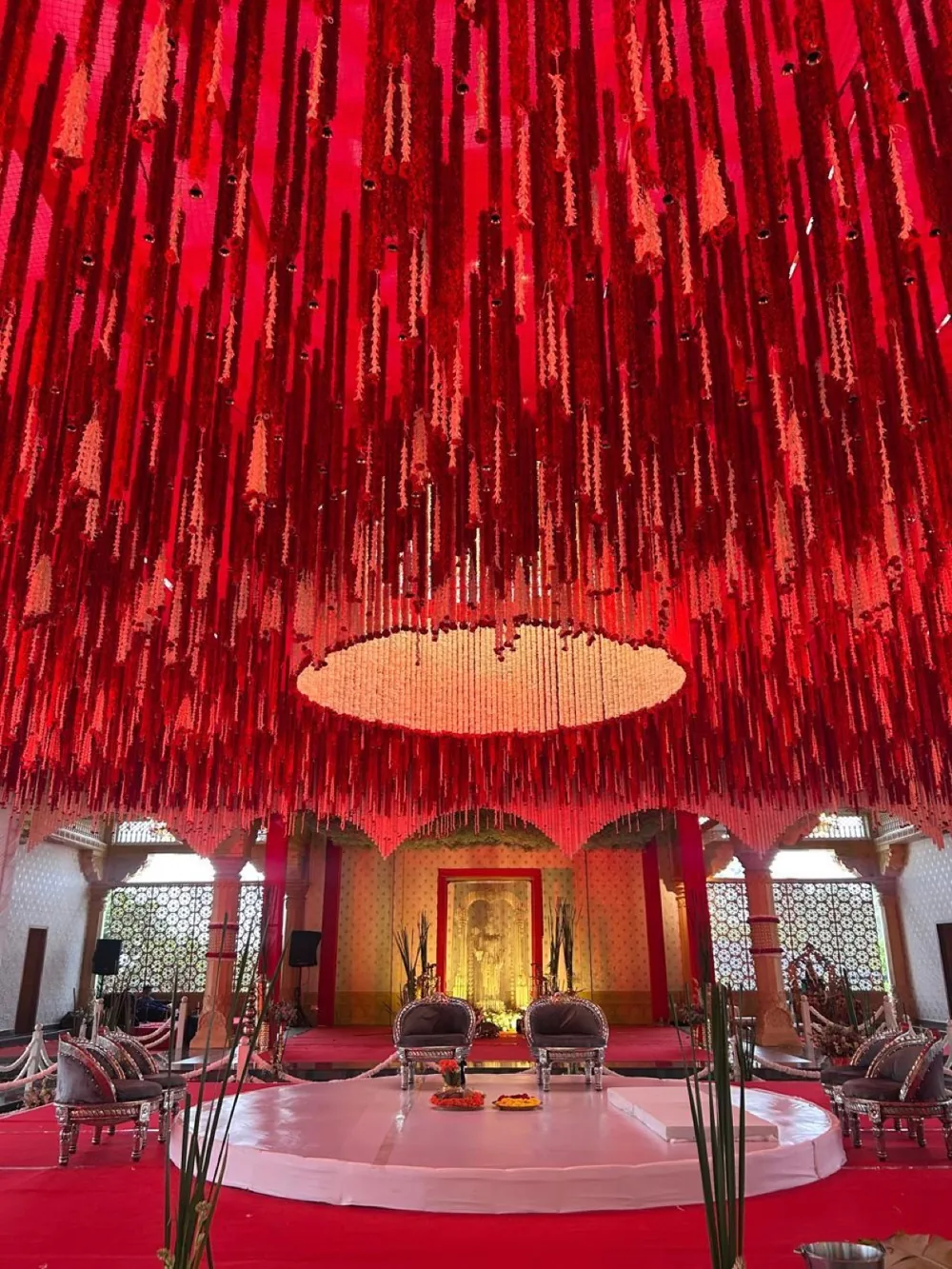
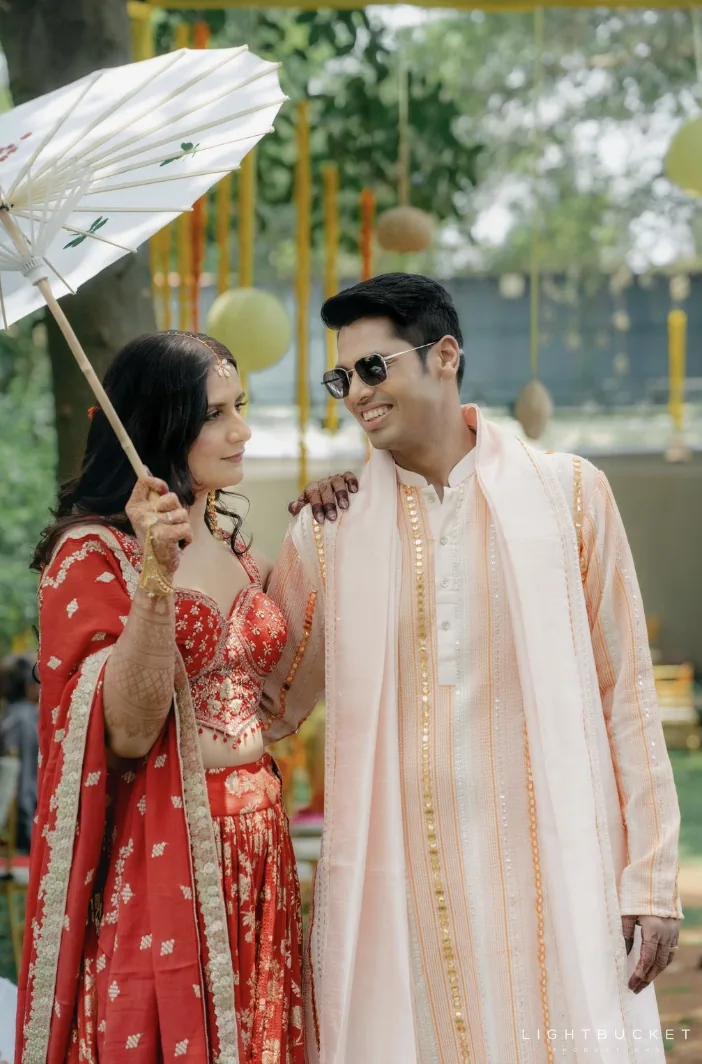
The classic form is two haldis, each side at its own home, morning-of or day-before. The combined couple haldi — one event, both families, turmeric crossfire — is now genuinely common, and it works: half the logistics, twice the photographs, and the two families warmed up before the wedding day. What it needs decided early is whose house or which neutral venue, because that question carries feelings the schedule cannot. Design-wise, haldi is the easiest function to make beautiful on a budget — marigold in mass, yellow everything, and the confidence to let one colour carry it; the marigold cascade in this page's cover image is what committing to the idea looks like. Dress code on the invite, and towels the family will not mourn.
Phoolon ki holi — the flower-petal holi, often folded into the haldi — is the trend that earns its keep: photogenic, elder-friendly, and joyous without staining silk. The logistics are honest but simple: petals in serious quantity (order multiples of what looks sufficient in the plan), a defined throwing zone so petals stay in frame, and a sweep crew. Delicate lehengas and flying marigold are natural enemies; say so on the invite.
The mehendi: an artist-math problem wearing a party
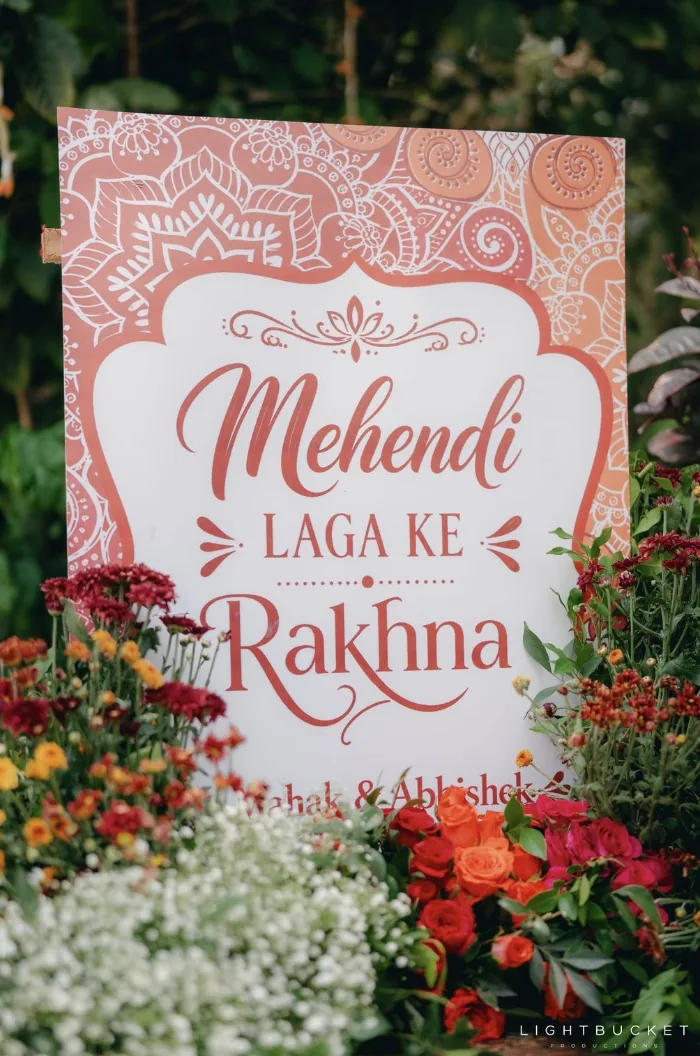
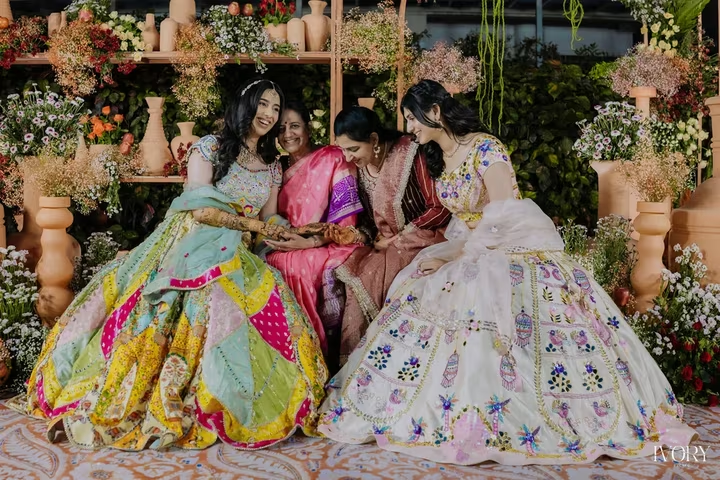
One artist does one bridal hand-and-feet in a multi-hour sitting, and simple guest designs at perhaps ten to fifteen an hour. Run that arithmetic against your guest list before booking — a 150-guest mehendi with four artists means most guests wait or skip, which is fine only if planned: the bride starts hours before guests arrive, artists for guests are separate from the bridal artist, and the function's music, food and seating assume that half the room is temporarily one-handed. Finger food, straws, and someone assigned to feed the bride are not jokes; they are the run-sheet.
The schedule that survives
Functions fail backwards: the haldi that starts late pushes the mehendi that pushes the sangeet rehearsal. The fixes are boring and total — one owner per function who is not the couple or their mothers, transfer buffers between home and venue written into the day, vendor call-times an hour before the family believes anything will start, and the golden rule of stacked days: the first event of each day starts on time or the whole day does not. This is, frankly, the part you hire a planner for; the turmeric they could manage themselves.