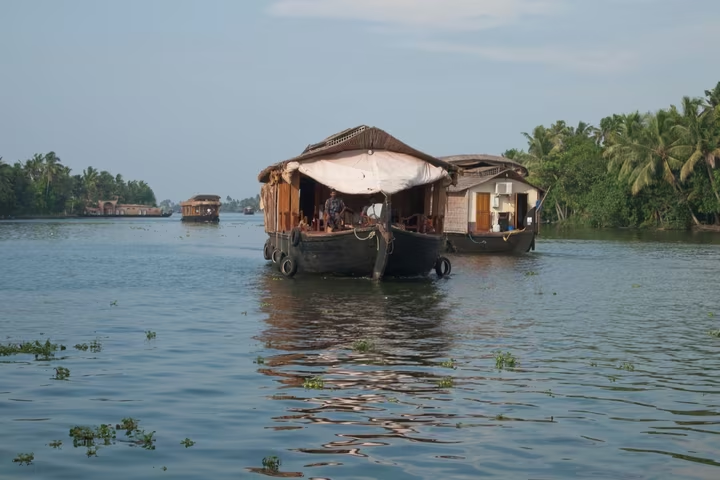
More Kerala destination weddings are planned by Bangalore-based couples than by couples from any other city. This is not a coincidence. Bangalore and Kerala share a deep cultural connection — the South Indian Hindu wedding tradition is common to both, Kannada and Malayalam communities often intermarry, and the physical distance (1.5 hours by air) makes Kerala one of the most accessible destination wedding options for Bangalore couples and their guests. For the full Kerala destination overview, read our complete Kerala weddings guide; for cost expectations, our Kerala wedding cost breakdown.
Planning a Kerala wedding from Bangalore is manageable in a way that planning from Delhi or Mumbai is not. The time zone is the same, the climate is familiar, and the direct flight connectivity means site visits are weekend trips rather than multi-day commitments. This guide covers every practical aspect of the planning process for Bangalore couples choosing Kerala.
Why Bangalore and Kerala Are Natural Partners
The cultural affinity between Bangalore and Kerala runs deep. Kerala's large professional community in Bangalore (significant Malayali population, long-established IT and healthcare communities) means that Kerala wedding traditions are well understood in the city. Bangalore vendors — photographers, decor teams — regularly travel to Kerala for weddings and know the venues well. And many Bangalore families have Kerala roots, making a Kerala destination wedding a genuine homecoming rather than a purely aesthetic choice.
The practical connection is equally strong. Kempegowda International Airport has multiple daily direct flights to all three major Kerala airports — Cochin, Trivandrum, and Calicut — each at 1.5 hours flight time. A site visit to a Kerala venue is a same-day commitment: fly in the morning, spend the day at the property, fly back in the evening.
The Three Site Visits — What to Do on Each
Site Visit 1 — Venue Shortlisting (12–15 Months Before)
This is the discovery visit. Visit 2–3 properties in person: walk the ceremony lawns, check the room inventory, inspect the food quality by dining at the property, and get a feel for the management team. For a backwater wedding near Kumarakom or Alleppey, fly into Cochin Airport. For a coastal wedding near Kovalam, Niraamaya, or Taj Bekal, fly into Trivandrum or Mangalore respectively.
This visit results in a decision: one venue, booked. Come back with a shortlist of no more than three; leave having signed a contract with one.
Site Visit 2 — Vendor Confirmations (8–10 Months Before)
This is the working visit. Travel with your planning team. Meet the decor team on-site to walk through ceremony, reception, and mehendi setup locations. Meet or video-call the photography team on location. Confirm the entertainment vendor — if you are doing Kathakali, this is when you meet the performance coordinator. Taste the menu with the venue's catering team. Leave with all major vendors confirmed in writing.
Site Visit 3 — Final Walkthrough (1–2 Months Before)
This is the pre-production visit. Walk every function location with your planning team and note-take every operational detail: where the mandap faces (exact orientation relative to the sunrise or lake view), where the sound system will be placed, where guests will sit for the ceremony. This visit eliminates the surprises that produce wedding-day stress.
Browse all Kerala venues and shortlist your site visit locations. For the north Kerala experience, see Taj Bekal. To begin planning with our team, visit Traditional Kerala wedding decor and flowers — the aesthetic vocabulary every Bangalore couple planning in Kerala should know. Kerala wedding season guide — timing site visits around Bangalore's work calendar and Kerala's seasons. Kerala Wedding Planning.
Guest Travel from Bangalore — Making It Easy
A Bangalore-based guest list for a Kerala wedding is the most logistically straightforward guest list in India. Multiple airlines operate 6–10 daily flights from Bangalore to Cochin, Trivandrum, and Calicut. Most guests can book flights themselves without coordination.
- Provide a recommended flight list. Share 2–3 recommended flights with specific departure times that align with your arrival schedule. If you have arranged group pickups from the airport at specific times, guests should be on flights that arrive within those pickup windows.
- Group pickups from Cochin Airport. For 80–150 Bangalore guests flying to Cochin, organise 3–4 coach departures from the airport at staggered times (10am, 1pm, 3pm). Guests arrive, collect bags, and board the coach — no individual taxis needed.
- The drive from Cochin to Kumarakom. 1.5 hours. Brief guests on what they will see — the backwater canals, the rubber plantations, the Kerala landscape. Turn the transfer into the first experience of the wedding, not just a logistics necessity.
- Guests who prefer to drive. Some Bangalore guests — particularly those with cars and who enjoy road trips — may prefer to drive. Bangalore to Waynad or Coorg (adjacent to Kerala) is 4–6 hours. For Kumarakom or Cochin-area venues, driving is 8–9 hours and not recommended for most guests; fly and hire a car at Cochin Airport instead.
Cultural Coordination — Two Wedding Traditions
Many Bangalore couples planning Kerala weddings come from a South Indian background — Tamil, Kannada, or Telugu — and are marrying into a Keralite family, or vice versa. This creates a genuinely interesting cultural planning challenge: how to honour both traditions in a single wedding that feels coherent rather than patchwork.
The good news is that South Indian wedding traditions share a significant common vocabulary. The nilavilakku (oil lamp) is central to all South Indian ceremonies. The jasmine garland, the banana leaf feast, the Haldi ceremony — these exist across Tamil, Telugu, Kannada, and Keralite traditions in different forms. A skilled planner identifies the commonalities and builds the ceremony around them, incorporating the distinctive elements of each tradition without creating a ceremony that feels like it belongs to neither.
- The ritual consultation. Early in the planning process, sit with the family priests from both sides and identify which rituals are non-negotiable, which are flexible, and which can be adapted. This conversation is best facilitated by your wedding planner, who can remain neutral and focus on practical integration rather than cultural negotiation.
- The sadya question. If one family expects a North Indian or Tamil catering style and the other expects a Kerala sadya, the right answer is usually: offer both across the different functions. The sadya can be served for the wedding day lunch; a more universal dinner format for the reception.
- Attire across two traditions. This is deeply personal and family-specific. Some Bangalore-Keralite couples choose the Kerala kasavu saree and mundu for the ceremony and a more pan-Indian style for the reception. Others integrate elements from both. There is no right answer — but there is a wrong one: a decision made without discussing it with both families.
Working with a Planning Team — Bangalore Base, Kerala Expertise
For a Bangalore couple planning a Kerala wedding, Panigrahana connects the Bangalore studio with a local Kerala team led by a founding team member. Our own Kerala production house and crew deliver the agreed production scope.
The practical benefit of this structure is significant. Your planning sessions and creative reviews happen in Bangalore — easy, in the same time zone, in person if desired. Our team handles venue liaison, vendor appointments, and local logistics without requiring you to be in Kerala for every conversation. Communication flows through a shared planning platform — shared document, shared timeline, weekly or bi-weekly check-in call.
When you visit Kerala, site visits are coordinated with our local Kerala team and production crew. Agree the visit plan with your planner rather than assuming a fixed number of trips.
The Planning Timeline — Starting 12–18 Months Out
- 12–18 months before. Engage planning team, shortlist venues, make site visit 1, sign venue contract, begin guest list and room block planning.
- 10–12 months before. Confirm wedding planner contract, begin vendor shortlisting (decor team, photographer, entertainment).
- 8–10 months before. Site visit 2 — vendor confirmations. Sign vendor contracts. Guest communication begins — save-the-date with travel information.
- 6–8 months before. Outfit planning and fittings. Menu tastings (can be done virtually or during a Kerala visit). Detailed function schedule drafted.
- 3–6 months before. Guest logistics — coordinated flights and accommodation confirmations. Honeymoon planning.
- 1–2 months before. Site visit 3 — final walkthrough. Detailed production document completed. All vendors briefed.
- Week of the wedding. Travel to Kerala. Wedding.
Panigrahana is a Bangalore studio with its own Kerala team and production warehouse, led by a founding team member. Our team knows Kerala's venues and vendors inside out — and we make the planning process manageable from Bangalore. Begin with Kerala Wedding Planning.
Frequently Asked Questions
How many site visits do I need for a Kerala destination wedding from Bangalore?
We recommend three site visits for a Bangalore couple planning a Kerala destination wedding. The first (12–15 months before) is for venue shortlisting. The second (8–10 months before) is for vendor confirmations. The third (1–2 months before) is the final walkthrough. All three trips from Bangalore to Cochin or Trivandrum are 1.5 hours by air — easily managed as weekend trips.
How do Bangalore guests travel to a Kerala destination wedding?
Most Bangalore guests will fly. There are multiple daily direct flights from Bangalore to Cochin (1.5 hours), Trivandrum (1.5 hours), and Calicut (1.5 hours). For a backwater wedding near Kumarakom or Alleppey, Cochin Airport is the most convenient. For a coastal wedding near Kovalam, Trivandrum Airport is closer. Coordinate group flight bookings and airport pickups for guests to make the logistics seamless.
Can Bangalore wedding vendors travel to Kerala?
Yes, and many do. Bangalore has some of the best wedding photographers and decor teams in South India, many of whom regularly travel to Kerala for weddings. The travel logistics cost (flights, accommodation, local transport) is typically charged as a supplement on top of the vendor's standard fee. Fresh florals and traditional elements are sourced locally in Kerala. Panigrahana builds its structural decor in its own Kerala warehouse, with a Kerala team led by a founding team member, so no team travel charge applies.
How does Panigrahana coordinate a Kerala wedding from its Bangalore base?
Panigrahana’s Bangalore studio works with our local Kerala team, led by a founding team member, and our own Kerala production house and crew for site visits and the wedding days. We conduct virtual planning sessions, shared planning documents, and regular check-in calls throughout, with site visits at the three key milestones. You never manage a remote team alone.
Bangalore to Kerala
Plan Your Kerala Wedding from Bangalore — With One Team
Panigrahana plans your Kerala wedding from our Bangalore studio, and our own Kerala team builds and runs it. The planning process is local; the wedding is extraordinary. Begin your story.
Begin Your Story