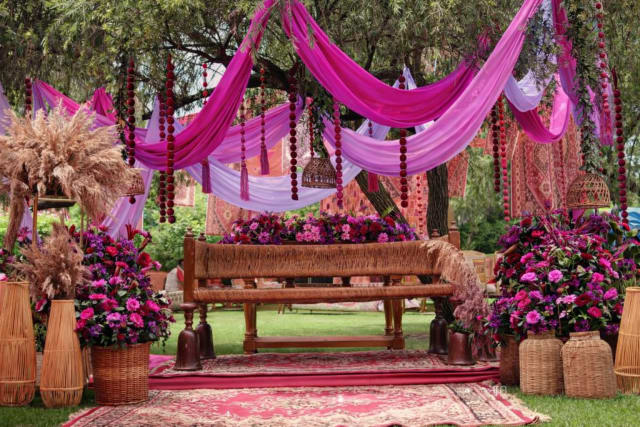
When you're planning from another time zone, the planner matters more than the venue — they become your eyes, hands and judgement on the ground.
Look for a single accountable point of contact, not a rotating cast; you want one person who knows your wedding cold and overlaps some of your hours. Ask how they communicate design. A studio that shares 3D renders and drawings before building removes the biggest remote-planning risk — imagining one thing and being handed another. Check who actually executes. An in-house team means fewer handoffs and less gets lost in translation than a chain of subcontracted vendors. Ask about their overseas track record specifically, because remote logistics, family proxies and compressed trips are their own discipline. Finally, test responsiveness early — how they handle your first ten questions predicts the next ten months.
We're architect-founded, design and build every mandap and set in-house, and a large share of our couples plan from abroad — so this way of working is our default, not an exception. Choose the team whose structure makes distance a non-issue.