The Anand Karaj — "the ceremony of bliss" — is among the most moving wedding rites in India and among the most misunderstood by outsiders, including planners who should know better. It is also the tradition with the clearest rules about where it may happen, which shapes the planning fundamentally. This guide covers the ceremony, the etiquette every guest needs, and the venue format that follows — written from the planning side, with the standing caveat that the gurdwara's granthi and the family's elders are the authorities on every religious question.
What happens at an Anand Karaj ceremony?
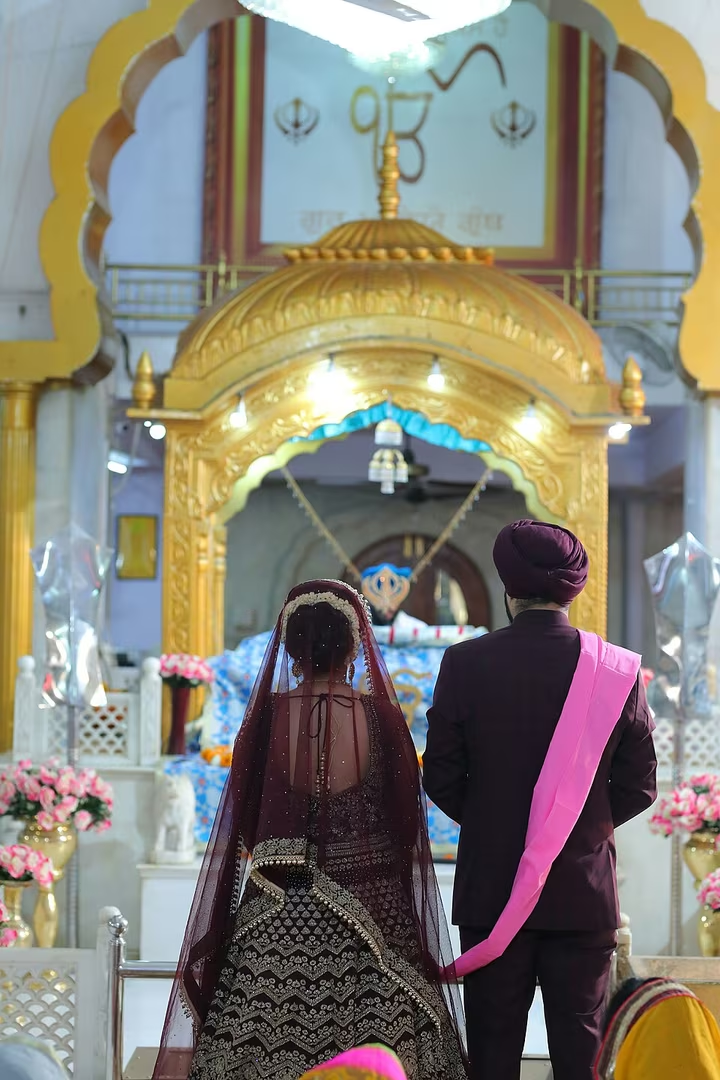
The Anand Karaj centres on the four laavan — four hymns composed by Guru Ram Das — read and sung from the Guru Granth Sahib. After each hymn, the couple walks slowly clockwise around the holy scripture, the groom leading and the bride holding a scarf joining them, each circuit deepening the marriage's spiritual meaning: duty, progress, detachment from worldly things, and union. There is no fire, no mandap, no Sanskrit — the scripture itself is the ceremony's centre and witness. Before it, the milni formally brings the two families together, customarily the fathers and uncles exchanging garlands and embraces; after it, prayers, the ardas, and the distribution of karah prasad close the religious portion. The ceremony usually happens in the morning and the religious portion typically runs one to three hours — shorter than most Hindu rites, and entirely scripted by the gurdwara's own practice rather than by anyone's event designer, which is exactly as it should be.
Planning this yourself? Send us your name and a number and we’ll reply within 24 hours with a realistic budget for it — yours to keep, whoever you end up booking.
Panigrahana is an architect-founded studio: 500+ weddings designed since 2018, rated 4.8/5 across 100 Google reviews (checked 27 September 2026), on a flat planning fee (quoted for the agreed scope) rather than a percentage of what you spend.
How long does an Anand Karaj take?
Allow for more than the ceremony itself. The religious part, usually in the morning, runs one to three hours. Before it comes the milni, when the two families formally meet; after the ardas and karah prasad comes the langar, the community meal that guests should stay for. The gurdwara's own practice sets the order and the timings, so confirm them with the granthi before you fix the reception time.
Where can an Anand Karaj take place? The gurdwara-only rule
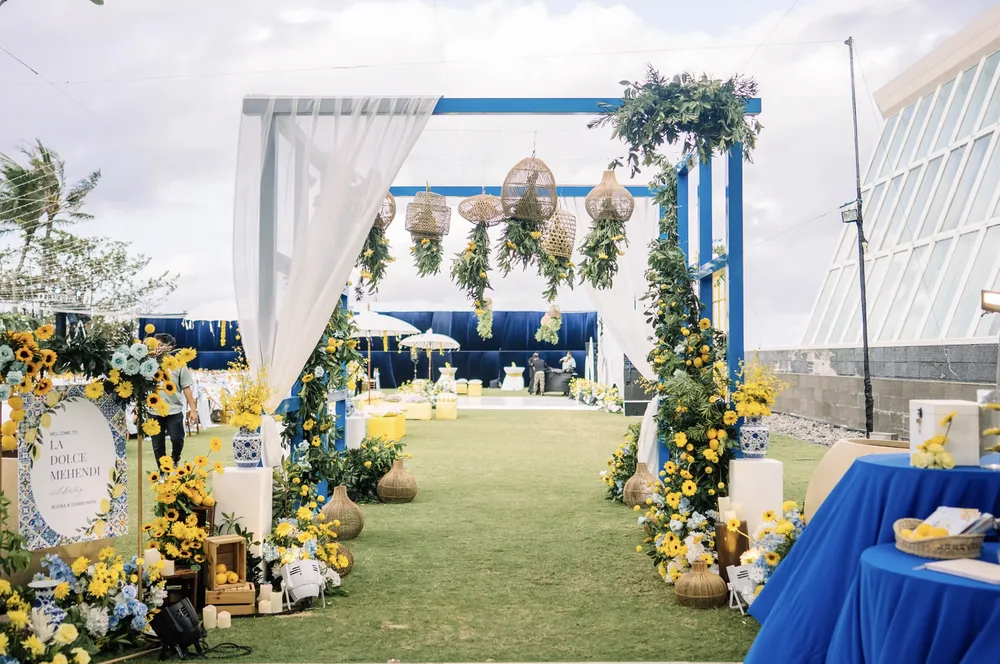
A long-standing directive of the Akal Takht — the tradition's highest temporal authority, and reaffirmed as recently as late 2025 — holds that the Anand Karaj takes place in a gurdwara: not in a hotel ballroom, not at a beach resort, not on a lawn with the scripture brought to the venue. Reputable gurdwaras and granthis follow this, and no planner should ever propose otherwise or shop for exceptions — the couples who ask us about a "destination Anand Karaj" get the same honest answer: the ceremony belongs to the gurdwara, and the celebration belongs anywhere you like. That split is not a limitation; it is the format. The morning belongs to the gurdwara — unticketed, unstyled, spiritually complete — and the evening belongs to the venue: the reception with its decor, dinner, entertainment and every production element a wedding wants, which is where our work begins.
What every guest must know
Gurdwara etiquette is warm, absolute and easy to honour. Heads covered, all genders — scarves are usually available at the entrance, though bringing your own is graceful. Shoes off before entering, deposited at the racks provided. No alcohol, no tobacco anywhere on the premises — and note that Sikh tradition holds alcohol contrary to the faith at the wedding itself, so the bar belongs to the evening reception if the family chooses one, never anywhere near the ceremony. Inside, everyone sits on the floor — men and women traditionally on separate sides in many gurdwaras, chairs available along the walls for those who cannot manage the floor — and follows the room: standing for the ardas, bowing toward the scripture on entry if comfortable. Photography rules vary by gurdwara and are agreed in advance, never improvised. And afterwards comes one of the tradition's glories: the langar, the community meal — vegetarian, free, served to everyone equally, eaten seated together — which guests should absolutely stay for, because it is the faith's hospitality made edible.
Planning the split-format day
The practical shape: gurdwara ceremony in the morning, reception at the venue that evening or the next day. The coordination points that matter — timing the reception generously after the ceremony so the families are not sprinting across the city; transport for outstation and foreign guests between the two sites, briefed on the etiquette above before they arrive; the photographer and videographer cleared with the gurdwara in advance and briefed on its rules; and the reception designed as its own complete event, since the ceremony needs nothing from us. For mixed couples, an Anand Karaj alongside another tradition's rite follows the same grammar as any fusion wedding — each rite whole, in its own right place, with the reception as shared ground; the gurdwara's own requirements for the ceremony, including questions of faith, are the granthi's domain and the family conversation comes first. Bangalore's Sikh community and its gurdwaras handle weddings warmly and often; the city's format is well-worn and works.
The one-sentence summary each audience needs
For couples: the ceremony is complete as the gurdwara conducts it — spend your planning energy on the reception and the guest logistics. For guests: cover your head, remove your shoes, sit on the floor, stay for langar, and skip the hip flask entirely. For fellow planners: the Anand Karaj is not a venue opportunity; it is a morning of grace that needs a very good evening built around it — and that evening is the job.