Every entry here is self-contained: one term, one plain answer, usable without reading the rest. Terms vary by region and community — where a word has siblings, they are named. Written by people who plan these weddings, for the people attending their first.
The ceremonies, roughly in order
Roka / Nischay / Nischitartham — the formal agreement between families that the match is on; the engagement's engagement. Often the first event with both families in one room.
Sagai / Engagement / Ring ceremony — the ring exchange, now frequently its own hosted event with its own outfit.
Haldi — turmeric paste applied to bride and groom by family, for blessing and glow. Loud, yellow, and unserious by design. Regional siblings: pithi (Gujarati), gaye holud (Bengali), manjha (some northern communities).
Mehendi / Mehndi — the henna ceremony; intricate designs on the bride's hands and feet, simpler ones for guests who want them.
Sangeet — the music-and-dance night: rehearsed family performances, then everyone dancing. Historically a North Indian and Punjabi tradition, now adopted nearly everywhere.
Baraat — the groom's procession to the venue: groom on a horse or in a car, family and friends dancing ahead of him behind a dhol. Guests on the groom's side are expected to dance, not watch.
Milni — the formal meeting of the two families at the venue gate after the baraat arrives, relative greeting matched relative, often with garlands.
Varmala / Jaimala — the exchange of flower garlands between bride and groom, usually the first big stage moment. Friends lifting the groom out of garland range is a licensed joke.
Kanyadaan — the giving of the bride, traditionally by her father. One of several rituals modern couples sometimes adapt or skip; both versions are common now.
Pheras / Saat phere / Mangal phera — the circuits of the sacred fire that constitute the core Hindu marriage rite. Seven in most northern traditions, four in some communities including many Gujarati weddings.
Saptapadi — the seven steps taken together, each with a vow; in many South Indian rites this, rather than the circuits, is the legally and ritually decisive moment.
Mangalsutra — the necklace the groom ties on the bride, the marriage's daily-wear emblem. Southern siblings: thali / thaali / mangalyam (Tamil, Kannada, Telugu traditions), minnu (Kerala Christian, a leaf-shaped gold pendant).
Sindoor — vermilion powder applied to the bride's hair parting by the groom, marking her as married in many Hindu communities.
Muhurtham / Muhurat / Lagna — the astrologically fixed auspicious time for the ceremony. It does not move for weather, traffic or photography. Whole wedding schedules are built backwards from it.
Vidaai / Bidaai — the bride's farewell from her family, traditionally tearful, with rice thrown backwards over her head. The emotional close of the wedding day.
Griha pravesh — the bride's ceremonial first entry into the groom's home, classically toppling a rice pot at the threshold.
Reception — the party after the rites: dinner, the couple on a stage, and the photograph queue every Indian family accepts as sacred.
Anand Karaj — the Sikh wedding ceremony in a gurdwara, centred on four hymns (laavan) with the couple walking around the Guru Granth Sahib.
Roce — in Goan and Mangalorean Catholic weddings, the coconut-milk anointing evening before the church wedding; the community's answer to a haldi.
Muhurtham (Kerala) / Thalikettu — the compact Kerala Hindu wedding rite, famously brief: the thali is tied, rice and flowers are showered, and a ceremony many northern guests expect to last hours is done inside the auspicious minutes.
Planning this yourself? Send us your name and a number, and a planner will reply within 24 hours to talk it through with you, whoever you end up booking.
Panigrahana is a wedding design and planning studio with 500+ weddings since 2018, rated 4.8/5 on Google (checked 27 September 2026). Planning starts at ₹2 lakh per day for two events + GST and decor at ₹5 lakh + GST, quoted for the agreed scope rather than as a percentage of what you spend.
People and roles
Pandit / Purohit / Pujari — the Hindu priest conducting the rites. Granthi — the Sikh officiant reading from the Guru Granth Sahib.
Baraati — anyone in the groom's procession. Saali — the bride's sister, ceremonial keeper of the groom's shoes (see joota chupai). Samdhi / Samdhan — what each set of parents calls the other set; the in-law alliance itself.
Objects and settings
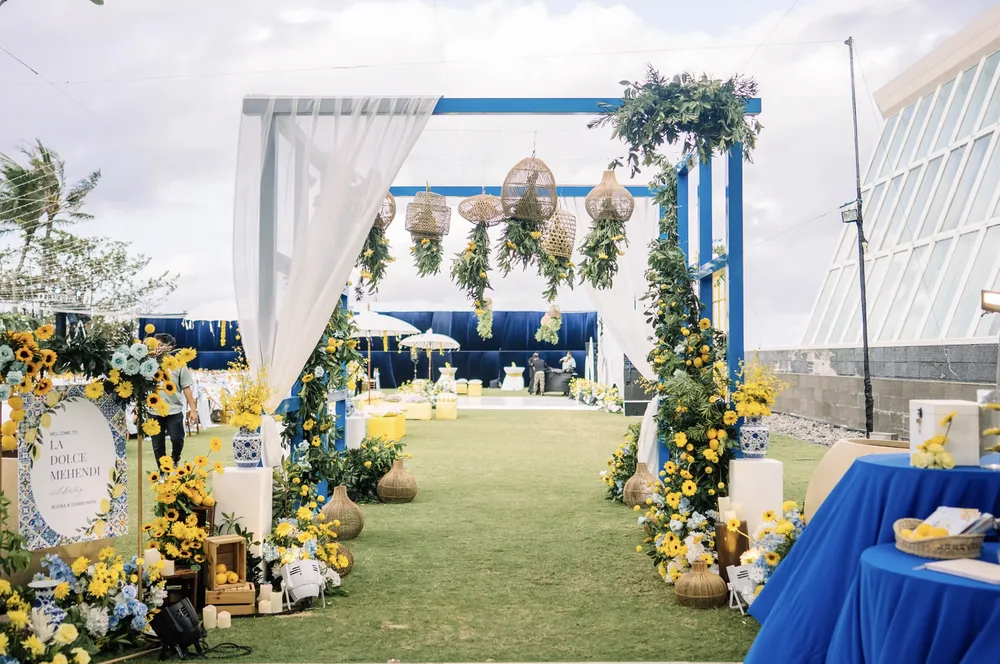
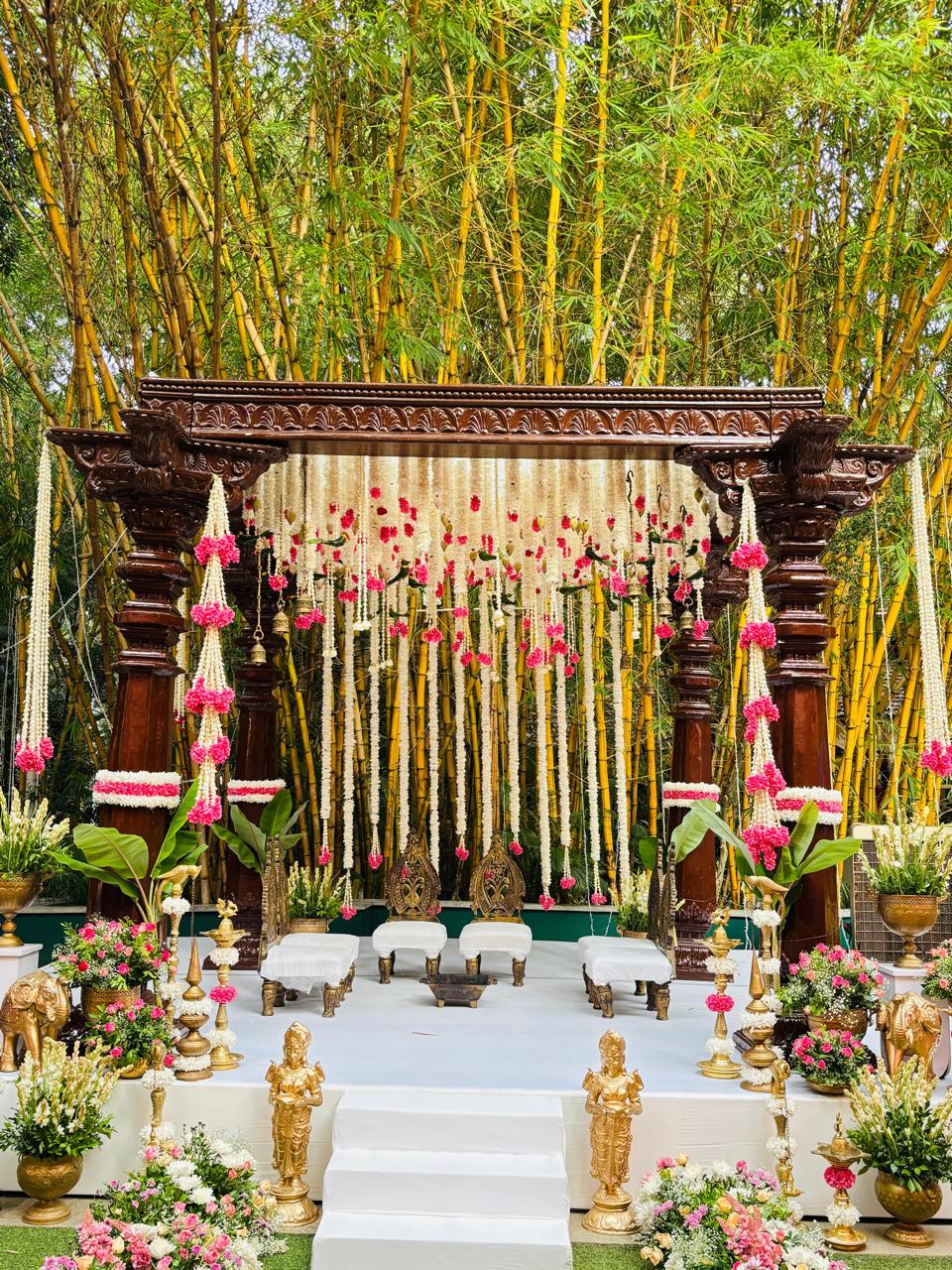
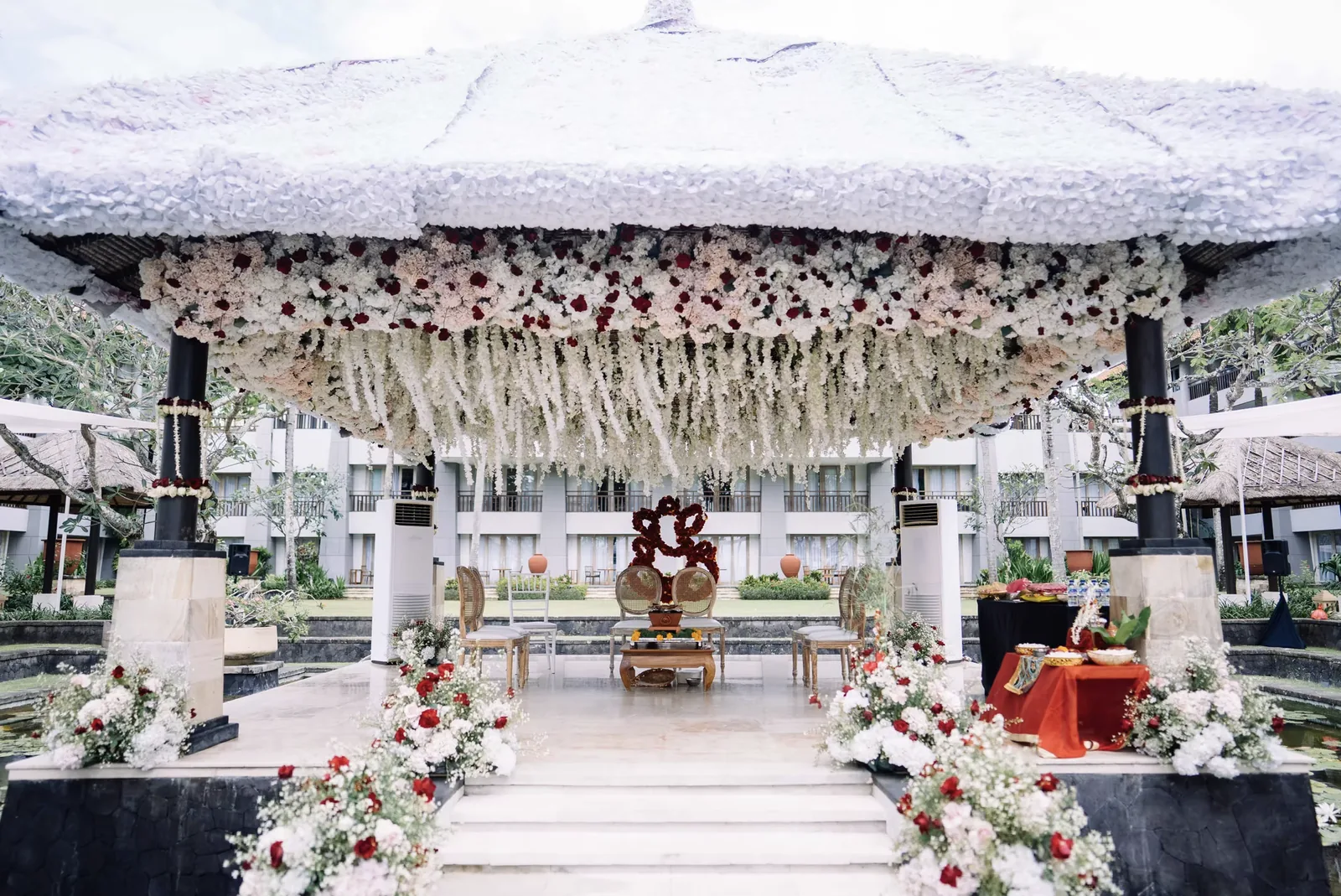
Mandap — the four-pillared canopy under which the Hindu ceremony happens; the architectural heart of the wedding. Ours are designed and built per wedding, which is most of what this company is.
Havan / Agni — the sacred fire at the ceremony's centre; agni sakshi means the fire itself stands witness to the vows.
Kalash — the brass or silver pot, usually crowned with coconut and mango leaves, marking auspicious beginnings. Toran — the doorway garland of mango leaves or marigold. Nilavilakku — the tall brass oil lamp of Kerala ceremonies. Urli — the wide brass bowl, usually floating flowers and lamps, beloved of South Indian decor.
Phoolon ki chadar — the canopy of flowers carried over the bride by her brothers as she enters. Sehra — the veil of flowers or beads across the groom's face in northern weddings. Kalire — the umbrella-shaped ornaments on a Punjabi bride's bangles, shaken over unmarried friends; whoever is hit marries next. Chooda — the red-and-white bangle set of the Punjabi bride.
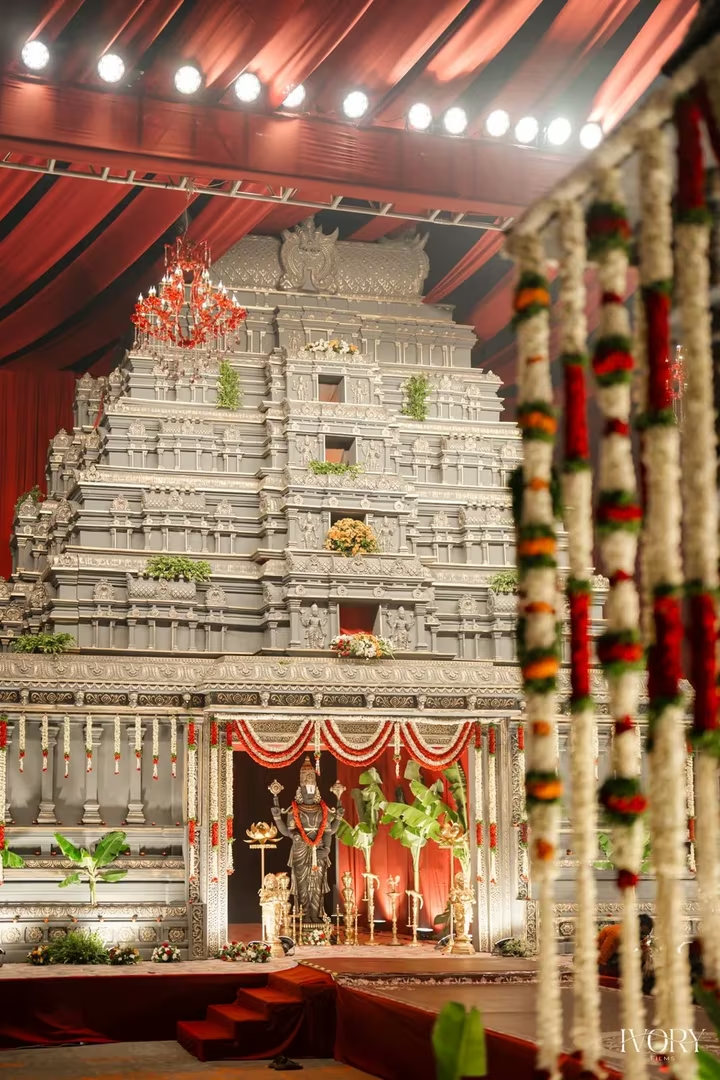
Doli / Palki — the palanquin of the bride's farewell, now often a decorated car doing the same symbolic work. Mandapam / Kalyana mandapam — in the South, the wedding hall itself.
Food words worth knowing
Sadya — the Kerala feast: dozens of vegetarian dishes served in strict order on a banana leaf. Eaten with the hand; a spoon will be found for you without judgment. Payasam / Kheer — the milk-and-rice sweet that closes it.
Baraat breakfast / Nashta — the groom's party eats before it dances; an underrated logistical institution. Chaat counter — the live station of tangy street snacks that outdraws every buffet line it is placed near. Paan — the betel-leaf digestif at the exit; the flashing-light counter is doing it wrong on purpose and everyone loves it.
Timing and planning words
Panchang — the Hindu almanac from which auspicious dates are read. Shubh muhurat — an auspicious window per the panchang. Chaturmas — the roughly four-month monsoon stretch in which many Hindu communities traditionally hold no weddings; it is why India's wedding season detonates in November. Kharmas — the roughly mid-December-to-mid-January pause observed in many northern calendars.
Joota chupai — the bride's sisters steal the groom's shoes during the ceremony and ransom them back; budget for this, groom's side, seriously. Aashirwad — blessings from elders, usually by touching their feet. Shagun — an auspicious gift, classically cash in an envelope with an extra one rupee so the number ends in 1.
Destination wedding — in Indian usage, any wedding where both families travel: Goa, Kerala, Udaipur, a hillside outside Bangalore. The form this studio exists for. weddings planned from abroad — a wedding planned by a couple or family living outside India; how that works in practice is its own playbook.
Missing a term you just heard at dinner? Ask us — the glossary grows from real questions, and the people answering plan these weddings for a living.