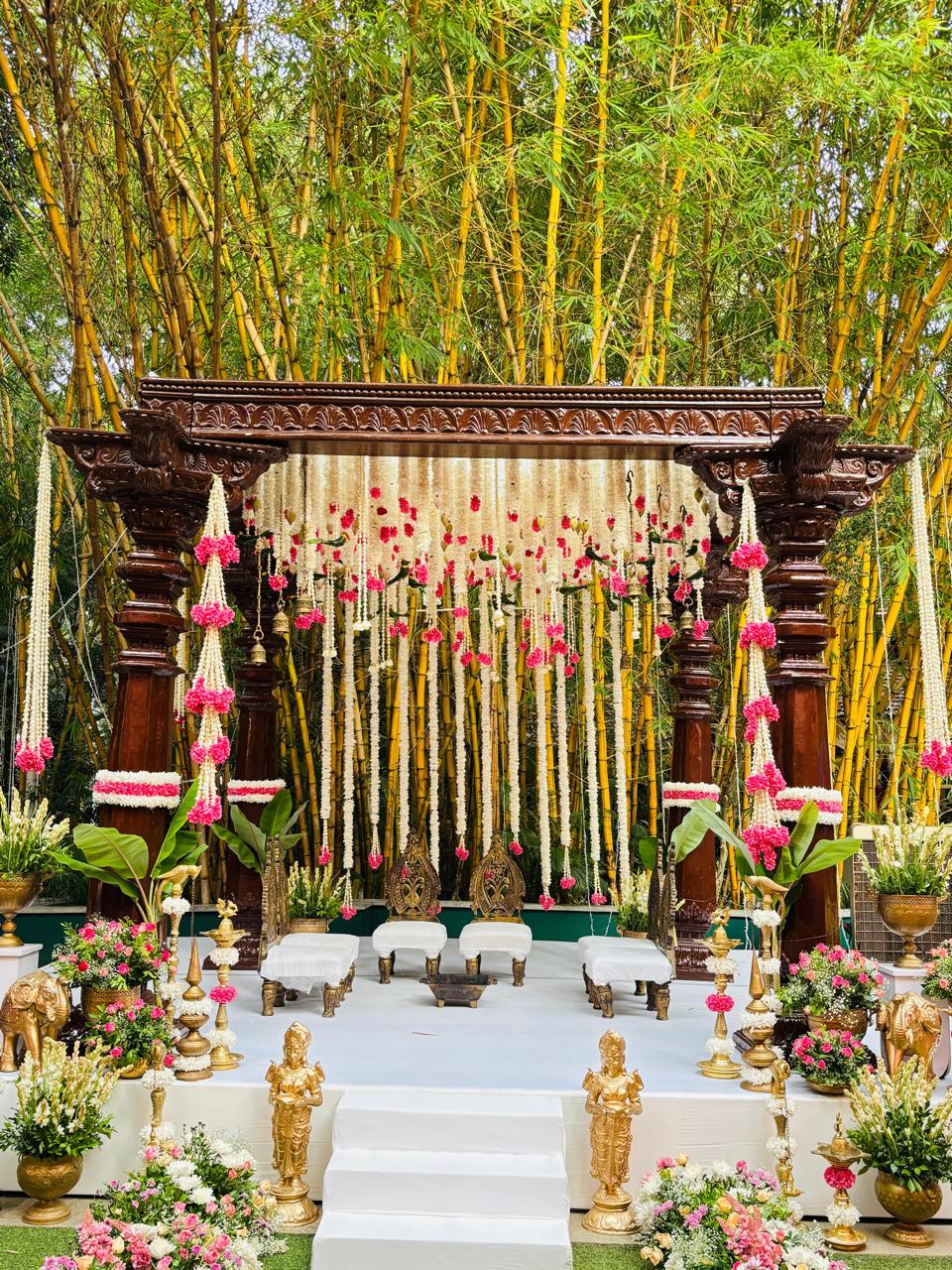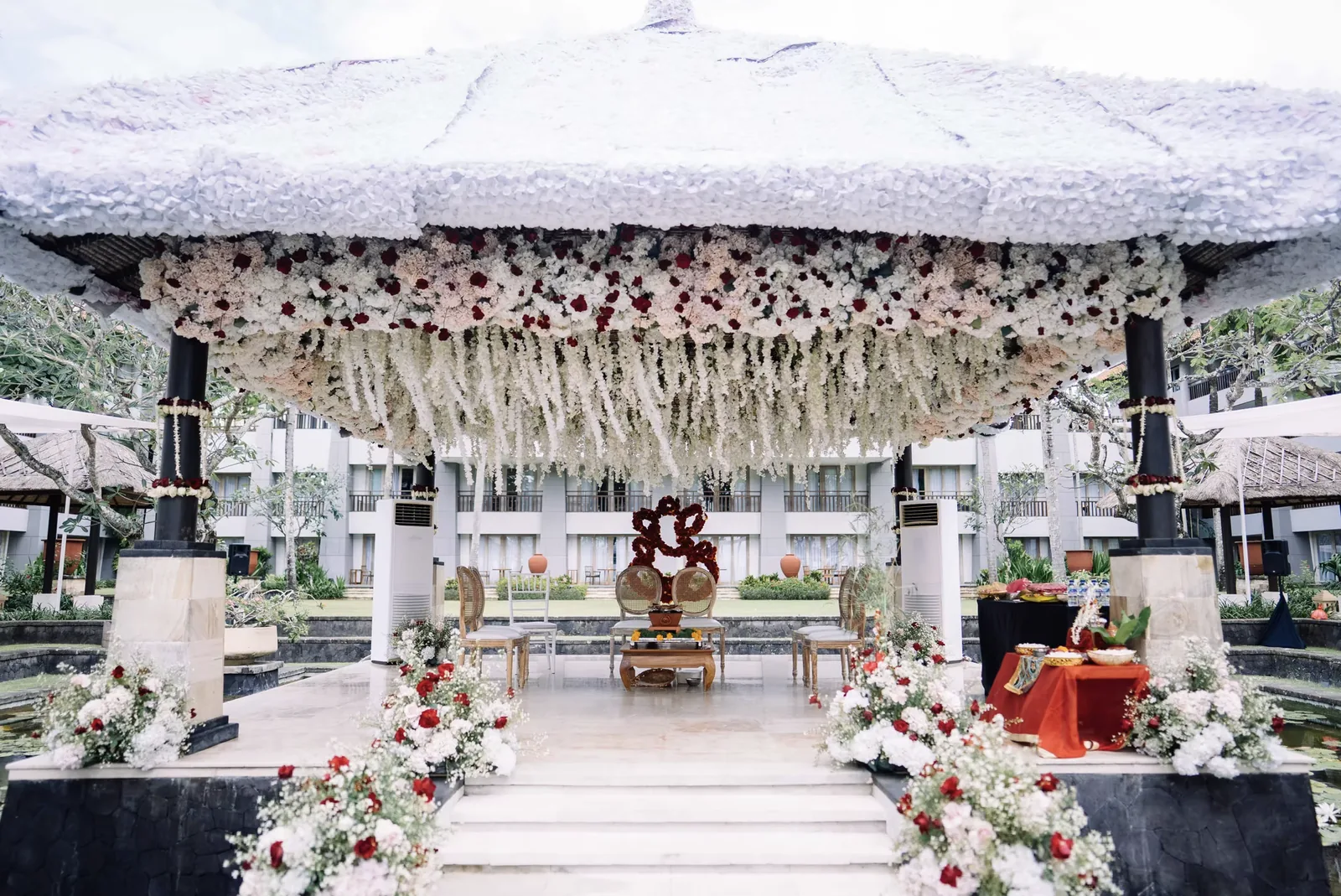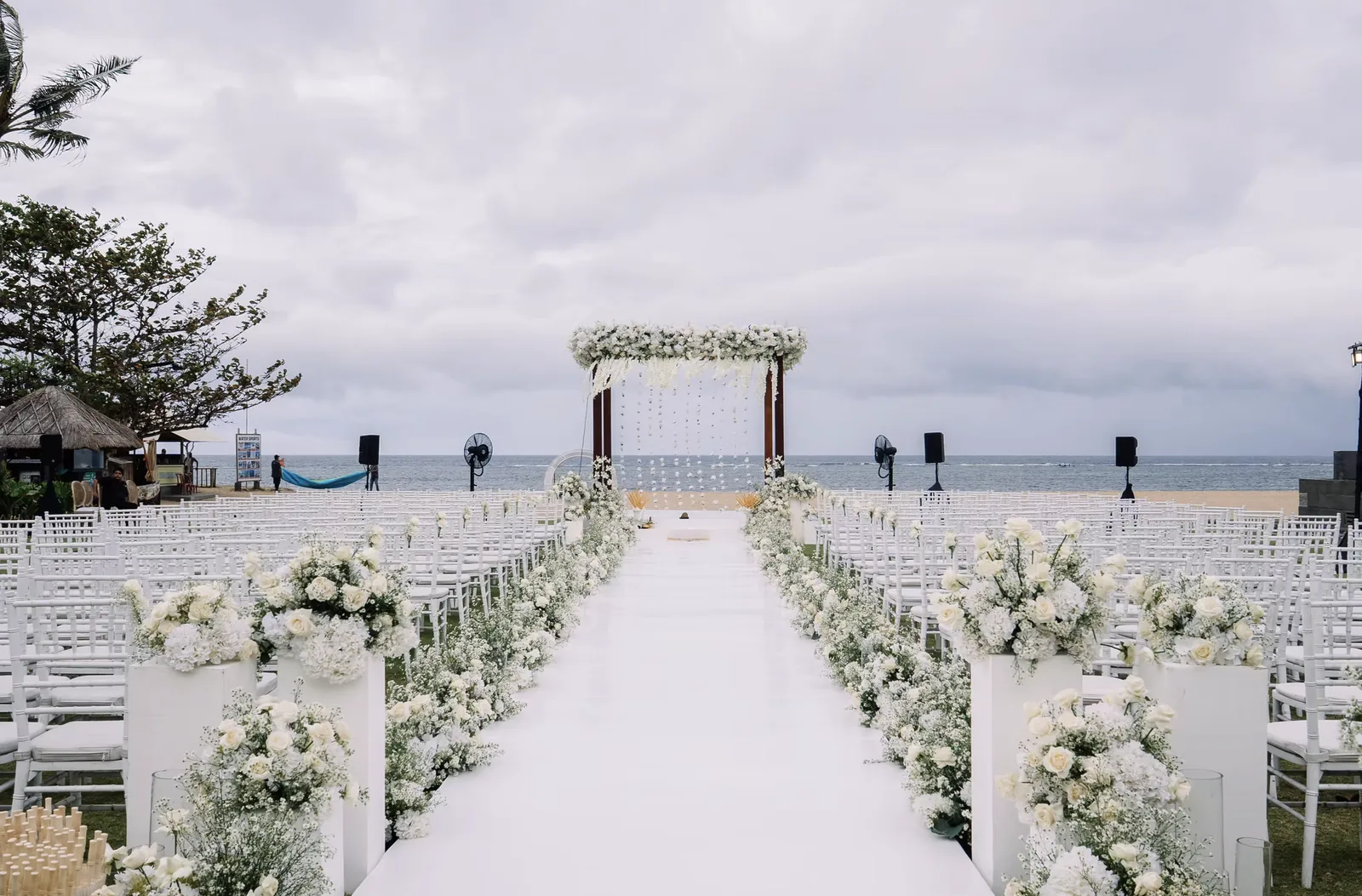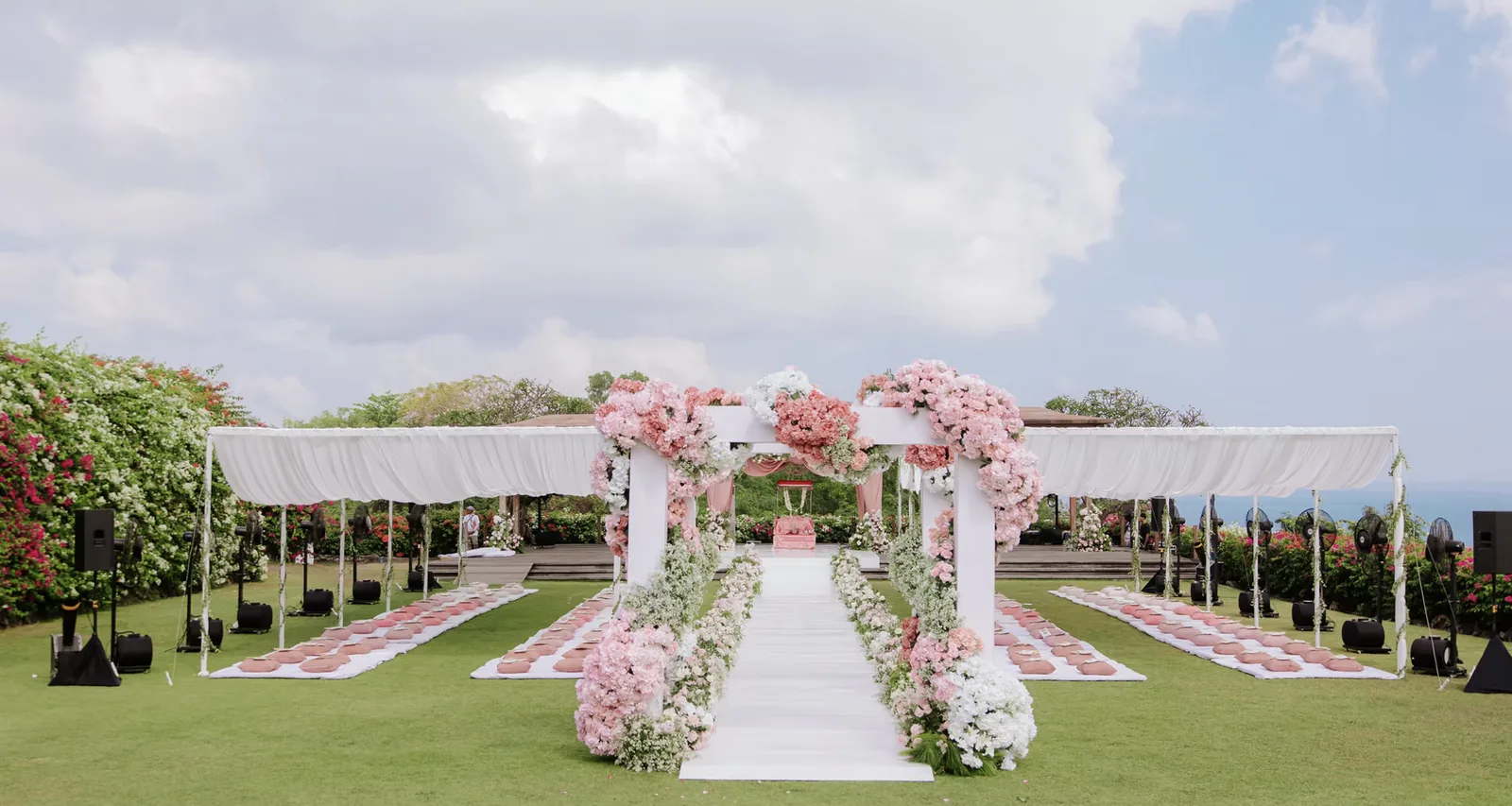
Ask what a mandap is and you get the translation — the canopy under which a Hindu wedding happens, the closest analogue a Western guest has being the altar. True, and thin. The mandap is the wedding's architecture: the structure that holds the fire, seats two families' honour, frames every photograph that will outlive the day, and — this is the part nobody writes — makes more demands on a venue than everything else in the wedding combined.
What does the mandap mean in a Hindu wedding?
The canonical mandap stands on four pillars, read as the four parents whose lives built toward this day; under it sit the couple, the priest and the fire that witnesses the vows. Regional forms vary — the South's carved-pillar manavarai, the North's floral chhatri, Bengal's chhadnatola — and modern design has stretched the form gloriously: suspended canopies, mirrored floors, a gopuram in tiers on a Goa beach. The constant is the geometry of witness: an elevated, framed centre that every seat in the house reads at once.
Planning this yourself? Send us your name and a number and we’ll reply within 24 hours with a realistic budget for it — yours to keep, whoever you end up booking.
Panigrahana is an architect-founded studio: 500+ weddings designed since 2018, rated 4.8/5 across 100 Google reviews (checked 27 September 2026), on a flat planning fee (quoted for the agreed scope) rather than a percentage of what you spend.
What does a mandap need from a venue?
Footprint. A working mandap for the couple, priest and both sets of parents starts around 12 by 12 feet of platform and grows with ambition; with the aisle, family seating and photography lanes, the ceremony zone wants far more clear floor than couples assume. Venue capacity charts count chairs, not ceremonies — ask for the ceremony layout, not the banquet one.
Height and rigging. A canopy needs clearance and, if anything hangs, rated rigging points — the difference between a floating floral ceiling and a decorator quietly substituting something smaller on the day. Ballrooms differ enormously here; ask for the ceiling height and hanging policy in writing.
The fire. The havan is non-negotiable in most Hindu rites and negotiable with almost every hotel: fire NOCs, smoke-detector zones, ventilation. Some ballrooms permit it, some designate zones, some refuse — and outdoor lawns solve it entirely. This single question should precede any venue shortlist for a ceremony wedding.
Sightlines and the sun. An outdoor mandap is a sundial: face it wrong and the couple squints through their vows while guests photograph silhouettes. We orient mandaps against the ceremony hour's light — one of those details that costs nothing early and cannot be fixed at noon.
Rented catalogue or designed?
Most mandaps in India are rental inventory — the same structure, re-flowered weekly. Nothing is wrong with that except sameness. Ours are designed per wedding and built in our own workshop, because the mandap is the one element every guest watches for an hour and every photograph keeps forever; it is where design authorship pays its whole fee. Whichever route you take, the venue checklist above is identical — a designed mandap simply asks the rigging question with more ambition. The mandaps in this page's photographs are ours; more of them are in the real weddings.