Entry listicles hand you thirty ideas and no physics. As the studio that has walked a couple in on cold pyro, brought a groom's party down a beach, and sent a couple out through a harbour on a speedboat with smoke flares, here is the version with feasibility attached — because the difference between a great entry and a cancelled one is always a permission, a distance or a power supply somebody checked late.
The baraat: a route problem first
Every baraat decision follows from the route: where the procession forms, how far it travels, and where it lands for the milni. Two hundred metres is a glorious baraat; eight hundred is a forced march in brocade. City venues need the internal-road conversation (many hotels route baraats through service roads — walk it first); public-road processions need the venue's guidance on local permissions; and the dhol-versus-DJ-truck choice is really a corridor-width and sound-rules choice. Horses and vintage cars are booked realities with handlers and insurance — arrange through people who do weddings weekly, and give the animal a calm staging area away from the speakers. The groom's real checklist: comfortable footwear, a water bearer, and a baraat marshal with authority to keep the procession moving — the schedule's fate rides with him.
Planning this yourself? Send us your name and a number, and a planner will reply within 24 hours to talk it through with you, whoever you end up booking.
Panigrahana is a wedding design and planning studio with 500+ weddings since 2018, rated 4.8/5 on Google (checked 27 September 2026). Planning starts at ₹2 lakh per day for two events + GST and decor at ₹5 lakh + GST, quoted for the agreed scope rather than as a percentage of what you spend.
Couple entries, by production weight
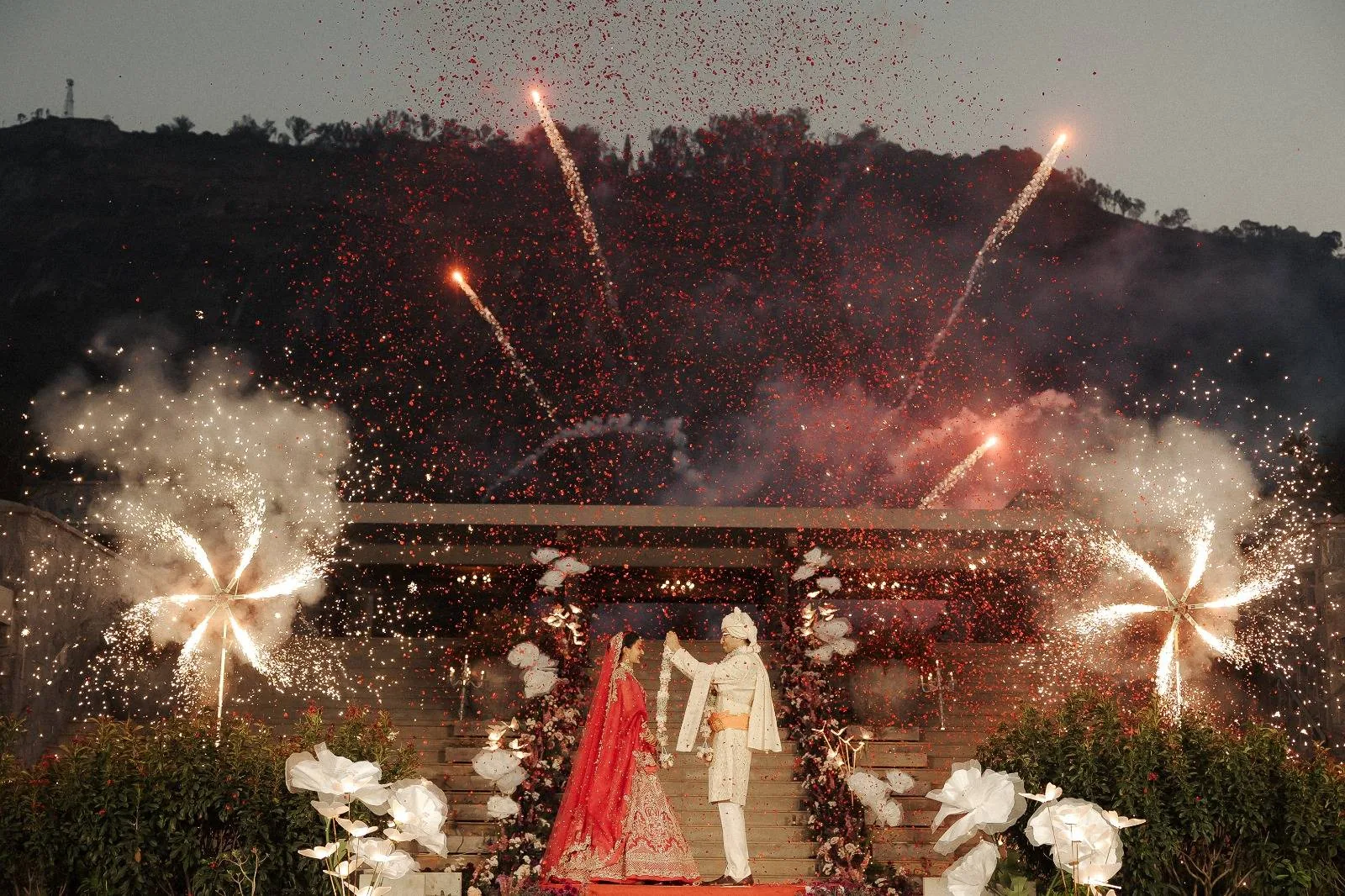
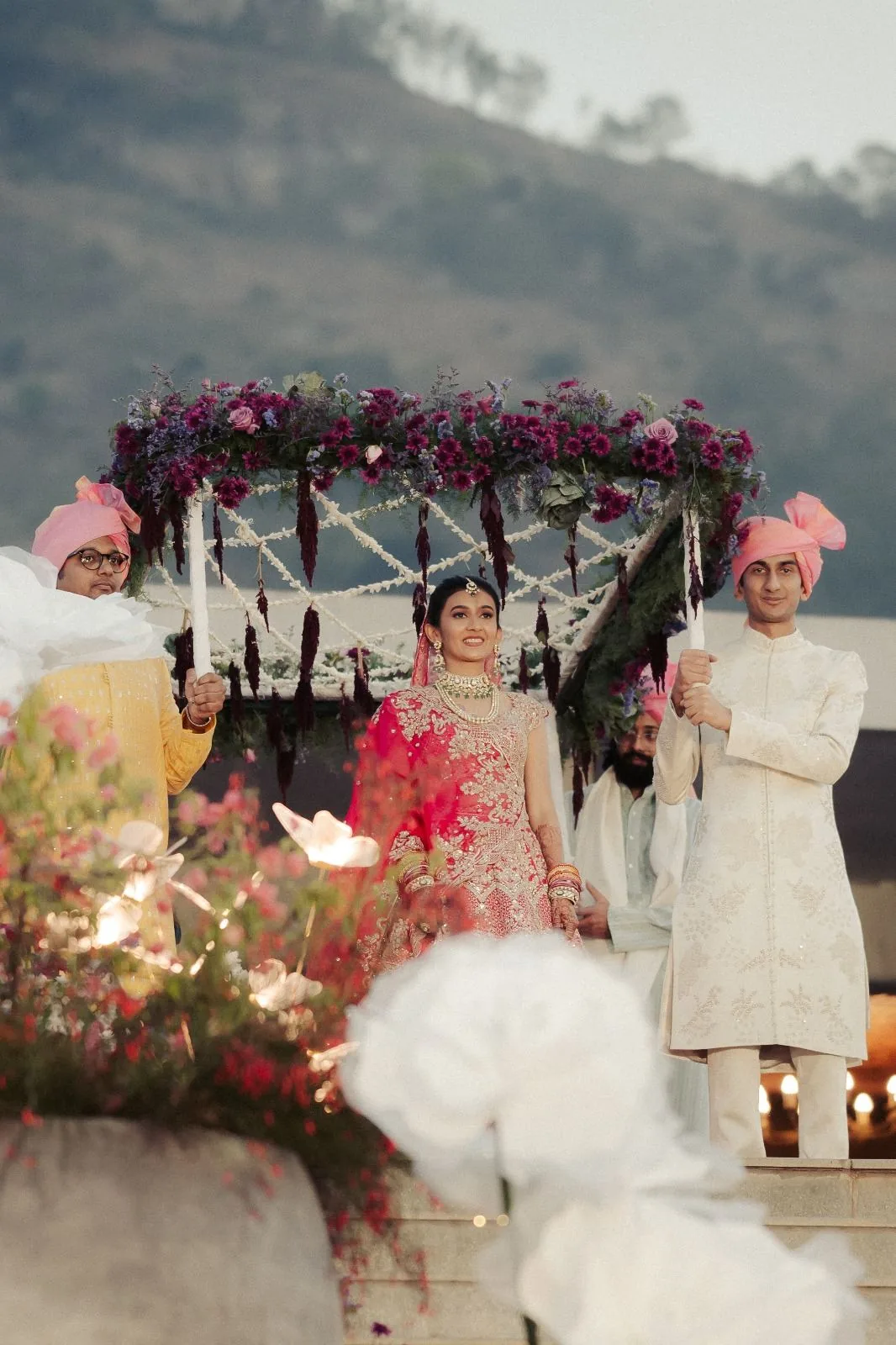
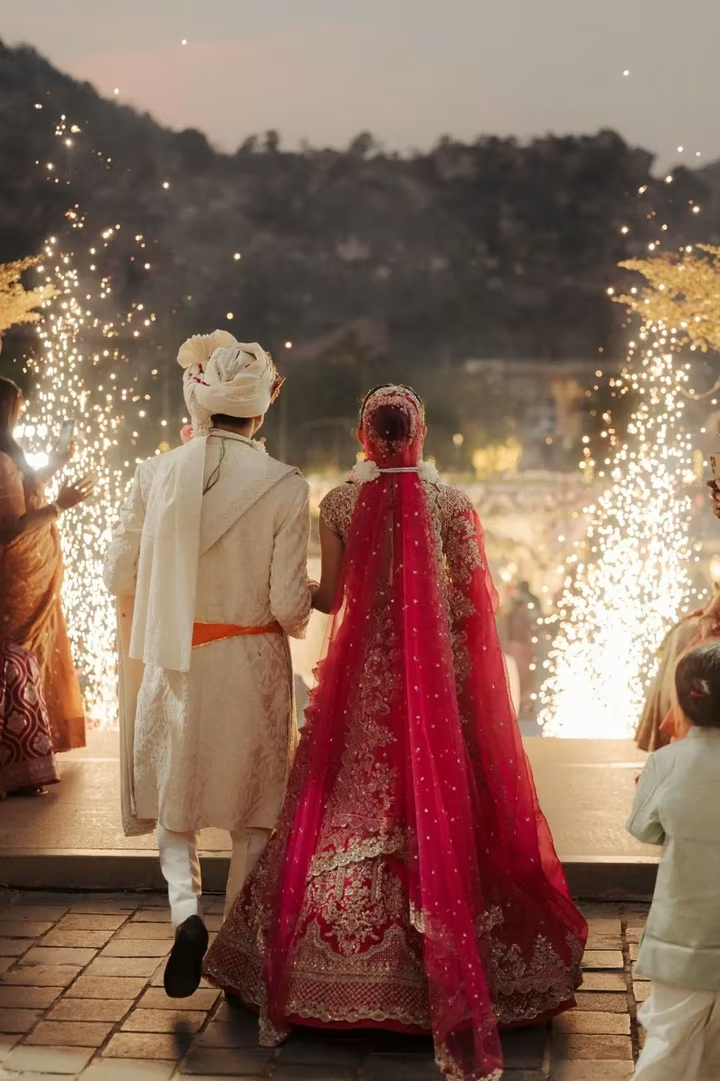
Zero-production, maximum effect: the timed walk — lights dimmed, one track, family flanking a lit aisle. Underrated because it is free and always works. Light production: petal showers from above, a phoolon-ki-chadar entry for the bride, sparkler lines held by friends (outdoors, with buckets nearby). Medium: cold pyro fountains — dramatic, flame-free by design, and still absolutely a venue conversation: reputable operators, clearances from anything overhead, and the venue's written yes. The walkway in this page's cover image is ours. CO2 jets and dry-ice fog: the low fog that makes a first dance float needs dry-ice rigs and ventilation planning — indoor AC currents eat fog, so position matters; both effects are operator-run, never DIY. Heavy: fireworks and drone shows. Fireworks live and die on the venue's licence situation and local rules — some properties run them beautifully, some cannot at all, and the answer must be in writing before anything is promised to a grandmother. Drone light shows are the new grandeur: genuinely spectacular, run by licensed operators under aviation clearances that take real lead time, and site-dependent — start that conversation months out, not weeks.
The three questions that decide every effect
Who operates it — the answer must be a professional whose insurance you could ask about, for anything involving combustion, gas or aircraft. What does the venue say in writing — verbal yeses evaporate at 6pm on the day. And what is the cleanup — confetti cannons are thirty seconds of joy and an hour of labour someone must own before the button is pressed. Effects budgets vary too widely by scale and city for honest generic numbers; what we can promise is that every effect above is routine when planned through the venue and grim when improvised past it. The entry is a production cue, and production is, conveniently, the thing we do in-house.