Couples agonise over venues and take the wedding's length as given — usually as whatever their cousin did. It should be the other way around: the day count is the single decision that multiplies everything else. Every added day is another round of catering for your full guest count, another decor build, another vendor day, and at destination weddings another room-night for everyone sleeping over. Decide the length first and half the budget decides itself.
What each added day actually costs
The arithmetic is unforgiving because it multiplies your biggest lines. A second day adds a full meal cycle for everyone present, an event's worth of decor, and — the destination kicker — a night of rooms that often outweighs both. A third day does it again. The corollary cuts the other way at home-city weddings: where guests sleep at home, an added evening costs one venue slot and one catering round, which is why the two-day city wedding is so common and the three-day one so rare outside destinations. The honest question is never "can we afford another day" in isolation — it is which format you are in, because the same extra day costs three times as much with a room block attached. The budget-split guide shows the mechanics.
Planning this yourself? Send us your name and a number, and a planner will reply within 24 hours to talk it through with you, whoever you end up booking.
Panigrahana is a wedding design and planning studio with 500+ weddings since 2018, rated 4.8/5 on Google (checked 27 September 2026). Planning starts at ₹2 lakh per day for two events + GST and decor at ₹5 lakh + GST, quoted for the agreed scope rather than as a percentage of what you spend.
Which rituals genuinely need their own day
Fewer than tradition's maximal version suggests. The ceremony needs its day — a muhurtham morning or a wedding evening, uncrowded. The sangeet earns a separate evening if there are real performances; rehearsed acts and an early muhurtham cannot share twenty-four hours kindly. The haldi and mehendi are the compressible pair: they stack into one function day — haldi morning, mehendi afternoon — or fold onto the sangeet day's daylight hours, and the combined couple haldi compresses further still. A TamBrahm wedding's rites, by contrast, genuinely occupy two mornings, and no schedule should pretend otherwise. The workable formats, in ascending order: the one-day wedding (ceremony plus evening reception — underrated, elder-kindest, budget-kindest); the two-day standard (functions day, then wedding day); and the three-day destination weekend (arrivals and sangeet, functions, wedding), which is the right shape when guests have flown — they came for a holiday wearing a wedding, and the third day is the holiday.
Guest stamina is a real budget line
Every format has a fatigue curve. By a third consecutive late night, attendance thins, elders retreat, and the wedding's biggest morning meets its lowest energy. The scheduling moves that fight it: alternate intensities — a loud night, then a gentle daytime function; never two consecutive 2am finishes before the main event; protect the morning before a muhurtham absolutely; and at destination weddings, leave one unscheduled half-day — guests return from a free morning kinder than they left. The couple's stamina is part of the same budget: a bride who has attended five of her own functions in forty-eight hours meets her wedding photographs already spent.
The run-sheet: where day counts become schedules
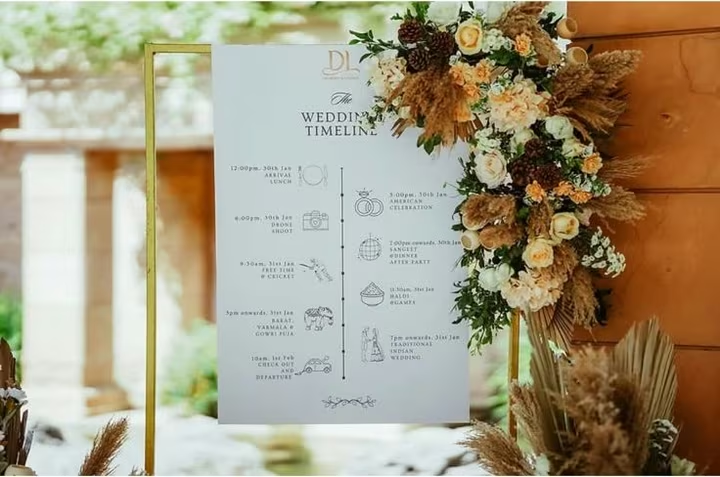
Whatever the length, the day runs on a sheet that names, for every block: what happens, where, who must be present, which vendors are live, and the transfer time to the next thing — with buffers where reality intrudes: getting-ready always overruns, transfers always overrun, and the vidaai should never have anything hard scheduled behind it. Print it in both timezones when family is abroad, give every vendor the same version, and appoint one owner per day who is neither marrying nor parenting the people who are. A three-day wedding is really five or six run-sheets stapled together — the timeline board in this page's photograph, from our own three-day build at the St. Regis, is what the guest-facing version looks like when the staples hold.