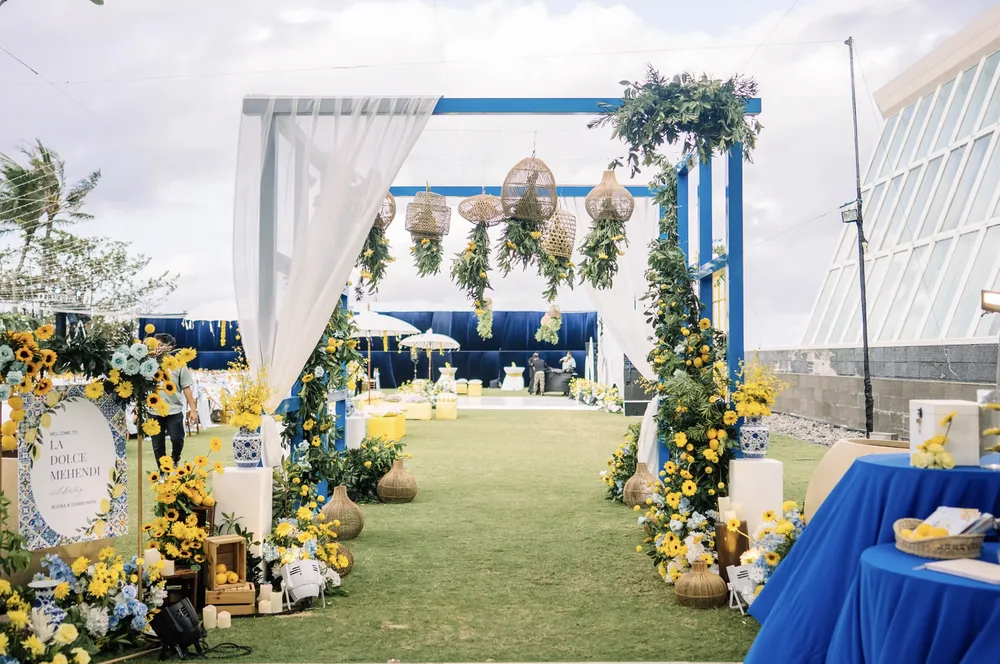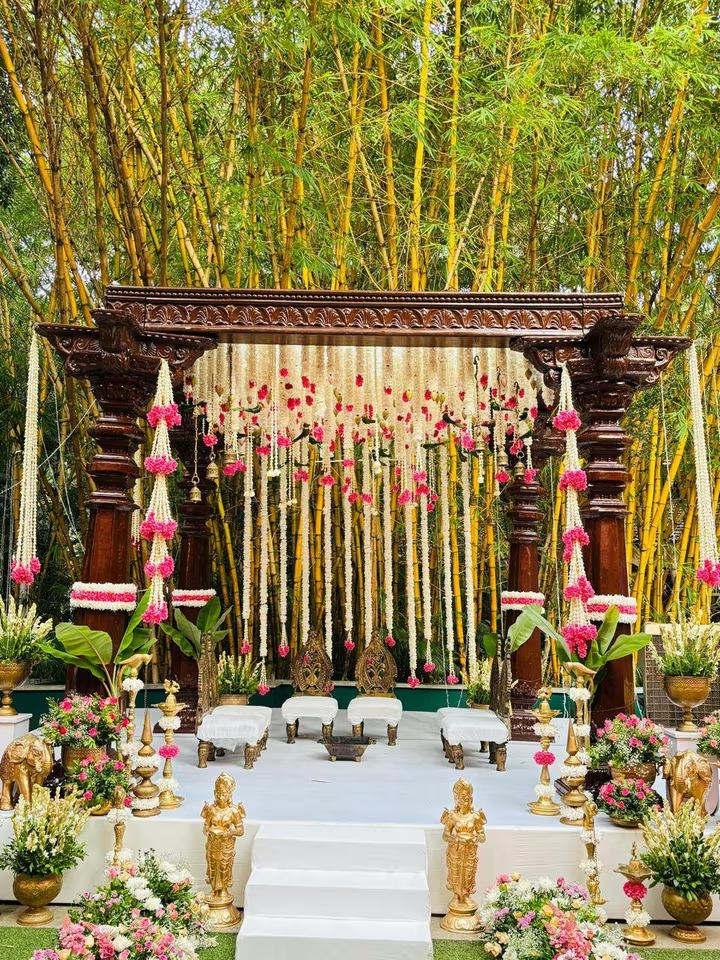
The top result for this question is a Quora thread, which tells you how badly it is served. As a Bangalore-founded studio that plans Punjabi sangeets and Tamil muhurthams in the same month — and increasingly for the same couple — here is the working answer: the differences are real, they are fewer than the stereotypes claim, and every one of them is a planning decision wearing cultural clothes.
The clock is the deepest difference
Most South Indian traditions marry in the morning — the muhurtham computed to the hour, sometimes brutally early — with lunch as the feast and the evening for an optional reception. Most North Indian weddings run the opposite way: evening baraat, night pheras, dinner stretching late. This one difference cascades into everything: venue slots (southern mantapas sell mornings; northern lawns sell nights), catering (lunch sadya versus midnight dinner service), photography light, and guest stamina. A fusion couple's first real decision is whose clock the main day runs on.
Planning this yourself? Send us your name and a number, and a planner will reply within 24 hours to talk it through with you, whoever you end up booking.
Panigrahana is a wedding design and planning studio with 500+ weddings since 2018, rated 4.8/5 on Google (checked 27 September 2026). Planning starts at ₹2 lakh per day for two events + GST and decor at ₹5 lakh + GST, quoted for the agreed scope rather than as a percentage of what you spend.
Length, sound and the shape of celebration
The northern wedding spreads wide: haldi, mehendi, sangeet, baraat — a multi-event festival with music at its centre, the ceremony one peak among several. The southern wedding runs deep: fewer satellite events, a ceremony that is itself the production — a TamBrahm wedding's rites can span two mornings — with the surrounding functions quieter. Neither is grander; they spend grandeur differently. Budget-wise, the North spends on nights and entertainment, the South on the rite and the feast — and the modern Bangalore wedding increasingly buys both, which is precisely why the how-many-days question needs answering early.
Food, clothes, calendars
The southern feast leans vegetarian and structured — the sadya's courses in order on a leaf — where northern menus run buffet-wide with non-vegetarian mains common. Bridal red silk is near-universal, but the southern Kanjeevaram and temple gold read differently from the northern lehenga and polki; grooms diverge further, veshti against sherwani. And the calendars genuinely differ: the northern panchang's empty months are not the Tamil calendar's empty months — our seven-names guide and the muhurat pages cover this — which matters enormously to mixed families trying to find one date two astrologers will bless.
Planning the both-worlds wedding
The format that works, proven across our fusion weddings: give each tradition its whole event rather than blending both into neither. A morning southern muhurtham with its full rites and lunch; the northern sangeet the night before with its full noise; the reception as shared ground. Two priests are easier to schedule than one compromise; two outfits are easier than one hybrid; and grandmothers on both sides get a day that looks like the wedding they know. What it demands is a planner fluent in both grammars and a venue that can turn a hall around between them — which is a solvable, bookable, schedulable problem. It is also, not coincidentally, the wedding Bangalore does more of than any city in India.