The Indian wedding calendar treats the monsoon as dead months, and the pricing reflects it: the same venues that command December premiums sit quiet from June to September, quoting their gentlest rates of the year. Most couples should take the conventional calendar and its dry certainty. But for a specific kind of couple — smaller list, aesthetic conviction, budget that would rather buy a better venue than a safer month — the monsoon is not a compromise. It is a genre. The rules are just different, and they are rules, not vibes.
Where rain is the backdrop, not the enemy
Kerala's backwaters are the genre's home ground: resort architecture built on verandas, pavilions and covered jetties, a lake that turns silver under rain, and a wedding culture already fluent in indoor ceremony. A muhurtham under a pavilion with the rain on Vembanad behind it is among the most beautiful formats we know, and the Kerala calendar even cooperates — Mithunam sits in the monsoon with no traditional avoidance, the state's one genuinely permitted quiet window. The Western Ghats — Coorg, Chikmagalur, Wayanad, the hill country a drive from Bangalore — trade the lake for mist: estates at their greenest, waterfalls actually running, and covered courtyards that make the weather scenery. The honest caveats: hill roads in heavy rain are a real logistics factor for elderly guests, and July's intensity differs from late August's — the monsoon has its own gentler shoulder weeks, and a planner who knows the region knows which they are. Heritage courtyards and covered-quadrangle venues anywhere complete the set — buildings designed a century before air conditioning solved rain by architecture, and they still do.
Where the genre does not work, said plainly: beach destinations. Goa's monsoon closes the sand, the shacks and half the vendor ecosystem — its June-to-September story is discounts on indoor weddings, not romance on the shore. Rain on a lake is scenery; rain on a beach is cancellation.
Planning this yourself? Send us your name and a number, and a planner will reply within 24 hours to talk it through with you, whoever you end up booking.
Panigrahana is a wedding design and planning studio with 500+ weddings since 2018, rated 4.8/5 on Google (checked 27 September 2026). Planning starts at ₹2 lakh per day for two events + GST and decor at ₹5 lakh + GST, quoted for the agreed scope rather than as a percentage of what you spend.
The value arithmetic
Off-season economics stack in the couple's favour three ways at once: venue rates at their yearly floor, availability so open that the properties unbookable in December will discuss dates next month, and vendor calendars relaxed enough that the best teams — the photographers and decorators booked solid all winter — are available and unhurried. The same budget that buys a compromise venue in peak season buys the property you actually wanted in August. What the savings must fund, non-negotiably: the covered-first design. A monsoon wedding priced without proper cover is not a bargain; it is a deferred emergency.
The design rules of the genre
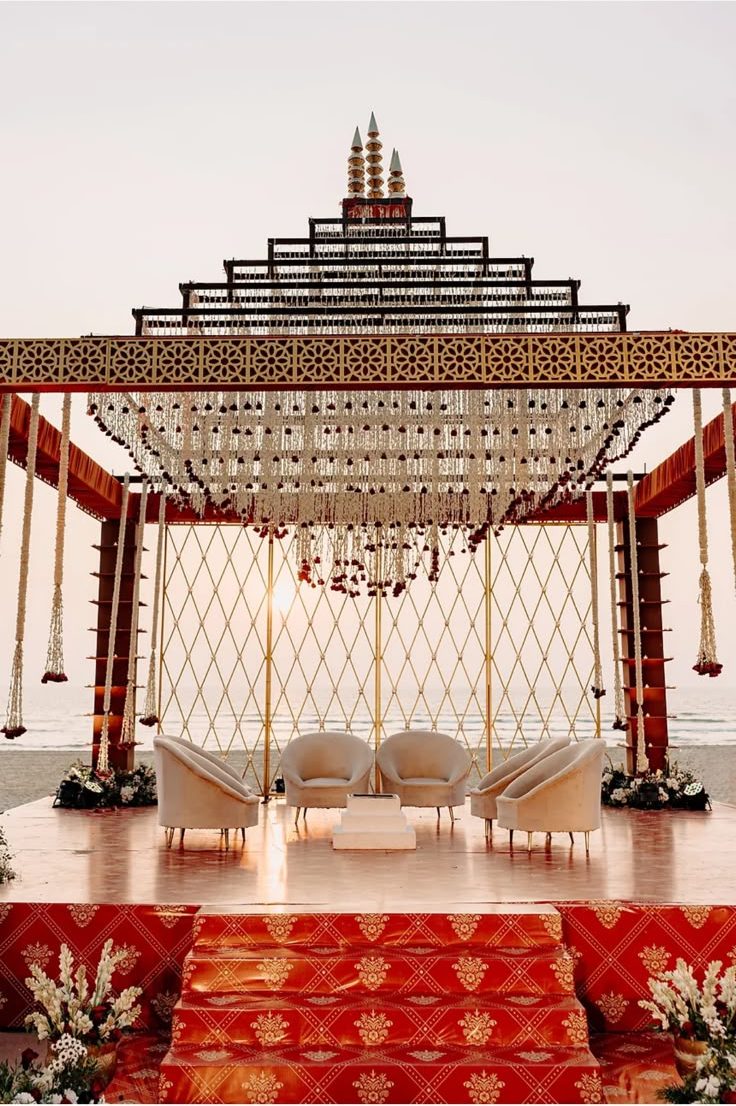
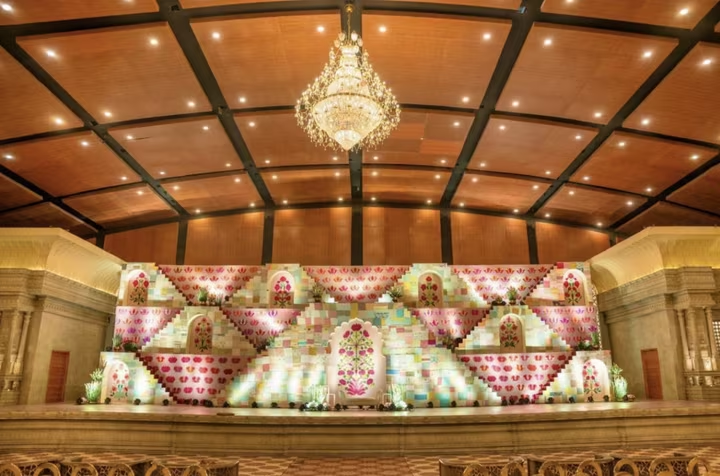
Covered-first, always: the ceremony under the venue's best roof as the plan, open sky as the bonus — never the reverse. Fabric and lighting over florals in exposed positions: humidity is hard on delicate blooms, kind to drape and lamplight, and the rain itself becomes the decor when the lighting is aimed through it. Umbrellas as designed objects — matching, abundant, photographed — because guests will use them anyway and coordinated beats improvised. Power protected (generators under cover, cabling off the ground: the venue conversation that matters most in these months). Transport with margins, especially in the hills. And photography briefed for the genre — mist, reflections, the couple under one umbrella — because monsoon frames are the entire visual argument for the choice, and a photographer expecting golden hour will miss what the season actually offers. Our sustainable build at Chamara Vajra, in this page's cover frame, ran its stage in exactly this grammar: fabric, structure and light doing the work weather-proof materials do best.
Who should actually do this
The monsoon wedding suits: guest lists compact enough to keep everyone under roofs comfortably; couples marrying in Kerala's permitted monsoon window or holding non-panchang calendars with full date freedom; and anyone whose venue ambition exceeds their month flexibility budget. It does not suit five-hundred-guest lawns, beach dreams, or families for whom a contingency plan reads as a bad omen. For the couples it fits, the trade is honest and excellent: certainty about weather exchanged for certainty about beauty, at the year's best prices. The format and budget guides carry the arithmetic; the rain plans from our Goa and Kerala teams carry the month-by-month truth.