The sangeet is the one event where your family becomes the entertainment — which makes it the highest-variance night of the wedding. Produced well, it is everyone's favourite memory; left to chance, it is ninety minutes of audio problems and one uncle's unabridged speech. Theme listicles will not save you. A running order will.
Themes, with their builds attached
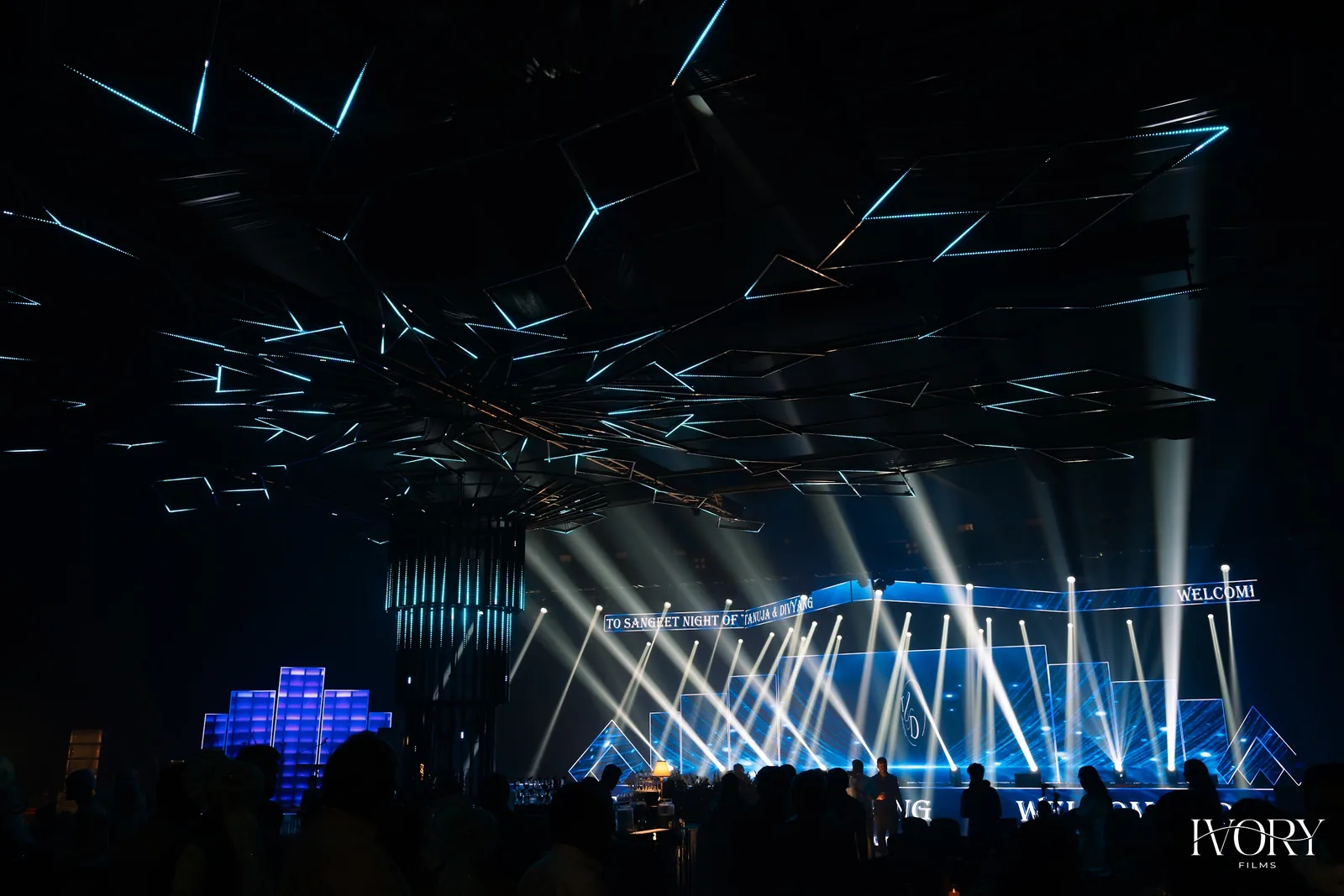
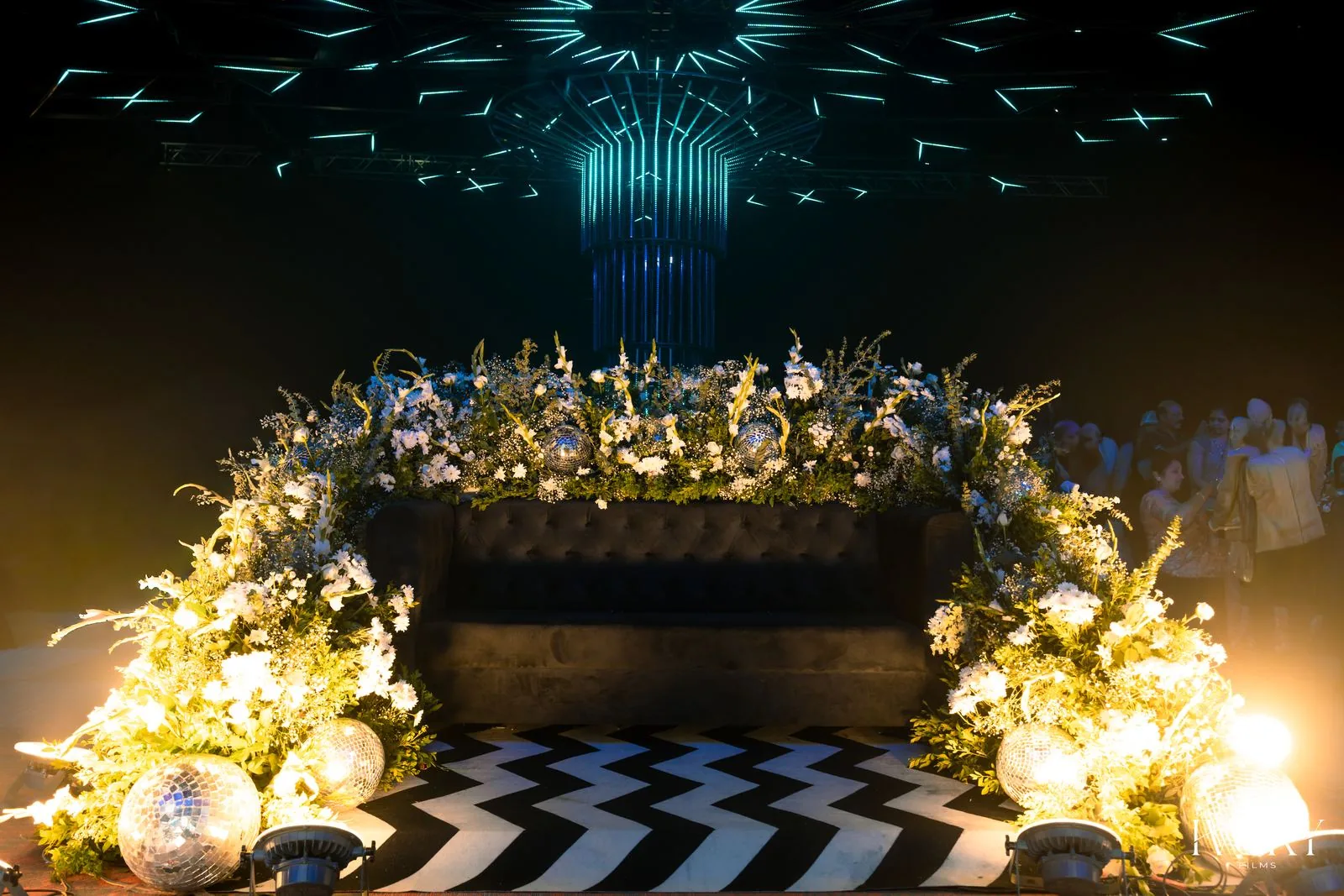
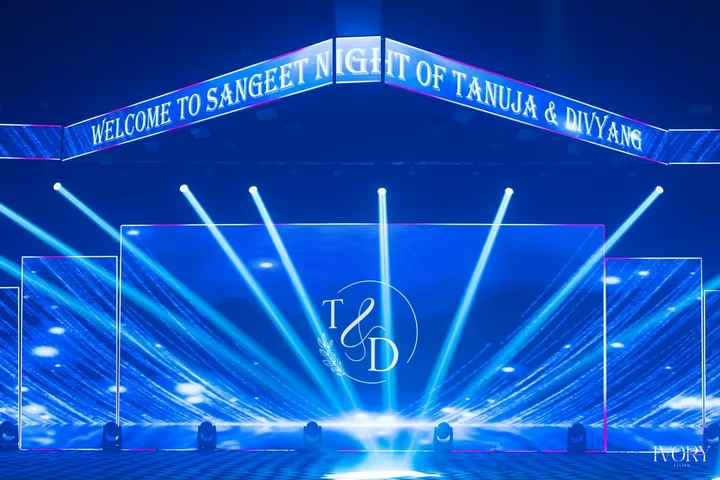
A theme is a build instruction, not a mood word. The starry night — the reigning favourite — is really a ceiling job: fairy-light canopies or draped string-light fields, which need rigging points and enough power, both venue questions. Retro Bollywood is a props-and-graphics theme: vinyl-and-poster styling, a photo corner that does the heavy lifting, costumes doing the rest — the cheapest theme to do convincingly. The mehendi-carnival crossover — jharokha stages, mirror work, colour in blocks like the frame above from our own build at Amita Rasa — rewards a venue with daylight and lawn. Royal and Sufi nights lean on fabric: draped ceilings, low seating, warm light; beautiful, fabric-hungry, and the theme where rental sameness shows most — this is where an in-house build earns its difference. Whatever the theme, spend where the cameras point: the stage backdrop and the couple's seating carry ninety per cent of the photographs.
Planning this yourself? Send us your name and a number, and a planner will reply within 24 hours to talk it through with you, whoever you end up booking.
Panigrahana is a wedding design and planning studio with 500+ weddings since 2018, rated 4.8/5 on Google (checked 27 September 2026). Planning starts at ₹2 lakh per day for two events + GST and decor at ₹5 lakh + GST, quoted for the agreed scope rather than as a percentage of what you spend.
The performance block: order is everything
The running order that works, tested across many family shows: open with the most confident group act to set energy; alternate sides — bride's side, groom's side — so neither family sits through a stretch of the other's cousins; place children early, while they are awake and adorable; bury the weakest acts mid-show, never first or last; give the parents' dances the emotional centre; and close with the couple, always, into the open dance floor. Cap the block — ten to twelve acts is a show, twenty is a hostage situation — and cap speeches harder: two minutes, named speakers, mic controlled by the emcee. Which is the other rule: there is an emcee, and it is not a family member who wants to dance. A hired anchor or the one friend with genuine stage control keeps names right, gaps filled and the schedule honest.
Games that actually run at scale
Party games die at weddings when they need explanation or exclude the audience. The formats that survive two hundred guests: the couple quiz with paddle answers — audience watches, laughs arrive on schedule; antakshari, refereed — bride's side versus groom's side, three rounds, a ruthless timekeeper, because unrefereed antakshari is a filibuster; family feud, wedding edition — survey the cousins beforehand, five questions, two family teams; and the dance-off gauntlet — thirty-second bursts by generation, toddlers to grandparents, which needs no rules at all. Every format shares the same physics: short rounds, visible scoring, an emcee with a hard stop.
The production layer nobody notices until it is missing
Rehearsal on the actual stage, even fifteen minutes, transforms amateur acts — book the venue slot for it. Music files collected three days out, in one folder, with a printed cue sheet; the DJ briefed on the running order, not handed phones mid-show. Two microphones minimum, one spare. Lights that change between acts, even simply — a colour shift per performance reads as production. And dinner service that respects the show: hold the heavy service until the performance block ends, or the buffet will beat your best dancer for attendance. None of this is expensive. All of it is the difference between a sangeet and a talent show in a hall.