Strip the wedding to its two most photographed instants and you get the varmala — the garland exchange that opens the marriage in public — and the vidaai, the farewell that closes it. Both are brief, emotional, and completely dependent on staging decisions made weeks earlier. The vendor pages selling "varmala concepts" list themes; what follows is how the moments actually get built.
The varmala: geometry before garlands
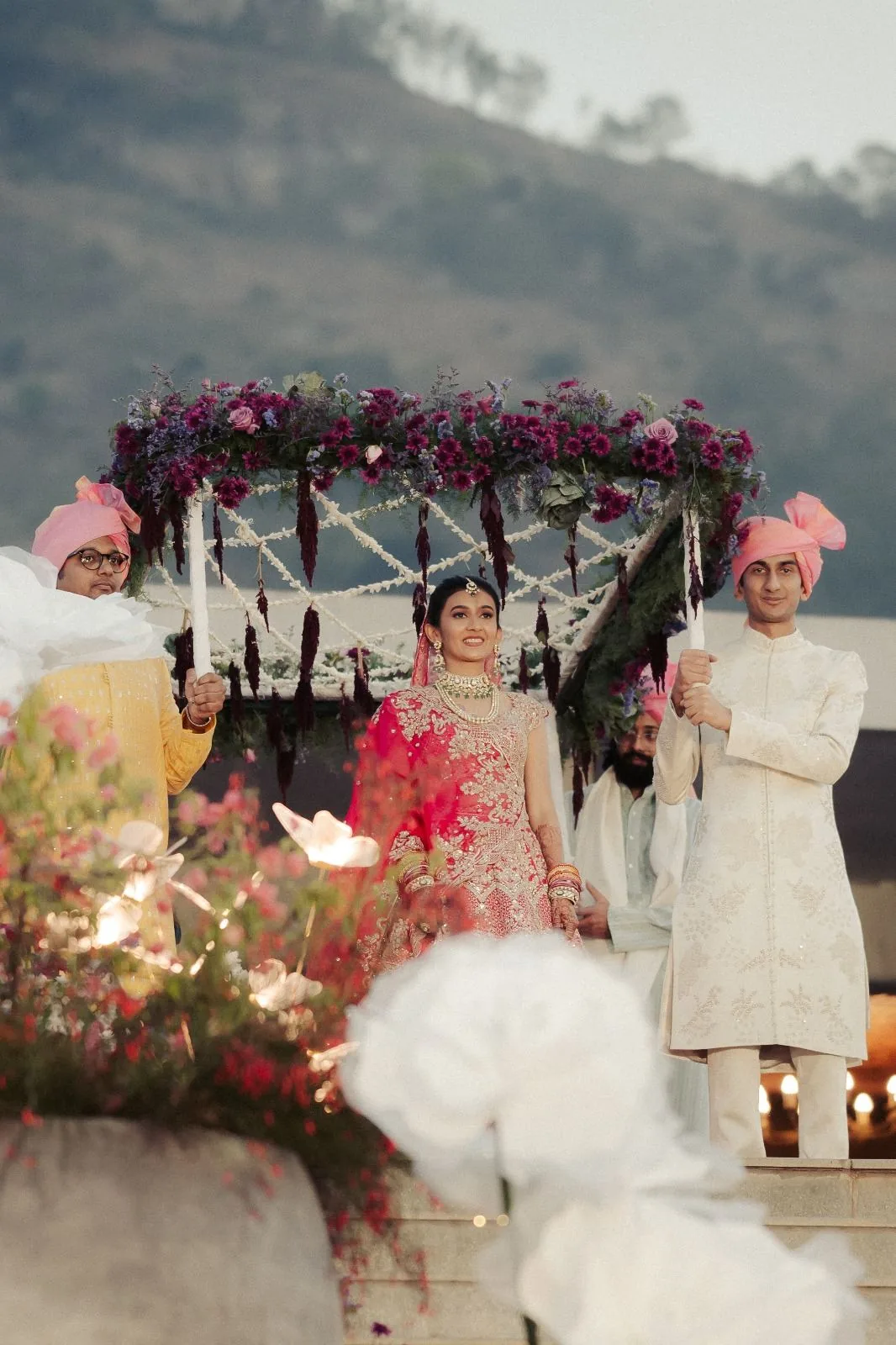
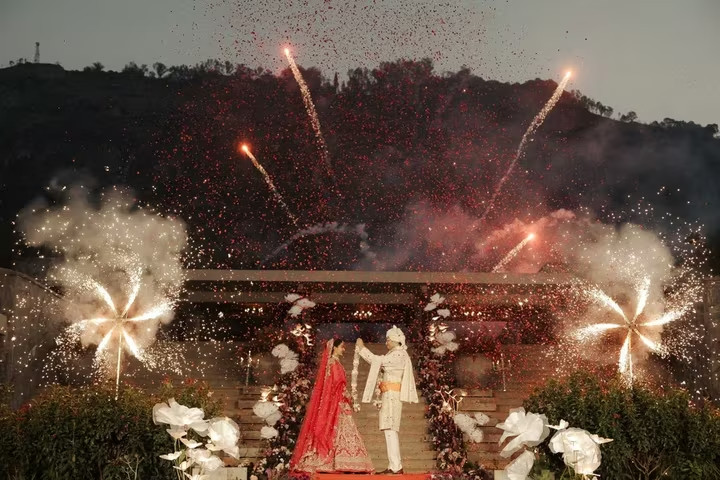
The moment is an exchange between two standing people surrounded by everyone they know — which makes it a sightline problem first. Whatever the concept, the couple needs elevation (a stage or platform), the crowd needs holding back (a defined edge, gently marshalled), and the photographers need their lane blocked out in advance, because this is the one moment nobody can re-shoot. Concepts, by production weight: the clean stage with great light and a petal shower from the sides — cheapest, never fails. The petal-drop from above — glorious, needs rigging overhead and one rehearsed cue. Effects at the exchange — cold pyro flanks or, done once and correctly, fireworks against the night sky; the frame on this page is exactly that moment at Amita Rasa, and it took the venue's licence, an operator, and a timed cue no guest ever saw. Lifted platforms and revolving stages exist and photograph well; they are machinery, so they carry an operator, a safety margin and a rehearsal — never let one arrive on the day unrehearsed. The garlands themselves deserve their own minute: fresh weight matters (dense rose and jasmine garlands are heavier than they look; brief the couple), and a spare pair backstage is the cheapest insurance in the wedding.
The comedy is traditional — friends hoisting the groom out of reach — and the schedule should love it, briefly. In muhurtham traditions the exchange may sit inside a fixed auspicious window; the fun gets its two minutes, then the marshal lands the moment. That sentence is the whole job.
Planning this yourself? Send us your name and a number, and a planner will reply within 24 hours to talk it through with you, whoever you end up booking.
Panigrahana is a wedding design and planning studio with 500+ weddings since 2018, rated 4.8/5 on Google (checked 27 September 2026). Planning starts at ₹2 lakh per day for two events + GST and decor at ₹5 lakh + GST, quoted for the agreed scope rather than as a percentage of what you spend.
The vidaai: designing kindness into an ending
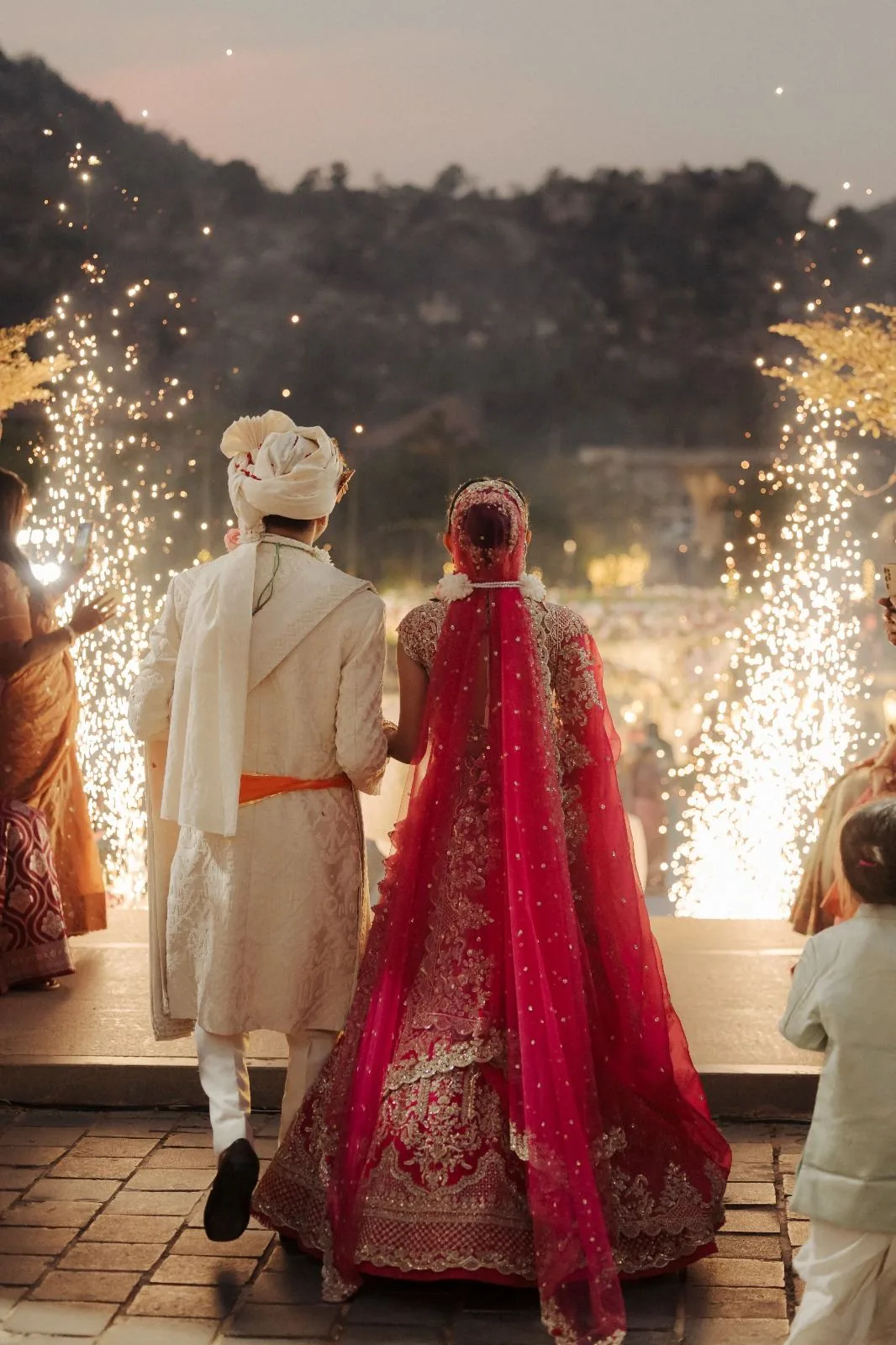
The vidaai resists production, and should — its content is a family letting go, and nothing we build should upstage that. What design can do is hold the moment gently: a defined path from mandap to car so the farewell has a shape; the rice-toss position agreed so the photographers catch it facing the bride; the car staged close, decorated, cooled, and pointing the right way, because nothing punctures a tearful farewell like a three-point turn. Send-off formats that work: the sparkler corridor (outdoors, dusk), the petal line, or — quietly the best — nothing but the family, good light and a photographer who knows the moment is coming. The doli, where families keep it, is genuinely moving and genuinely heavy; it needs four steady bearers and a short route.
Two schedule truths, learned repeatedly: the vidaai always runs longer than planned, because it should — pad it, and put nothing hard after it. And decide in advance whether the vidaai is the true exit or the ceremonial one (couples increasingly return for the after-party half an hour later; both families deserve to know which goodbye this is). Tears, like everything else on the day, deserve a plan that lets them happen unhurried.