One Guest List Is Not Enough: Count Functions and Room Nights Separately
A simple way to distinguish invitations, event attendance, occupied rooms and room nights before comparing wedding proposals.
Count wedding attendance separately for each function, then calculate accommodation by room and night. Invitations, guests, rooms and room nights measure different things. Keeping them separate makes venue, catering and transport proposals easier to compare.
Start with people, then describe their stay
A wedding described as ‘200 guests’ might include 200 people at the reception, fewer at the haldi and a smaller group staying overnight. If a supplier assumes the same attendance for every function, the proposal may not match the celebration you intend. Record attendance for each event before asking for a revised estimate.
For accommodation, group people into the rooms they will actually use. Couples, families and solo travellers have different needs. Do not simply divide the headcount by two and treat the result as a confirmed room requirement. Check room types and permitted occupancy with the hotel, then distinguish confirmed needs from assumptions.
Use a small worked example
This is a hypothetical planning example, not a client booking or a hotel quote. Suppose 40 rooms are needed on the first night and 55 on the second. The stay uses 95 room nights. That figure is different from the peak requirement of 55 rooms, and neither number tells you how many people will attend the reception.
If an additional ten rooms are needed for one more night, the room-night total becomes 105. The price depends on the hotel’s offer and the categories booked; this example deliberately uses no room rate. Its purpose is to show why changing arrival and departure patterns changes the accommodation requirement.
Keep the quantities in separate columns
| Quantity | Used for | Common misunderstanding |
|---|---|---|
| Invited people | Invitation and RSVP tracking | Everyone invited is assumed to attend |
| Attendance by function | Meals, seating and event planning | Reception attendance is applied to every event |
| Rooms by night | Property inventory and rooming | People are treated as rooms |
| Room nights | Length of stay and accommodation comparison | Peak room count is mistaken for the whole stay |
| Transfer passengers by journey | Vehicle planning | All staying guests are assumed to arrive together |
Track confidence as well as the total
Use confirmed, likely and undecided labels for attendance while planning. These are your working categories, not universal attendance percentages. As responses arrive, update the appropriate event and stay columns. Record who is following up and when the hotel or caterer needs a final commitment.
Ask each supplier what quantity its quote uses. A venue might offer an event space alongside a meal commitment, while a hotel offer combines room categories and meals. Read the actual proposal before moving a number into your budget. Keep unanswered quantities visible rather than allowing an old estimate to look final.
Connect the list to hospitality
Arrival information belongs beside the stay plan, but it needs its own status. A confirmed room does not mean a flight is booked, and a confirmed flight does not tell the transport team which terminal or station to meet. Collect the details needed for the journey through a clear process and restrict access to the people coordinating it.
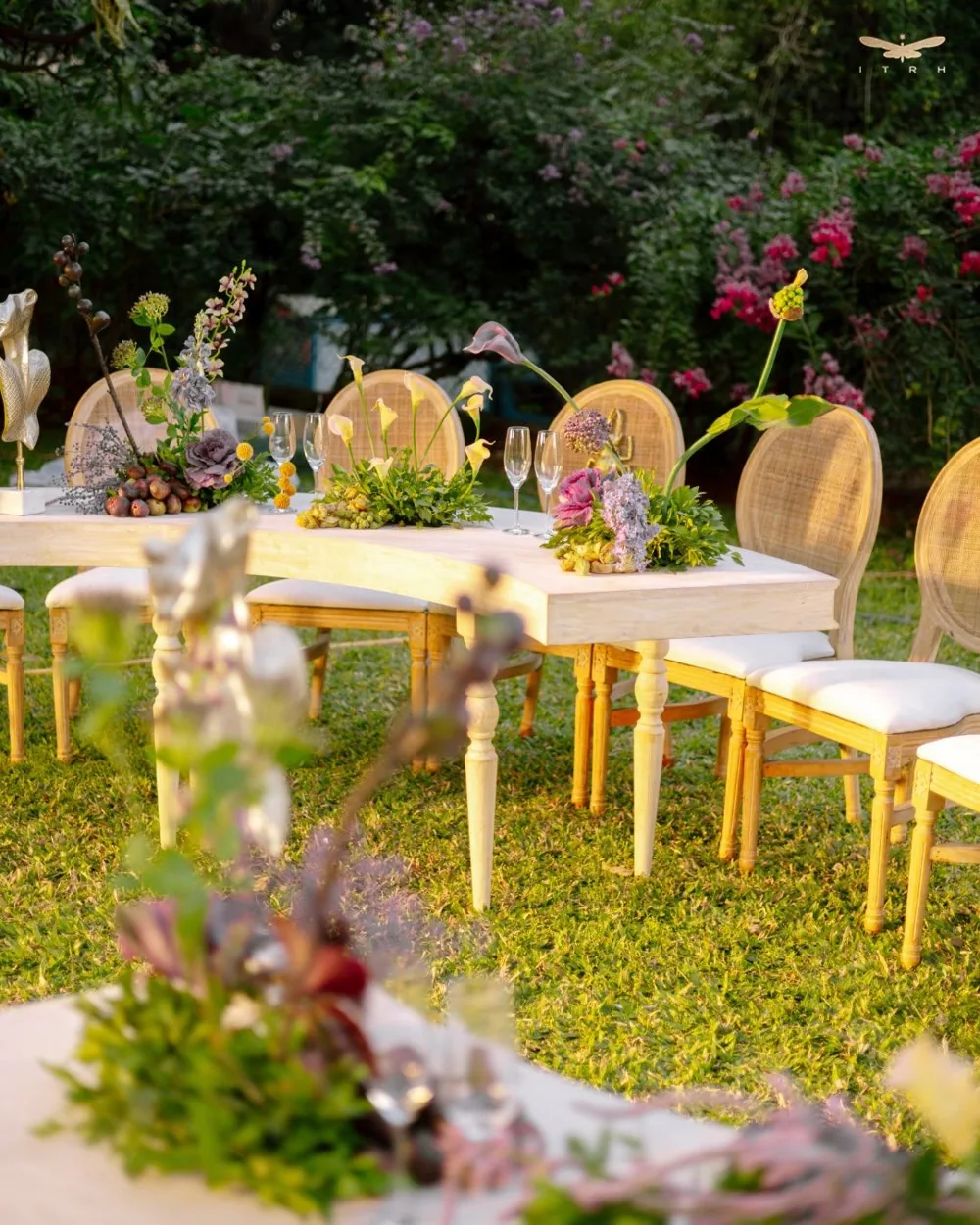
Bring this working sheet to your planning conversation with Panigrahana. It helps us discuss the event spaces, hospitality and design scope using the same assumptions. The garden seating photograph is from our decor portfolio; the numerical example above is an illustration and is not the attendance record for that event.
Questions couples ask
What is a room night?
One room used for one night is one room night. Forty rooms on one night and fifty-five on another total ninety-five room nights.
Should I give the caterer the full invitation count?
Provide the expected attendance for the specific function and follow the caterer’s agreed confirmation process. Invitation count and meal commitment are different quantities.
Can I estimate rooms by dividing guests by two?
That can be an early rough assumption, but it is not a rooming plan. Check actual groups, room categories and the property’s occupancy rules.