Wedding Entertainment: What Each Element Costs to Produce
Dhol for the baraat, a Goan band for the haldi entrance, a flash mob, an emcee running games between sangeet performances, mehendi counters for fifty guests, live food stalls. These are the briefs we are actually handed. This page is what each one costs to put on the floor, written from our own production books rather than from a mood board.
Entertainment & Guest Experience
Updated 20 September 2026
Prefer chat? Message us on WhatsApp.
How much does wedding entertainment cost in India?
Indicative market ranges: dhol group ₹15,000–₹40,000, live band ₹60,000–₹2.5 lakh a session, professional emcee ₹30,000–₹75,000 for a two-session booking, mehendi corner with 3–4 artists ₹25,000–₹60,000, flash mob ₹60,000–₹1.5 lakh including rehearsals. Live food counters are quoted per head on top of the catering contract. Entertainment usually lands at 5–8% of the total wedding budget. Dates, city and stage time move all of these, so treat them as a planning range, not a quote.
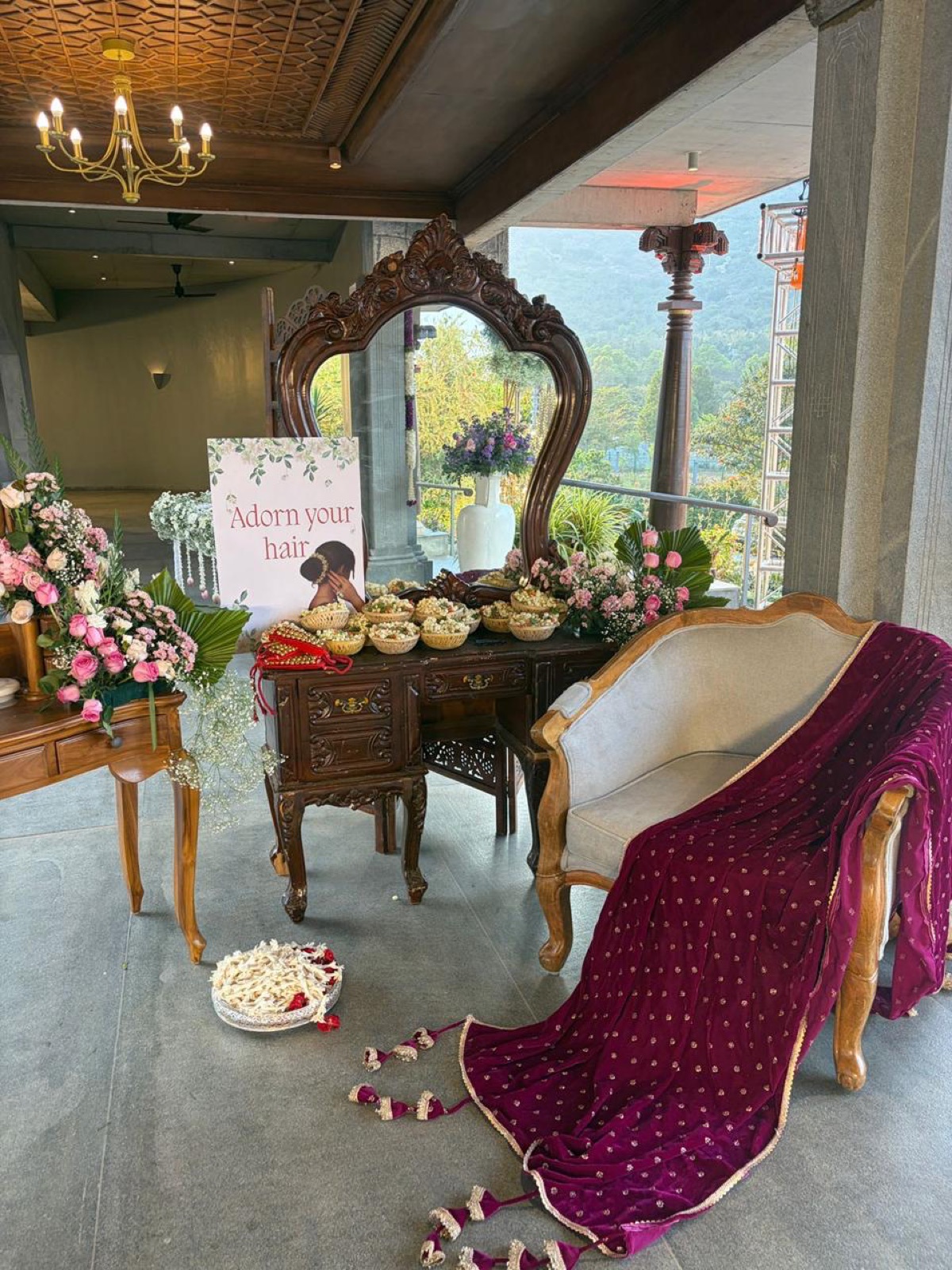
The entrances
Entrances are the most over-planned and under-produced part of a wedding. The brief we get is usually some version of “explore ghodi and luxury car options” — and the answer is almost always decided by the property, not by preference.
A ghodi needs a clear approach road, written permission from the venue, and a daylight or properly lit slot. A luxury car needs a driveway wide enough for the doors to open on camera; a grand car in a tight porch photographs worse than a walk-in. In banquet-only properties with no approach at all, the strongest version is usually a staged indoor entrance with the band playing inside the room, which also solves the noise cut-off problem below.
The reliable cost drivers: dhol group ₹15,000–₹40,000 depending on players and duration; a Goan or brass band ₹40,000–₹1.2 lakh; a percussionist for a haldi or sangeet entrance ₹20,000–₹50,000; cold-pitara, CO₂ jets and sparkler effects ₹25,000–₹90,000 depending on how many cues you want. Drone shots and firework finales are permission-dependent and priced per venue.
Sangeet: the flow matters more than the ideas
Couples rarely need more ideas for a sangeet. They need a running order that does not sag. The best brief we have been handed came from a couple who had already sat through a good one:
Couple entry → something on stage with the emcee → ring exchange → cake cutting → roughly fifteen performances, broken once or twice by games and activities run by the emcee → DJ night.
That shape works because the emcee-led breaks do the job an interval does in theatre: they let guests eat, move and talk without the room emptying. Fifteen back-to-back performances without a break is the single most common reason a sangeet loses its audience by the DJ set.
A professional emcee who can actually run games — not just announce — is ₹30,000–₹75,000 for a two-session booking. Most emcees quote per session rather than per day, so a mehendi-plus-sangeet booking is two line items. A choreographer for family performances runs ₹50,000–₹2 lakh depending on rehearsal count, and a flash mob sits at ₹60,000–₹1.5 lakh because the cost is rehearsal time, not performance time.
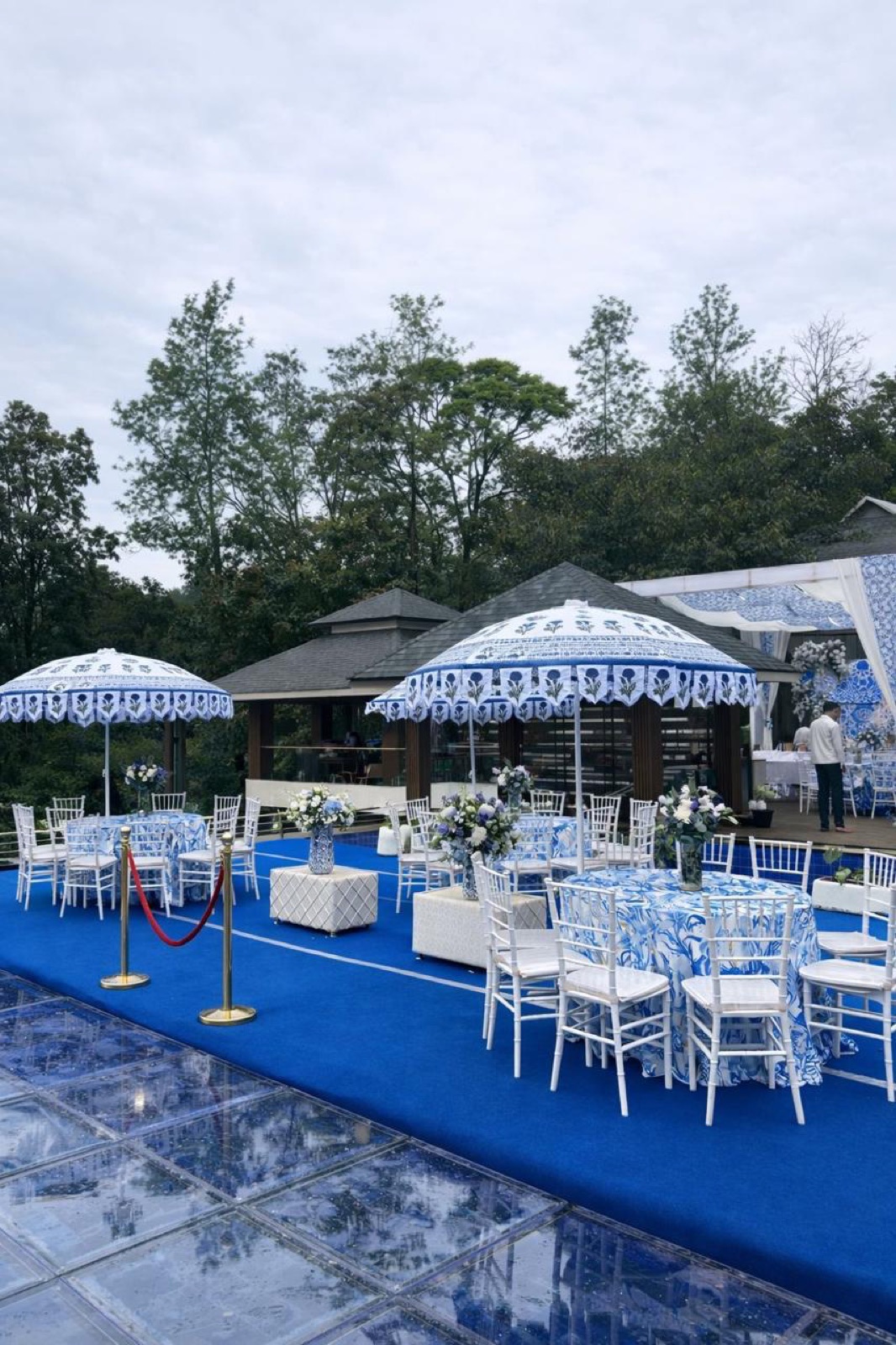
Mehendi corners and guest counters
The brief we get is specific and almost always the same: three to four mehendi artists, guest mehendi for about fifty guests. That ratio is right. Plan roughly one artist per 15–20 guests who actually want mehendi, on top of the bridal artist, who is booked separately and works far longer.
Three to four artists for fifty guests costs ₹25,000–₹60,000. Cutting to two artists does not really save money — it creates a queue, and a queue pulls guests out of the function you spent the rest of the budget building. The same logic applies to every staffed counter: a gajra or flower-jewellery station ₹15,000–₹40,000, a bangle or potli counter ₹20,000–₹50,000, a caricature or polaroid artist ₹15,000–₹45,000 a session.
Stalls, live counters and carnival formats
Carnival-style functions have grown faster than anything else in our brief sheets, particularly for mehendi and sangeet. The format is simple: several small activity and food stalls around the edge of the space instead of one seated dinner.
What we see requested most: live food counters — chaat, pasta, dosa, and yes, the Maggi counter that refuses to die — usually quoted per head by the caterer on top of the main contract, so ask for it as an add-on line rather than a separate vendor. Then the non-food stalls: photo booth or 360° spinner ₹25,000–₹75,000, game stalls (ring toss, shooting, tambola) ₹10,000–₹30,000 each with an attendant, tarot or caricature ₹15,000–₹45,000.
The mistake worth avoiding: stalls need staff and floor space, not just a table. An unstaffed stall becomes a mess within twenty minutes. Budget an attendant per stall and about 6–8 feet of clear circulation in front of each one, or the stalls will fight the seating plan.
Movie nights and after-parties
The late-night slot is the cheapest place to buy goodwill at a wedding, and the most commonly skipped. A projected film or a reel of the couple, lounge seating and a light bar costs a fraction of any main function: projector and screen ₹15,000–₹50,000, lounge and bean-bag seating ₹20,000–₹60,000, string and ambient lighting ₹15,000–₹45,000.
Two practical constraints decide whether it happens at all. Most Bangalore properties enforce a 10pm outdoor sound cut-off, so anything after that has to move indoors or run on silent-disco headsets. And a movie night needs a genuinely dark surface — the same string lights that make the photos work will wash out a projection.
What this usually adds up to
For a 300-guest wedding with a mehendi, sangeet and wedding day, an entertainment package built from the elements above typically lands between ₹3 lakh and ₹12 lakh — the lower end being dhol, an emcee and mehendi artists, the upper end adding a live band, flash mob, several staffed stalls and an after-party. Against a full wedding budget that is the 5–8% noted at the top, and it is the line guests remember longest.
Every figure here is indicative and moves with your date, city and how long each act is on stage. We build these as a line-item sheet against your actual run-sheet rather than a package, so you can see what each element costs and drop the ones that do not earn their place.
South Indian formats: nadaswaram, chenda melam and panchavadyam
The traditional South Indian ensembles are the most under-used entertainment in Indian weddings and among the least expensive things on a programme. A nadaswaram and thavil pair carries a Tamil or Kannada muhurtham in a way no recorded track does. A chenda melam or panchavadyam ensemble turns a Kerala arrival into the loudest and best-remembered ten minutes of the day. All of them are fully acoustic, which means no sound desk, no power and no playback — and also that they cannot be turned down.
What they need from production is space and a route. An ensemble needs somewhere to stand that is not in the guests’ eye line, a processional path with a width and a walkable surface, and an arrival direction that reads well against the mandap. We set the processional route at the same time as the ceremony layout, because retrofitting one to the other on the morning produces a procession nobody can see. Detail on the Kerala traditions is at music at a Kerala wedding.

Effects: cold pyro, confetti and fireworks
Effects are the one part of an entertainment programme where the paperwork matters more than the product. Indoor cold pyro, confetti cannons and low-smoke effects all interact with a venue’s fire policy, its ceiling treatment and its housekeeping contract, and permission is property-specific rather than city-wide. Ask the venue three questions in writing: what is permitted indoors, what is permitted outdoors, and who clears up afterwards.
Fireworks are a separate question again, with its own approval, its own timing rules and its own local position, and it is one of the few elements that can be refused late enough to leave a hole in the programme. Ask early rather than assuming, and design a version of the finale that works without them. Our practical position for Goa is at fireworks at Goa weddings.
Licences: what you legally need to play music
Recorded and live music at a wedding is a public performance, and the permissions that attach to it are separate from the venue booking, separate from the bar licence and separate from any sound-limit rule. They are also usually the vendor’s responsibility in practice and the host’s responsibility in the contract, which is exactly the gap that produces an argument at eleven o’clock at night.
Settle three things in writing before the sangeet is designed: who obtains the music permission, by when, and what happens if it is not in place. Our page at the wedding music licence in India sets out what applies, and the wider Bangalore permission set — sound, bar, road, effects — is at wedding licences in Bangalore.
Curfews by region, and the hard stop
A curfew is not a detail; it is the shape of your evening. The amplified-music deadline decides whether the sangeet is a full night or half of one, and it varies by region and by venue.
In Bangalore, outdoor amplified music has a firm evening deadline and the useful question is whether the venue has an indoor room you can move into afterwards, and until when that room runs. In Goa, resorts set their own limits on top of the local position, and a beachfront ceremony venue and an indoor ballroom at the same property frequently have different answers. In Kerala, the traditional ensembles are acoustic and sit outside the amplified-sound question entirely, which is one reason a Kerala evening can run differently from a Bangalore one.
The planning move is the same everywhere: get the outdoor deadline, the indoor option and the indoor deadline in writing before you book, then build the run order backwards from the hard stop rather than forwards from the first act. A programme designed to a hard stop finishes on a high note; one designed forwards finishes with someone being asked to stop mid-song.

AV, stage and power behind the performances
Every element above sits on three invisible systems, and when entertainment fails on the night it is almost always one of them rather than the act. Sound: a room needs coverage rather than volume, and a lawn needs more boxes than a ballroom for the same guest count. Light: a performance needs front light or the cameras get silhouettes, which is the single most common reason sangeet footage is disappointing. Power: a rig, a kitchen and cooling on the same supply is how an evening ends in the dark, so the venue’s available load in kilowatts should be in writing and checked against the production load at design stage.
Stage and dance floor size are the other pair worth deciding early. A stage sized for a couple of duets will not hold a twelve-person family finale, and a dance floor sized to look full at 9pm will be a queue at 11pm. The build side of this — structure, backdrop, rigging and the sightlines that make a performance visible from the back tables — is at sangeet stage design in Bangalore.
See the South India Wedding Venue Price Index for venue and catering bands, or sangeet stage design and costs for the build behind the performances.
Common questions
DJ or live band for a sangeet?
Both work and they solve different problems. A DJ holds a floor for hours, reads a room and costs less; a live band creates two or three moments people talk about and needs a longer changeover, more power and more stage. The arrangement we use most often is a band for the entrance and the first set, then a DJ for the rest of the night, with the changeover placed against a natural break such as dinner service.
Do we need a licence to play music at a wedding?
Music at a wedding is a public performance and carries permissions separate from the venue booking and the bar licence. In practice the vendor often handles it and the contract often makes it the host's responsibility, which is the gap that causes trouble late at night. Agree in writing who obtains it, by when, and what happens if it is not in place.
What time must music stop in Bangalore?
Outdoor amplified music in Bangalore has a firm evening deadline, and the question that actually matters is whether your venue has an indoor room you can move into afterwards and until when that room runs. Get the outdoor deadline, the indoor option and the indoor deadline in writing before booking, because a verbal assurance on a site visit is not a clause.
How long should the sangeet performances run?
Shorter than most families plan. The performance block that holds a room is roughly ninety minutes including changeovers, after which attention moves to the floor whatever is on stage. Build the run order backwards from the hard stop, cap the number of acts, and rehearse the changeovers rather than the dances.
How many family performances is too many?
The limit is time rather than count: once the block runs past about ninety minutes, guests start leaving their tables regardless of how good the next act is. Set a total duration first, divide it among the acts, and tell each group their slot length before they start choreographing rather than afterwards.
Are fireworks allowed at Goa weddings?
It depends on the venue, the location and the current local position, and it is a separate approval from the sound and space permissions. Ask early, because a fireworks plan refused close to the date leaves a hole in the programme, and design a finale that works without them.
What are traditional Kerala wedding music formats?
Chenda melam and panchavadyam are the two most commonly used, both fully acoustic percussion and wind ensembles performed live. They are among the least expensive and most memorable elements available at a Kerala wedding, and what they need from production is space for the ensemble and a processional route with a workable width and surface.
What are the most requested wedding entertainment elements right now?
The requests we are briefed on most often are a dhol baraat, a live band or percussionist for the haldi or sangeet entrance, a flash mob, an emcee running games and activities between sangeet performances, mehendi counters for guests, and live food counters. Carnival-style function formats with multiple activity stalls have grown quickly for mehendi and sangeet.
How many mehendi artists do I need for my guests?
Plan roughly one artist for every 15 to 20 guests who want mehendi, on top of the bridal artist. For about 50 guests that means three to four artists working in parallel, which is the brief we most commonly receive. Fewer artists does not save money so much as create a queue that pulls guests away from the rest of the function.
Should the groom enter on a ghodi or in a car?
Both work, and the decision is usually driven by the venue rather than taste. A ghodi needs a clear approach road, permission from the property and a daylight or well-lit slot. A luxury car needs a driveway wide enough to open doors on camera. In banquet-only properties with no approach, a staged indoor entrance with the band inside the room is often the stronger option.