Goa Beach Wedding Decor: Check the View From Every Seat
A practical Goa beach wedding design review: sun, wind, seating, ceremony sightlines and the indoor alternative before you approve the mandap.
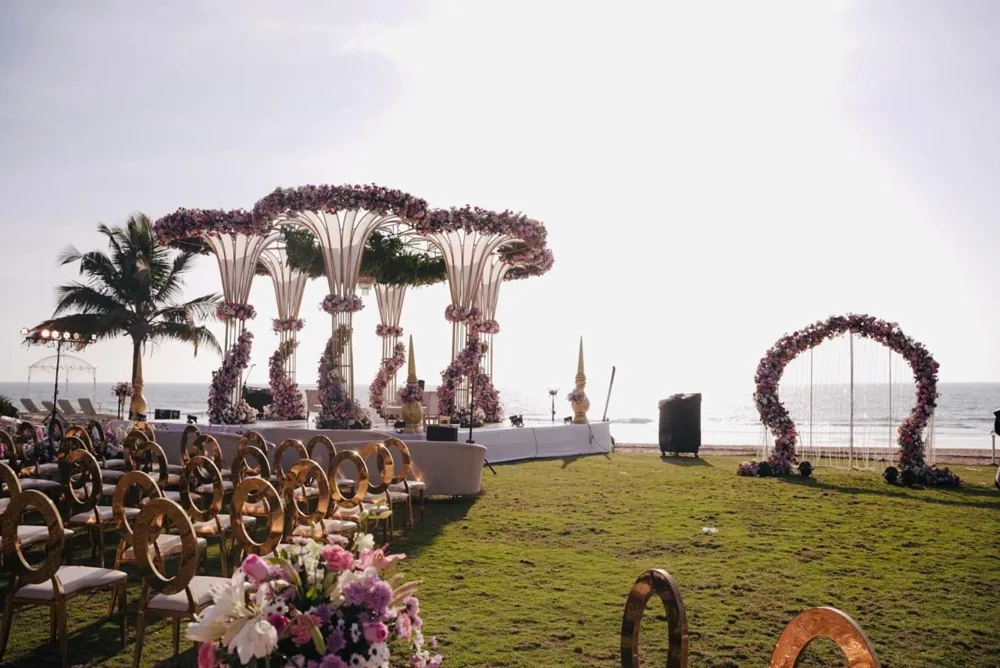
For a Goa beach wedding, approve the ceremony layout from the guest seats as well as the camera position. Check shade at the actual ceremony time, a firm route to the seating, the view around the mandap and an agreed indoor alternative. A photograph of the backdrop cannot confirm these things.
Start with the time guests will sit down
A sea-facing mandap can be the right design and still put the audience in an uncomfortable position. Ask the venue for a walkthrough at the planned seating time, then again at the ceremony time. Look from the last row, not only from the aisle. Note where guests will wait if the ceremony starts late.
Your review should cover the route from the hotel lobby to the seats, the shaded waiting area and access to drinking water. If an older guest needs a shorter route or firmer surface, put that requirement on the plan. Do not assume that a buggy reaches every part of a lawn or beach. Ask the hotel where it can actually stop.
Choose what the mandap should frame
Decide whether the view is the sea, the couple, the ritual or a constructed backdrop. An open frame can preserve the horizon from the centre but obscure it from angled seats. Dense floral sides may look rich in a frontal photograph while blocking a parent’s view. Ask for a seated-eye-level view from both sides.
A useful design approval shows the priest, couple, closest family seats, aisle and camera positions together. If the ritual requires people to move around a fire or platform, agree the usable space with the officiant and production team. Decorative size and usable ceremony space are different measurements.
Treat moving fabric as a production decision
Fabric can soften a beach setting. It also moves. Before approving a canopy or long loose panels, ask the production team how the structure and fabric will be secured, who signs off the installation and what conditions trigger a change of plan. A styling image is not a structural specification.
Avoid asking a decorator to promise that a particular arrangement is safe in every weather condition. Ask instead for the responsible person, the venue’s requirements and the alternative design. Keep decorative fabric separate from any claim that a structure is weatherproof.
Use this seat-by-seat review
| Position to check | What you are checking | What to record |
|---|---|---|
| Front family seats | View of the couple and ritual; space to stand | Blocked views and seats that must move |
| Back row | Audibility and visible ceremony area | Speaker review and sightline photograph |
| Accessible route | Steps, surface and distance from drop-off | Route confirmed with the hotel |
| Guest waiting area | Shade and seating before the start | Host responsible for delayed arrivals |
| Indoor alternative | Equivalent seating and ceremony space | Reserved room, layout and changeover owner |
Keep a recognisable design if the wedding moves inside
Choose the parts of the look that matter most: perhaps the flower palette, a carved frame or the aisle treatment. Ask which can move and which need a second installation. An indoor plan should be drawn for the actual room, including columns, ceiling height, doors and the audience.
A hotel saying it has a ballroom does not establish that the ballroom is reserved for your function. Confirm its availability, the decision deadline and any additional costs in the written proposal. Record who tells guests about the change and where they should go.
Send a brief that can be priced
Send your date, venue shortlist, ceremony time, seated guest count and one reference image with notes about the parts you like. Add the guest needs and the indoor-plan question. That gives the planner a workable brief instead of an instruction to reproduce a photograph.
Ask for the first review to separate the visual proposal from unresolved venue checks. You can love a design while leaving approval pending until the seating, permissions and alternative plan are confirmed.
Questions couples ask
Can a resort lawn give the same beach-wedding feeling?
A sea-facing lawn may offer the view you want with a different surface and access route. Compare the actual sightlines, seating route and hotel conditions; beachfront location alone does not establish beach access.
Should the entire setup face the sunset?
Check the view and comfort at the ceremony time with your photographer and planner. The best position for a single photograph may differ from the best orientation for guests throughout the ceremony.
Is beach décor always cheaper than ballroom décor?
No. Compare the complete scope, including access, structures, power, labour, weather arrangements and removal. An open location does not remove those costs.