Turn Your Pinterest Wedding Saves into a Clear Design Brief
Choose what you love in each reference, resolve conflicting ideas and build a wedding brief that works with your venue and budget.
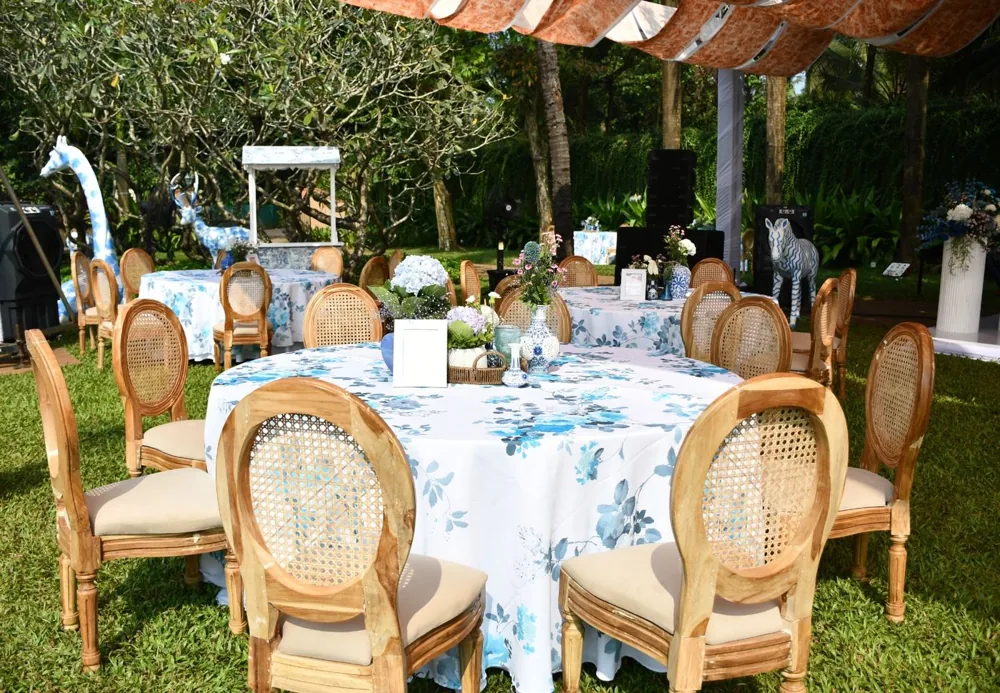
Turn saved wedding images into a brief by identifying the specific feature you like in each one, grouping compatible ideas and connecting them to your venue, functions and spending priorities. Keep inspiration images separate from the agreed design and quotation.
A saved image can contain several different wishes
You may save a photograph for its blue flowers while your partner notices the relaxed seating and your designer sees the custom roof. Before sharing a large board, add a short note to each important image: ‘this shade’, ‘this open silhouette’, ‘this intimacy’ or ‘this lighting’. The notes are often more useful than another hundred photographs.
Separate the ceremony, mehendi, sangeet and reception references. The functions do not have to look identical, but they should feel as though they belong to the same couple. Look for a thread you actually enjoy, such as patterned textiles, an airy garden setting or a strong theatrical entrance. A theme name alone does not explain how you want to spend time in the space.
Make four decisions before adding more images
| Decision | Write this in your brief |
|---|---|
| Atmosphere | How you want guests to feel and use the space |
| Visual priority | The one or two features you most want to remember |
| Practical needs | Guest count by function, seating, accessibility and weather backup |
| Spending priority | What deserves more of the budget and what can stay simple |
Test the reference against your venue
A photograph of a low floral aisle in a stone courtyard may not translate directly to a wide lawn. The same arrangement can feel sparse when the surrounding space changes. Ask your designer to explain what must become larger, what can be removed and which existing venue features should remain visible. This is where a measured layout becomes more useful than another moodboard.
Check what the photograph leaves out. An empty aisle does not show the chair spacing once guests are seated. A close-up cannot reveal whether a hanging installation needs substantial support. A sunset image cannot tell you how an event will look during an afternoon ceremony. Treat the image as a starting point for questions, not as a complete specification.
Keep disagreement visible and manageable
If one family prefers a traditional mandap and the couple wants a quieter contemporary setting, list the elements each person cares about. The disagreement may concern colour rather than the ceremony itself. A clear list lets the designer preserve the meaningful elements while changing the surrounding treatment.
Create a small ‘not for us’ section too. Explain whether you dislike the colour, density, material or general atmosphere. Avoid dismissing an entire reference when only one detail is the problem. Assign one person to consolidate family feedback and record the date of the approved direction.
Move from references to your own design
Panigrahana’s design process includes moodboards, hand sketches, 2D layouts and 3D mockups. Each document has a job: the board establishes direction, the sketch explores a form, the plan explains the space and the mockup helps you review the intended appearance. The quotation then records what will be produced.
The blue-and-white tablescape shown here is completed Panigrahana work. You can use our portfolio to discuss a palette or a seating idea without asking for the entire event to be repeated. Bring the venue name, the functions you are planning and a short selection of annotated references to the first design conversation.
Questions couples ask
How many wedding inspiration images should I share?
Share a small, annotated selection that explains your priorities. Add more only when they answer a specific design question; a large unlabelled board can contain conflicting instructions.
Can different wedding functions have different themes?
Yes. Give each function a clear purpose and choose a few recurring details if you want continuity. The ceremony and party can have very different atmospheres.
Does saving a reference mean that exact setup is included?
No. The agreed design, dimensions, materials and priced scope determine what is included. Confirm those documents before approving production.