How to Review Your Wedding 3D Mockup Before Approving It
A practical review of scale, sightlines, flowers, lighting and finishes, so your wedding render becomes a clear design decision.
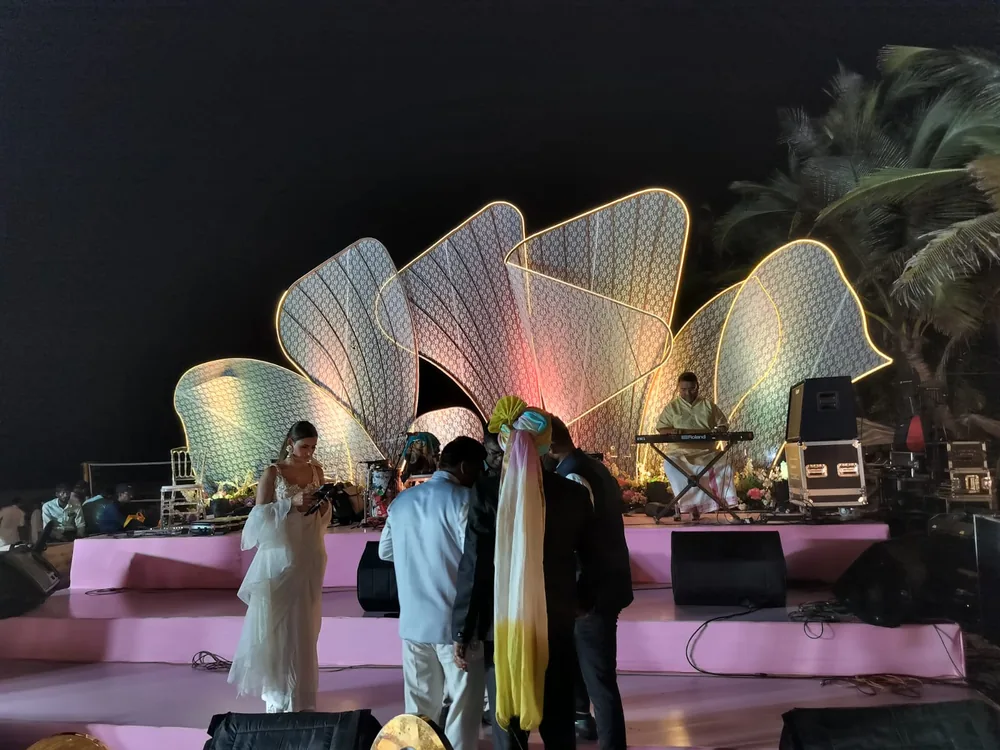
Review a wedding 3D mockup together with the measured layout and priced specification. Check scale, guest sightlines, decorated surfaces, lighting and materials, then record the version and any approved changes. The render explains the intended appearance; it does not replace the build details.
Begin with the view your guests will have
A wide render can make a stage look beautifully balanced while hiding a blocked view from the back rows. Ask to see the design from the entrance, the couple’s position and a seated guest’s viewpoint. Include the camera positions if photography is a priority. You should understand which parts of the backdrop appear in portraits and which are visible only from one dramatic angle.
Compare the render with the actual venue. Doors, pillars, trees, floor changes and ceiling services belong in the review. If the model uses a simplified room, ask which site conditions have been left out. A clean model is useful for discussing colour; it is less useful for approving circulation if the real obstructions are missing.
Separate appearance from specification
| In the image | In the supporting document |
|---|---|
| An impressive mandap | Overall dimensions, platform dimensions and access |
| A dense floral canopy | Coverage, flower approach and agreed alternatives |
| A glowing backdrop | Fixture positions, intended lighting scenes and power responsibility |
| A mirror-like floor | Actual finish, joints, installation and venue acceptance |
| Comfortable guest seating | Chair count, spacing, routes and table plan |
What should you ask about materials?
Ask to see samples or clear references for the finishes that carry the design. A screen can suggest velvet, brushed metal or translucent fabric without showing how the chosen material behaves in the venue. Discuss joins and exposed edges as well as the front surface. If a decorative piece will be seen from both sides, both sides need an agreed finish.
Flowers deserve a separate conversation. Agree the visual effect and any acceptable substitutions before a last-minute availability issue arises. Screens and lighting can change colour appearance, so use a physical swatch for a critical fabric shade when possible. Do not turn a tiny colour difference between two phones into a design revision without checking the actual reference.
Review daylight and the evening separately
A sundowner event changes while guests are still in the room or on the lawn. Ask how the scene will look before the lights become visible and after natural light fades. A structure with a strong silhouette can carry the daylight view; the evening needs its own lighting plan. The St. Regis Goa photograph accompanying this guide shows a completed illuminated backdrop, not the render for that event.
Request a clear explanation of anything shown only for atmosphere: simulated sunlight, decorative candles, surrounding landscaping or a perfectly empty background. Some of those elements belong to the venue rather than the production scope. Find out which are included before approving the final image.
Give feedback that a designer can act on
Use one annotated version. Write ‘reduce the central floral height so the couple remains visible’ rather than ‘make it more premium’. Mark whether each note is a question, a requested change or an approval. Gather family feedback into that same document so the designer does not have to reconcile contradictory messages from several groups.
Panigrahana uses 2D layouts and 3D mockups as part of the design process. The useful milestone is an approved design connected to a priced scope. Keep the version number, date and open questions together, then use the same documents during the production handover.
Questions couples ask
Is a wedding render an exact photograph of the finished event?
No. It is a visual model of the intended design. Materials, dimensions, lighting and site conditions need supporting specifications and review.
What should I approve besides the 3D image?
Approve the measured layout, material and floral scope, quotation, exclusions and the recorded design version. Resolve open questions before production starts.
Can family members review the design from abroad?
Yes. Share one version and collect consolidated feedback. Panigrahana’s couple portal and planning calls help families follow the process from different locations.