A Wedding Design Approval Log for Families in Different Time Zones
Keep family decisions, design revisions and costs in one clear record when your wedding is in India and you are planning from elsewhere.

Use one wedding approval log with the decision, latest design version, cost effect, decision owner, deadline and final status. Collect family feedback in that record and confirm approvals in writing so a late message in another time zone does not silently change production.
Give every decision a home
A wedding planned across countries can accumulate a perfectly sensible collection of messages that becomes impossible to follow. A parent approves a fabric on WhatsApp, the couple requests a change by email and the designer presents a newer version on a call. The problem is not the number of communication channels. It is the absence of one record showing which decision is current.
Keep an approval log for decisions that affect the booked scope. It can sit beside your design documents and costing sheet. Do not turn every casual conversation into administration; record the choices that change what is built, bought, booked or scheduled. Give each one a short descriptive name that everyone can recognise.
Use a record that survives a missed call
| Field | Example of what to record |
|---|---|
| Decision | Reception entrance finish |
| Current reference | Drawing or deck version and date |
| Requested change | Specific material, dimension or colour change |
| Cost and timing effect | Confirmed revision, or awaiting a supplier response |
| Decision owner | The person authorised to approve this item |
| Status | Open, approved, superseded or cancelled |
Separate a suggestion from an approval
Agree a simple rule with your planning team: a reaction emoji or an enthusiastic voice note is not enough to approve a priced revision. Ask for an explicit confirmation linked to the version under review. When an item is approved, record what it replaces. Keep the older version available but visibly superseded.
Use deadlines with a date and time zone. ‘Tomorrow morning’ means something different to a family member in California and a designer in Bangalore. If a response is late, the planner should explain what can still change and what has already entered production. Do not assume silence means approval unless that procedure has been specifically agreed.
Let the family participate without creating competing instructions
Choose a decision owner for each area rather than giving one person every task. A parent may coordinate ritual requirements while the couple approves design and spending. The important point is that the planning team knows whose consolidated instruction to use. If two people disagree, mark the decision open instead of asking the supplier to guess.
Keep a short meeting note after a review call: decisions made, questions still open and the next documents needed. The person who could not attend should be able to catch up without watching an hour of conversation. For visual questions, an annotated image usually explains more than a long paragraph describing ‘the panel on the left’.
Use the portal between conversations
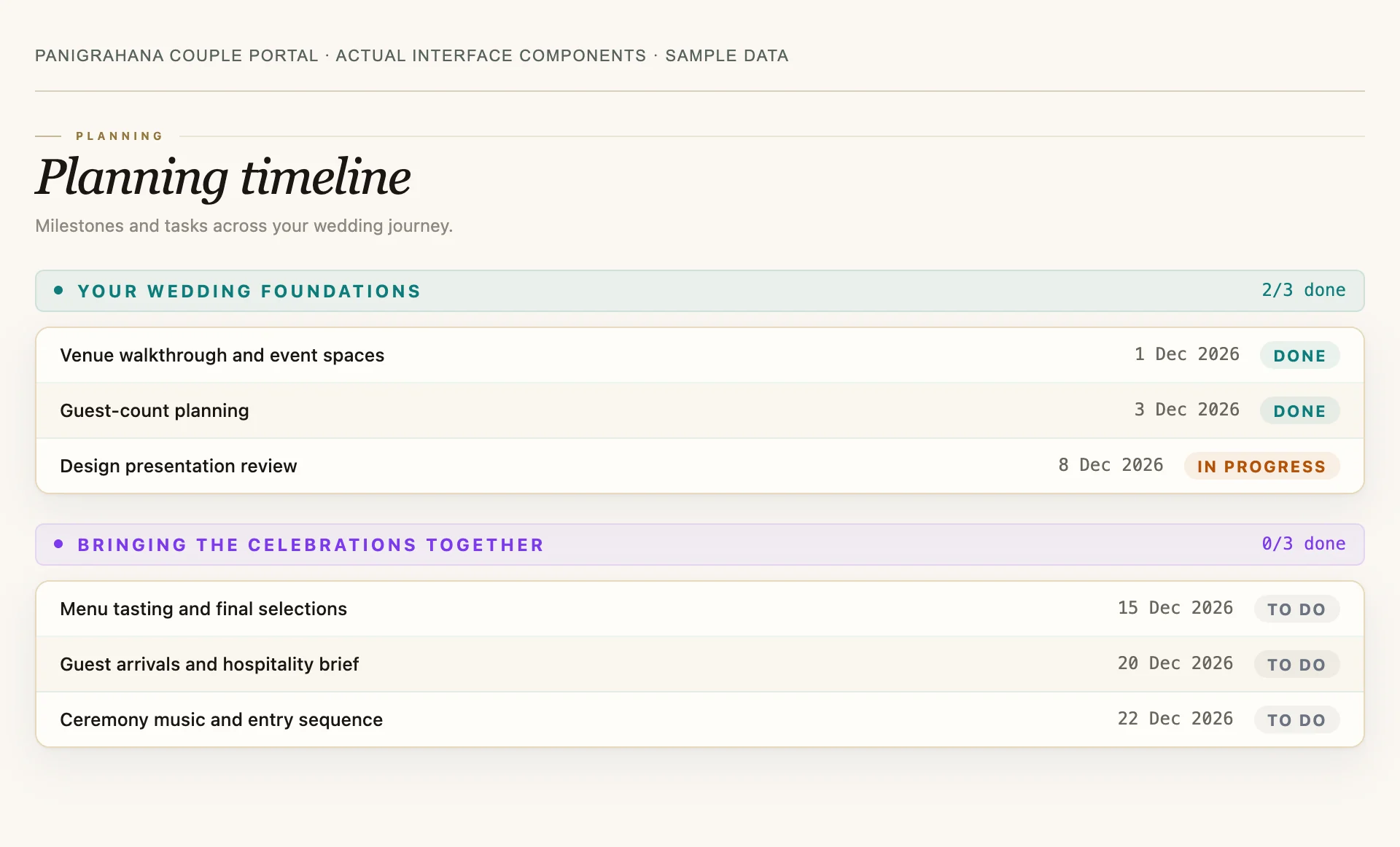
Panigrahana’s couple portal brings planning information together for couples and their families. The public previews show actual portal components populated with labelled sample data. They demonstrate how planning, show flow and payment information can be reviewed between calls; they are not screenshots of a real client’s private account.
The portal supports the conversation with your named team. Before the next review, open the current design version and list the decisions that need an answer. After the call, check that the written record reflects what you agreed. This small habit makes remote planning easier to follow, especially as several functions move toward production at once.
Questions couples ask
Who should approve wedding design changes?
Name an authorised decision owner for each area. Family members can contribute feedback, but the supplier needs one consolidated approval for each priced revision.
Should we delete old wedding design versions?
Keep them as a record and mark them superseded. The current approved version should be easy to identify without losing the history of agreed changes.
Can we follow the planning without joining every call?
Use a current decision log and concise meeting notes. Panigrahana’s couple portal also lets families review planning information between calls.