Interactive Wedding Stations: Plan the Queue as Carefully as the Decor
Make a gajra, attar or guest activity station welcoming, with clear service capacity, placement, staffing and timing.
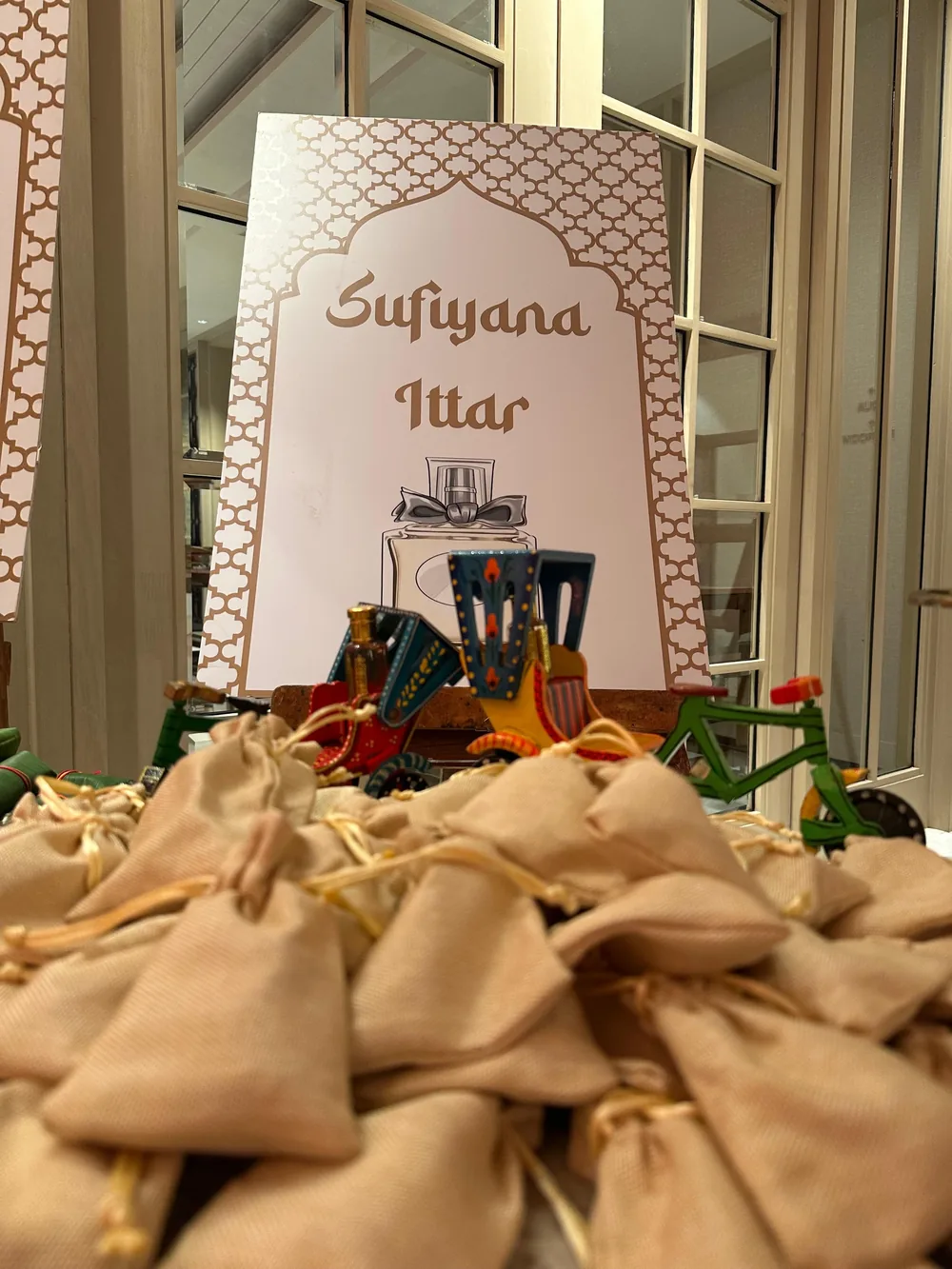
Plan an interactive wedding station around what each guest does, how long it takes and how many people can participate at once. Choose a visible location with room to wait, assign staff and connect its operating hours to the event schedule. Attractive styling alone does not keep a queue moving.
Describe the experience in one sentence
Start with the action: guests choose an attar, collect a gajra or leave a message for the couple. Then decide whether someone guides that action or guests use the station independently. A clear purpose makes it easier to choose the furniture, signage, supplies and staffing.
Interactive decor appears in WedMeGood’s 2026 coverage, while WeddingWire’s Pinterest collaboration includes multisensory settings. Our practical question is what happens when guests actually arrive. The attar station shown here is from Panigrahana’s supplied St. Regis Goa work; it is a completed example, not a claim about how many guests used it.
Use a capacity estimate before approving the size
Consider this hypothetical example: one guest interaction takes four minutes and one host can assist one guest at a time. The theoretical maximum is fifteen interactions per hour, before allowing for pauses, replenishment or uneven arrivals. If you expect many people to arrive together, one position may create a queue even when the total guest count seems manageable.
Time a sample interaction with the supplier. Ask what can be prepared in advance and whether a second serving position improves the experience. Do not promise every guest a personalised item until the operating window and staffing have been checked. If the activity is optional, provide a comfortable way to participate later or pass by.
Place the waiting space on the plan
| Planning detail | Question to resolve |
|---|---|
| Location | Can people find it without blocking an entrance? |
| Queue | Where do guests wait, and does that obstruct another route? |
| Staffing | Who explains, serves and replenishes? |
| Supplies | Where are spares stored and who tracks them? |
| Operating time | Does it overlap with a ceremony, performance or meal? |
| Access | Can guests participate comfortably without a difficult reach or step? |
Style the working parts too
A station needs somewhere for packaging, spare stock and used materials. Include those areas in the design rather than hiding them behind a cloth at the last moment. Keep labels readable and the main activity at a comfortable height. Review the station while it is being used, because hands, trays and supplies change how much surface remains available.
For scented or wearable items, explain the choices and let guests decline without pressure. Coordinate product details and any handling requirements with the supplier. Keep the station away from food service if the experience could interfere with the meal or create congestion, and confirm placement with the venue.
Give the station an opening and closing plan
Assign a setup check before guests arrive: supplies ready, staff briefed, signage placed and the surrounding route clear. Agree when the station closes and how unfinished guest requests are handled. If it is moving to another function, allow for packing, replenishment and restyling rather than assuming it can be carried across instantly.
Panigrahana designs guest-facing details as part of the full event plan. Share the activity you want and the functions where it should appear. We can then discuss the physical setup alongside hospitality and timing, with the practical work reflected in the scope.
Questions couples ask
How many interactive wedding stations do we need?
Estimate the time per interaction, available operating hours and expected participation with the supplier. Total guest count alone is not enough to size the activity.
Should an activity station be at the main entrance?
Only if waiting guests will not block arrivals or circulation. A visible location with its own waiting space may work better.
Can a station be reused at another wedding function?
Often it can be considered, but confirm transport, reset time, replenishment and staffing. Reuse needs a plan and a priced scope.