Plan Your Wedding Tablescape Layout Before Choosing Centrepieces
Round, long or curved tables: start with guests, service and sightlines, then develop the flowers, linen and tabletop details.
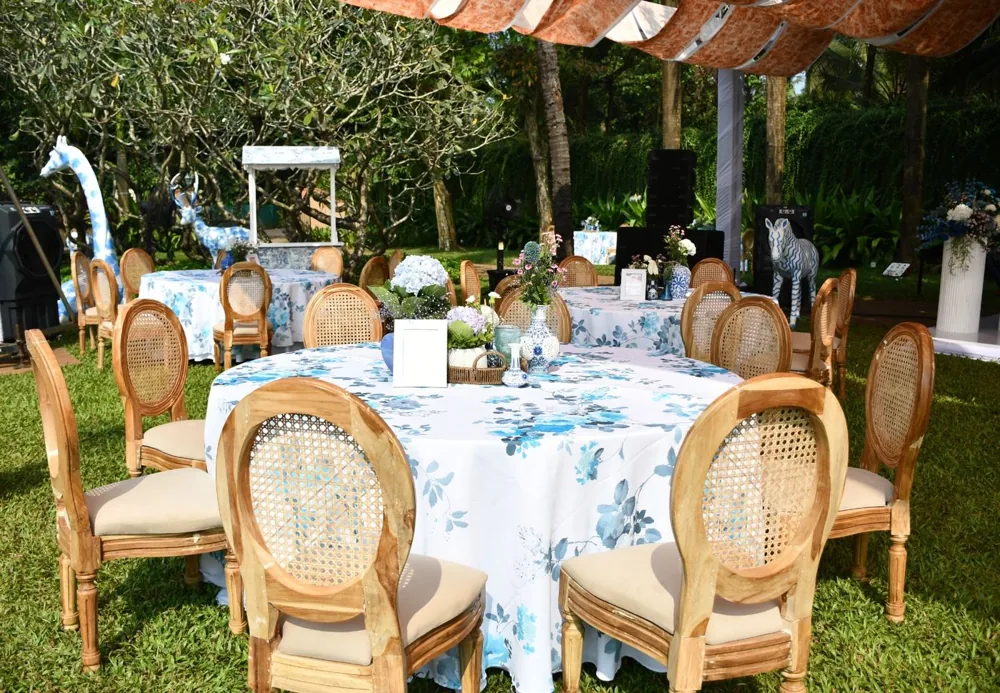
Plan a wedding tablescape by settling the table arrangement, guest seating, service routes and usable tabletop space first. Choose centrepieces and decorative details within that plan. A beautiful table photograph cannot establish whether the layout works for your guest count or venue.
A table shape changes more than the photograph
Long tables can create a shared dinner atmosphere; round tables can suit smaller conversation groups. Curved arrangements introduce a different rhythm across the room. None is automatically the most comfortable or space-efficient choice. The result depends on the actual furniture, chairs, guest groups and service arrangement.
WedMeGood’s 2026 forecast discusses unusual table layouts, including curved forms. Use that as a prompt to explore the plan, rather than selecting a shape before checking the venue. Ask for the proposed table and chair dimensions, then review the arrangement with the catering and venue teams.
Draw the occupied table
An empty layout symbol looks tidy because it leaves out chair movement, bags, plates, glassware and people standing to greet each other. Review the plan with chairs in use. Check whether guests can reach their seats and whether staff can serve without repeatedly asking people to move.
Think about who is seated together. Families with young children may need a different arrangement from a group of friends who will leave the table frequently. Ask guests privately about specific access needs. Keep the seating plan flexible until attendance is clear, while respecting the supplier’s deadline for confirming quantities.
Give the tabletop a working surface
| Element | Check before approval |
|---|---|
| Place settings | Enough space for the actual meal service |
| Flowers | Sightlines across the table and stability of vessels |
| Candles or lamps | Venue acceptance, placement and service access |
| Menus and favours | Readable positions without crowding the place setting |
| Linen and chairs | Colour, fit, comfort and the appearance in real lighting |
Review a sample at the right height
If a tabletop mockup is available, sit beside it. Looking down at a beautifully styled table gives a different impression from talking across it. Check whether flowers or candles sit in the line between faces. Review the actual plate and glassware arrangement with the catering team rather than using a smaller decorative place setting that will not be served.
Ask how the design will be repeated across the room. Not every table must carry the same centrepiece, but the variations should be intentional. Confirm quantities for each arrangement and record which pieces belong to the venue, which are hired and which are being produced for the wedding.
Make the wider room belong to the table
A blue-and-white table can look different against a warm ballroom carpet than it does on a green lawn. Consider the background, lighting and adjacent event features. If the table is already rich in pattern, ask whether the surrounding details can stay quieter. Let the actual venue help settle the palette.
The tablescape photographs in this guide are from Panigrahana’s completed portfolio. They offer a starting point for discussing colour, furniture and floral balance. Your final design should connect that visual direction to your own guest list, meal format and measured event layout.